
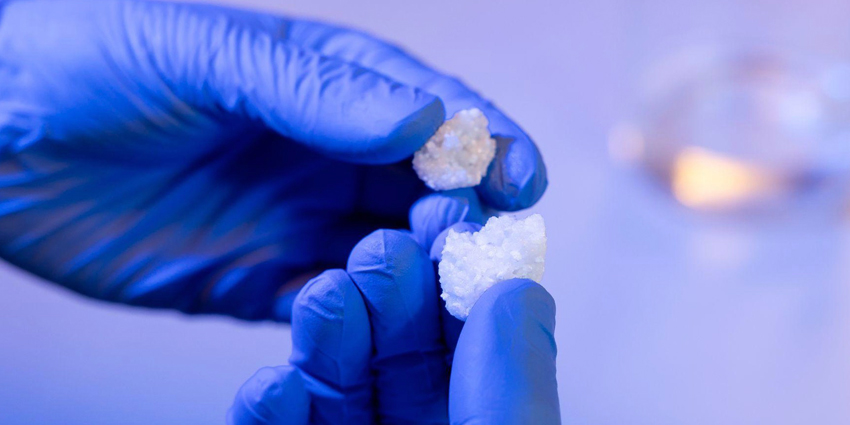
UK-based orthobiologics company, Locate Bio Limited, a spin out from the University of Nothingham, (see The Interesting Turn Bmp2 Bone Grafting Is Taking) has successfully completed an oversubscribed £9.2 million funding round to advance the clinical study of its bone graft substitute, LDGraft, for spinal fusion.
£9.2M Raised for a Time Release BMP2
1 min read Premium comments
Secondary#ldgraft#locatebio
Locate Bio is a privately held UK-based orthobiologics company. The funding will be used for a randomized study of LDGraft in single level anterior lumbar interbody fusion. The clinical trial is called RESTORE.
Locate Bio received U.S. Food and Drug Administration (FDA) breakthrough device designation for LDGraft last year. Per the press release, Locate Bio uses a “proprietary protein encapsulation method to deliver a powerful therapeutic protein called rhBMP-2” which is combined with an “osteoconductive scaffold in LDGraft.”
OTW spoke with Locate Bio CEO John von Benecke about how LDGraft is different from other alternatives out there. Von Benecke told OTW, “Other rhBMP-2 products in development focus exclusively on the retention of the rhBMP-2 to various biomaterials, using a variety of attachment mechanisms. At Locate Bio, we recognize the delay in peak BMP-2 expression in bone healing as you move up the species order. It is much slower in humans than in mice. This has informed our development approach.”
Von Benecke continued, “LDGraft is based on not only ‘where’ the rhBMP-2 is delivered but also ‘when’ it becomes available to bind to specific cell receptors and activate the signaling cascade, and our design intent is the improved biomimicry of that signaling process.”
New and existing investors participated in the funding round including Mercia Ventures and BGF. Mercia Ventures is a venture capital investor that is part of Mercia Asset Management PLC. Established in 2011, BGF is the most active equity investor in the UK and Ireland.
In the press release, von Benecke commented, “This oversubscribed funding round underscores the significant investor confidence in the company’s vision and the potential of LDGraft to become the most relied-on bone graft substitute globally.”
Author
React:
Discussion
This is a fascinating development. In my practice we've seen similar outcomes with the revised protocol. The key differentiator seems to be patient selection criteria. Has anyone else noticed the correlation with BMI thresholds?
Great point. I'd push back slightly on the conclusion, the sample size in the cited study is too small to draw population-level inferences. That said, the directional signal is compelling and worth a larger RCT.
We implemented a similar approach last year. Early results are promising but we're still gathering 12-month follow-up data. Happy to share our protocol if anyone is interested.
Join the conversation
Orthopedic professionals are discussing this. Sign in and upgrade to read every comment and add your voice.