
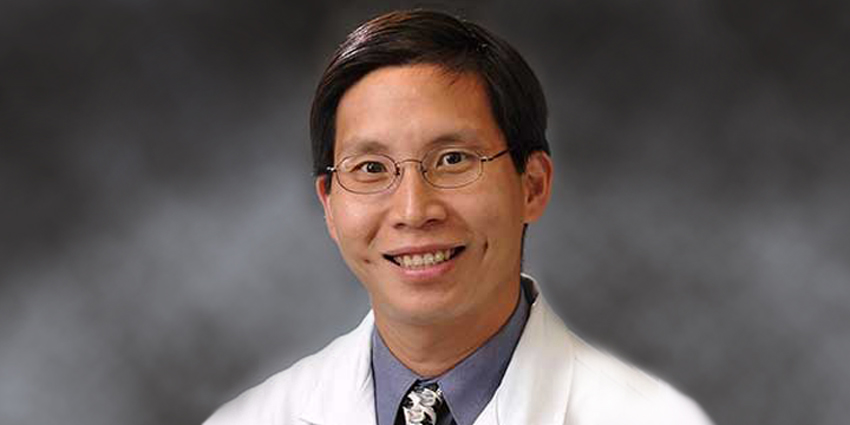
Gwo-Chin Lee, M.D., FAAOS is the new editor-in-chief of the Journal of the AAOS Global Research & Reviews. Dr. Lee, a professor of orthopaedic surgery at Weill Cornell Medical College in New York City, began fully overseeing the publication January 1, 2024.
Gwo-Chin Lee, M.D. Takes Helm at JAAOS Global Research & Reviews
2 min read Premium comments
#gwochinlee#jaaosglobalresearch
Now a hip and knee reconstruction specialist at Hospital for Special Surgery, Dr. Lee was a professor of orthopedic surgery and served as director of the adult reconstruction fellowship at the University of Pennsylvania in Philadelphia.
Dr. Lee obtained his bachelor’s degree in biological sciences from Stanford University and his medical degree from Baylor College of Medicine in Houston. He then completed his orthopedic surgery residency training at the Mayo Clinic School of Graduate Medical Education in Rochester, Minnesota, and his fellowship in adult reconstruction at the Insall Scott Kelly Institute in New York City.
“The Journal of the AAOS (JAAOS) and more recently JAAOS Global have always been excellent resources for orthopedic surgeons at various stages of their careers,” Dr. Lee said. “The caliber of high-quality, peer-reviewed content is unmatched, as it provides well-researched, topical, clinical, and balanced information on relevant topics affecting our daily practices.”
“As a deputy editor for JAAOS prior to assuming my current role, I learned many things,” Dr. Lee told OTW. “First, I was excited to see that the quality of research within our field is continually increasing. The increase in the level of evidence of our studies will allow us to make data-based decisions to improve the quality of care for our patients.”
“Second, I came to appreciate how journals which form the repository of knowledge rely greatly on the ‘labor of love’ from our consultant reviewers. Without their expertise and insight, this improvement in research quality would not be possible. Therefore, one of my goals as editor-in-chief is to continue to uphold the high-quality standards of JAAOS Global Research and Reviews and to work to help ease the barrier to publication to our contributors, reviewers, and editors.”
“I believe that one of the most important initiatives of AAOS and its journals is to increase the collaboration with our global partner societies. I believe that good orthopedic care can come in various forms and be determined by traditions, training, and resources.”
“We recognize that orthopedic care may be different in other regions and parts of the world. Therefore, I would like our journal to be more inclusive and reflective of the global voice. We are working hard to engage global societies and associations to increase the number of contributions to our journals. I believe that through research and mutual learning we can improve the quality of musculoskeletal care worldwide.”
Author
React:
Discussion
This is a fascinating development. In my practice we've seen similar outcomes with the revised protocol. The key differentiator seems to be patient selection criteria. Has anyone else noticed the correlation with BMI thresholds?
Great point. I'd push back slightly on the conclusion, the sample size in the cited study is too small to draw population-level inferences. That said, the directional signal is compelling and worth a larger RCT.
We implemented a similar approach last year. Early results are promising but we're still gathering 12-month follow-up data. Happy to share our protocol if anyone is interested.
Join the conversation
Orthopedic professionals are discussing this. Sign in and upgrade to read every comment and add your voice.