
The U.S. Food and Drug Administration (FDA) has granted its second 510(k) clearance to a pedicle screw sleeve designed to significantly and safely improve screw fixation in spine surgery.
FDA Adds 2nd Clearance to Novel Pedicle Screw Fixation Sleeve
2 min read Premium comments
Secondary#ogmend#ogmendimplantenhancementsystem#wovenorthopedictechnologies
According to the FDA’s 510(k) summary document, the system is intended to “augment pedicle screw fixation when a screw has lost purchase due to screw loosening, back-out, or breakage.” It is for use with “rigid, thoracolumbar pedicle screw systems where a screw is inserted posteriorly, through the pedicle, and into the vertebral body.” The system is “for use in skeletally mature patients.”
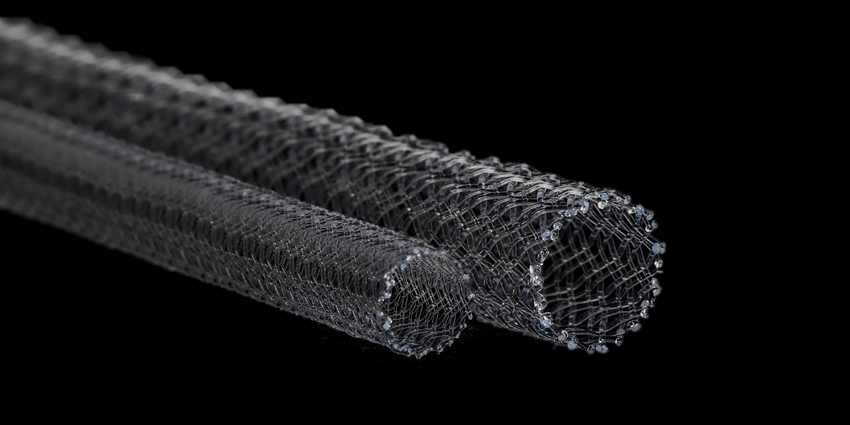
Per the 510(k) summary document, the system is a “sterile, single-use device intended to provide supplemental fixation to restore stability when the screw-to-bone interface becomes mechanically compromised.” The system consists of a permanently implanted sleeve and an inserter. It is “designed to use the principles of interference fit, surface area contact, and pressure distribution to secure a screw to bone and achieve stability at the screw-to-bone interface to allow for subsequent healing.”
This second clearance expands the range of available implant sizes to now include both medium and large. Medium is for use “with screws ranging in diameter from 3.5mm – 6.5mm.” Large is for use “with screws ranging in diameter from 6.5mm – 10.5mm.” The medium and large are both now available in Europe and the United States.
Woven Orthopedic Technologies, LLC, a medical device company based in Manchester, Connecticut, submitted the device for 510(k) clearance. The device, as with the first cleared device, is called the Ogmend® Implant Enhancement System. It is the second 510(k) clearance the company has received in the past year.
“It’s the quality of the interface that matters when it comes to high-quality fixation,” said Brandon Bendes, company president and CEO. “What Ogmend does is enhance the screw-bone interface so that the surgeon can optimize stability at the foundation. The interaction between a screw and bone will determine the quality of fixation. Ogmend seeks to optimize that interaction by facilitating robust bone ingrowth and resisting foundational failure. And it does this by encompassing the entire interface instead of just a portion.”
When OTW inquired as to why this particular material—PET (polyethylene terephthalate)—was chosen, Bendes noted, “It is sufficiently flexible to mold to the bony environment, durable enough to withstand the peak stresses at the interface, static so that it does not degrade and lose its impact, and biocompatible such that it enables the bone response and maintains a friendly environment over the long term.”
Bendes continued, “The most important element is that Ogmend is a very simple, off-the-shelf solution that can be used whenever needed. Surgeons have been left to their own creativity to find ways to enhance fixation. With Ogmend, they’re always prepared with a standardized solution to manage challenging scenarios when they arise…and with our large clearance they now have it for nearly all pedicle screw sizes!”
Author
React:
Discussion
This is a fascinating development. In my practice we've seen similar outcomes with the revised protocol. The key differentiator seems to be patient selection criteria. Has anyone else noticed the correlation with BMI thresholds?
Great point. I'd push back slightly on the conclusion, the sample size in the cited study is too small to draw population-level inferences. That said, the directional signal is compelling and worth a larger RCT.
We implemented a similar approach last year. Early results are promising but we're still gathering 12-month follow-up data. Happy to share our protocol if anyone is interested.
Join the conversation
Orthopedic professionals are discussing this. Sign in and upgrade to read every comment and add your voice.