
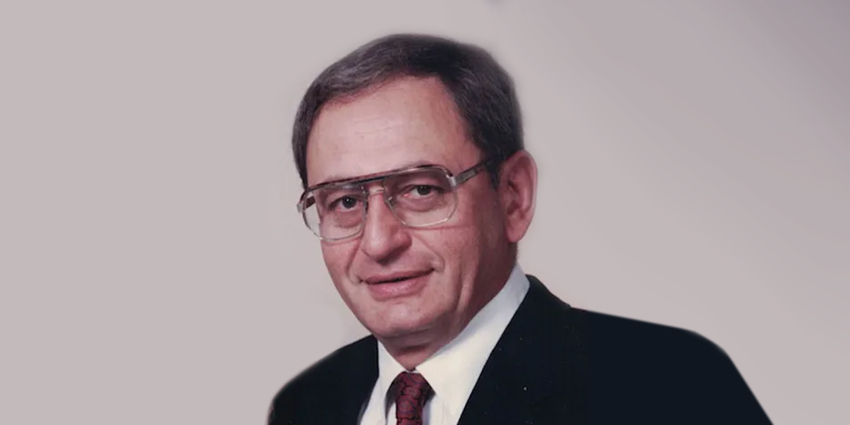
Leonard Alan Goddy, M.D., an orthopedic surgeon who was a leader of the Louisville Jewish community, and a champion of underserved children, passed away on December 10, 2023, in Louisville.
Leonard Alan Goddy, M.D., Dies, Age 90
1 min read Premium comments
Remembrances#obituary#leonardalangoddy
Goddy, 90, was known for pioneering new medical technologies including the use of the external fixator to treat difficult fractures, lengthen legs, and realign legs and arms. He held orthopedic clinics at Kosair Crippled Children’s Hospital on Eastern Parkway and Norton Children’s Hospital that served thousands of children.
Goddy graduated from the University of Louisville medical school in 1958 and began his orthopedic practice in 1963. Early in his career he treated many boxers including Muhammad Ali.
He also served as a lieutenant colonel and surgeon at the U.S. Army’s 8th Field Hospital in Na Trang, Vietnam. After saving his field command who broke his leg on a parachute jump, Goddy was made an honorary Green Beret, which is a rare honor.
Supporting younger Jewish families was also important to him. As president of Congregation Adath Israel, he led its merger in 1977 with Brith Sholom and oversaw the construction of a new Temple building and pre-school.
After he retired, Goddy served on the Board of Governors of Family Health Centers of Louisville, a not-for-profit center with seven clinical locations which provides primary and preventive care regardless of a person’s ability to pay from 2005 to 2018.
Goddy was born in Pittsburgh, Pennsylvania, and graduated from Taylor Allderdice High School. He received his bachelor’s degree from Washington & Jefferson College in Washington, Pennsylvania.
Goddy was preceded in death by his parents, Abe and Jeannette “Shankey” Fineman Goddy; his sister, Carol Tobin Lewis; and his wife, Lynn Francis Cassen Goddy. He leaves behind his loving partner of 10 years, Donna Stone; his children David Goddy; Karen Goddy; Suzanne Weintraub; and his grandchildren Sonya Goddy, Julian Goddy, Alec Palchikoff, and Jordan, Adam and Jillian Weintraub.
Author
React:
Discussion
This is a fascinating development. In my practice we've seen similar outcomes with the revised protocol. The key differentiator seems to be patient selection criteria. Has anyone else noticed the correlation with BMI thresholds?
Great point. I'd push back slightly on the conclusion, the sample size in the cited study is too small to draw population-level inferences. That said, the directional signal is compelling and worth a larger RCT.
We implemented a similar approach last year. Early results are promising but we're still gathering 12-month follow-up data. Happy to share our protocol if anyone is interested.
Join the conversation
Orthopedic professionals are discussing this. Sign in and upgrade to read every comment and add your voice.