
The U.S. Food and Drug Administration (FDA) has granted Breakthrough Therapy Designation to an investigational drug therapy for periprosthetic joint infection (PJI) of the hip and knee.
Breakthrough FDA Designation for Hip/Knee PJI Drug
1 min read Premium comments
Secondary#ostealtherapeutics#vtx7
With this designation, the drug’s manufacturer, Osteal Therapeutics, Inc., will be able to expedite the drug’s development and FDA review. Also noteworthy is that the FDA acknowledged that preliminary clinical evidence indicated that Osteal’s drug may demonstrate substantial improvement over available therapy on a clinically significant endpoint(s).
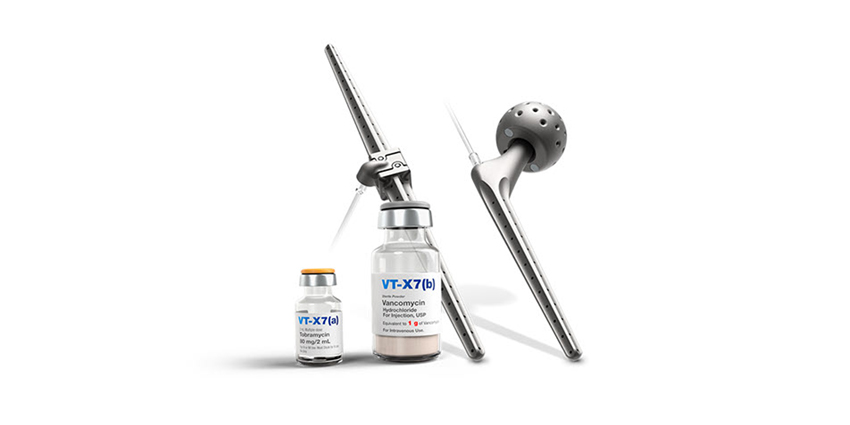
Osteal’s product, which is a drug-device combination, is called VT-X7 (vancomycin hydrochloride and tobramycin sulfate for irrigation/VT-X7 irrigation system).
Osteal Therapeutics, a privately held, clinical-stage pharmaceutical company that developed VT-X7. VT-X7, said that this “novel drug/device combination product is designed to deliver therapeutic concentrations of vancomycin and tobramycin, well-established, broad-spectrum antibiotics, directly to the joint space and surrounding tissue to treat PJI.”
The FDA granted the Breakthrough Therapy Designation based on results from a “Phase 2b, prospective, multi-center, randomized controlled clinical trial evaluating the safety and efficacy of VT-X7.” In a Phase 2 clinical study of VT-X7, “100% of patients were treated and received a new permanent joint prosthesis in seven days with 93% remaining infection free at one year.”
The Breakthrough Therapy Designation follows Orphan Drug, Qualified Infectious Disease Product, and Fast Track designations. It also coincides with the completion of enrollment in APEX-2, the “pivotal clinical trial” for the drug.
Judson Cooper, a founding principal of Prism Ventures LLC and a member of Osteal Therapeutics Board of Directors, said, “We are pleased to see VT-X7 receive Breakthrough Therapy Designation from FDA. In this market where there are no FDA approved products for treatment of PJI, Osteal offers one of the most compelling advances in PJI treatment we have ever seen.”
Cooper continued, “By virtually eliminating the interstage period associated with traditional two-stage exchange arthroplasty, VT-X7 could put patients on the path to normal life sooner without the morbidity and mortality associated with this lengthy period of limited mobility.”
Author
React:
Discussion
This is a fascinating development. In my practice we've seen similar outcomes with the revised protocol. The key differentiator seems to be patient selection criteria. Has anyone else noticed the correlation with BMI thresholds?
Great point. I'd push back slightly on the conclusion, the sample size in the cited study is too small to draw population-level inferences. That said, the directional signal is compelling and worth a larger RCT.
We implemented a similar approach last year. Early results are promising but we're still gathering 12-month follow-up data. Happy to share our protocol if anyone is interested.
Join the conversation
Orthopedic professionals are discussing this. Sign in and upgrade to read every comment and add your voice.