
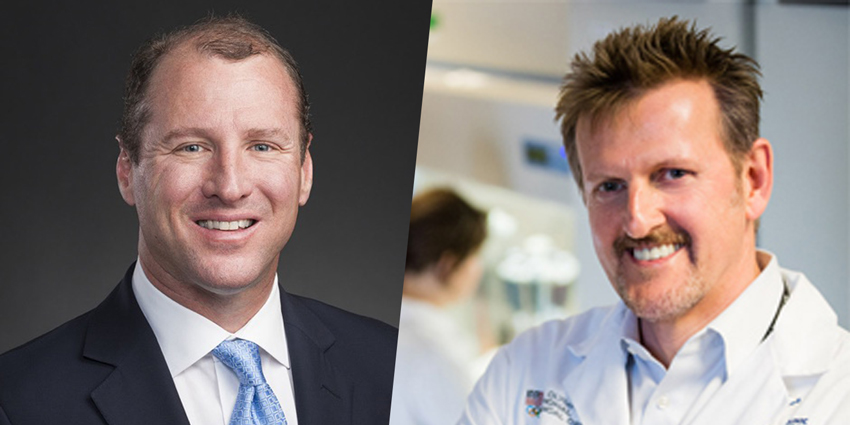
Research by the Steadman Philippon Research Institute into an anti-aging compound, Fisetin, a naturally occurring antioxidant found in yellow fruits and vegetables, has resulted in the prestigious Orthoregeneration award being given to Peter J. Millett, M.D., M.Sc. and Johnny Huard, Ph.D. by the Orthoregeneration Network (ON) Foundation/AGA Orthoregeneration Award for their research into the role that Fisetin can play in treating aging shoulders, hips, and knees.
Steadman Philippon Researchers Receive Orthoregeneration Award
3 min read Premium comments
#rotatorcuff#johnnyhuard#orthregenerationaward#petermillett
Their award-winning study was “Safety and Efficacy of Fisetin for Improving Rotator Cuff Repair: Initial Outcomes in a Sheep Model.” The award was presented on September 16, 2023, in Berlin, Germany, by Dr. Matthias Steinwachs, president of the ON Foundation
Dr. Millett is chief medical officer and an orthopaedic surgeon specializing in shoulder surgery at The Steadman Clinic and Steadman Philippon Research Institute (SPRI). Dr. Huard is the chief scientific officer and director of the Linda and Mitch Hart Center for Regenerative and Personalized Medicine at SPRI. The award is shared by former SPRI International Fellows Drs. Rony and Maria Dey Hazra of Germany, and Jeremiah Easley, D.V.M., professor of Veterinary Medicine at the C. Wayne McIlwraith Translational Medicine Institute at Colorado State University.
“It is a thrill to have our original research recognized by the ON Foundation, an esteemed international organization that is dedicated to orthopaedic tissue regeneration,” said Dr. Millett. “Not only do rotator cuff tears increase rapidly with age, but we also see an increased incidence of retears as patients get older.”
“Hypothesizing that age-related cellular aging (senescence) may be a factor, we worked with a rotator cuff tear model, finding that animals receiving Fisetin and bone marrow stimulation had reduced creatine kinase in their blood, better muscle relaxation, less degeneration, as well as improved tissue markers and fewer senescent cells.”
Co-investigator Dr. Huard noted, “Surgeons and patients need safe, effective solutions for the pain and dysfunction that accompany rotator cuff repairs. This research opens the door for new thinking and better clinical solutions for our patients.”
When OTW asked Dr. Millett what put them on the trail of using Fisetin this way, he replied, “We have been interested in Fisetin for some time and are actively working on regenerative medicine strategies.”
“Fisetin has senolytic (anti-aging) and anti-inflammatory effects that may be beneficial in tendon healing and other types of healing after orthopaedic surgery. It reduces the number of senescent cells—sometimes called zombie cells—that are damaged old cells that accelerate aging and cause inflammation. Senescent cells are important emerging targets for diseases of aging, and Fisetin may help our bodies to rid itself of these damaging cells.
“Fisetin may be able to slow or prevent cellular aging or senescence”
“Fisetin is a natural antioxidant found in many fruits and vegetables, particularly those with yellow coloring. Fisetin has been shown to extend the life of lower organisms, hence it is called a senolytic (anti-aging) agent.
Fisetin also has anti-inflammatory properties. Perhaps the most interesting aspect of Fisetin is the role it plays cellular senescence. Fisetin may be able to alter the cellular aging process and slow or prevent cellular aging or senscence.”
“The body typically rids itself of senescent cells, but when it fails to do so this maladaptive response can lead to cancer and age-related disease. Dr Johnny Huard from our team and others, such as Laura Niederhofer and Paul Robbins at University of Minnesota and Jim Kirkland at Mayo Clinic have shown that Fisetin reduces senescent cells. Since many orthopaedic diseases are age-related, senolytic treatment with Fisetin is an exciting new area for our research.”
OTW asked Dr. Millett if any of his orthopedic colleagues are exploring the use of senolytics. “I am not aware of any other orthopaedic surgeons who are using senolytics,” he said. “One of the most common anti-aging strategies involves Yamanaka factors which were discovered by Shinya Yamanaka—a Japanese orthopaedic surgeon who won the Nobel prize in 2012 for his discovery that differentiated cells could be induced to become stems cells.
“I certainly know that my partners and I at the Steadman Clinic and Steadman Philippon Research Institute are interested in senolytics,” Dr. Millett told OTW. “Our Chief Scientific Officer Dr Johnny Huard has been interested for many years and introduced the strategy to us. We are conducting NIH-funded [National Institutes of Health] studies for the use of Fisetin for patients with knee osteoarthritis and studies using Fisetin for postop healing after various orthopaedic procedures, such as arthroscopic hip surgery (Marc Philippon) and rotator cuff repair (myself and Matt Provencher).”
This research was supported by a generous philanthropic contribution from Björn and Kathy Borgen of Vail, Colorado.
Author
React:
Discussion
This is a fascinating development. In my practice we've seen similar outcomes with the revised protocol. The key differentiator seems to be patient selection criteria. Has anyone else noticed the correlation with BMI thresholds?
Great point. I'd push back slightly on the conclusion, the sample size in the cited study is too small to draw population-level inferences. That said, the directional signal is compelling and worth a larger RCT.
We implemented a similar approach last year. Early results are promising but we're still gathering 12-month follow-up data. Happy to share our protocol if anyone is interested.
Join the conversation
Orthopedic professionals are discussing this. Sign in and upgrade to read every comment and add your voice.