
IncludeHealth, Inc., a provider of musculoskeletal technology solutions, is partnering with SocialClimb to improve the patient experience and expand access to its digital self-assessment tool.
IncludeHealth Partners With Healthcare Marketing Platform
1 min read Premium comments
Secondary#includehealth#socialclimb
SocialClimb offers its clients a healthcare marketing platform to bring together physicians and patients online. The partnership will enable SocialClimb to provide its orthopedic clients access to IncludeHealth’s digital front door, a digital self-assessment tool.
OTW spoke with IncludeHealth about the partnership and the digital self-assessment tool. When asked about the number of practices implementing the tool, IncludeHealth told OTW, “This tool launches in November so none yet, but we have the first 10 practices signed up.”
OTW also asked IncludeHealth about how many practices would have access to this tool through the partnership. IncludeHealth explained to OTW, “Any practice can have access to it by reaching out to SocialClimb or IncludeHealth.”
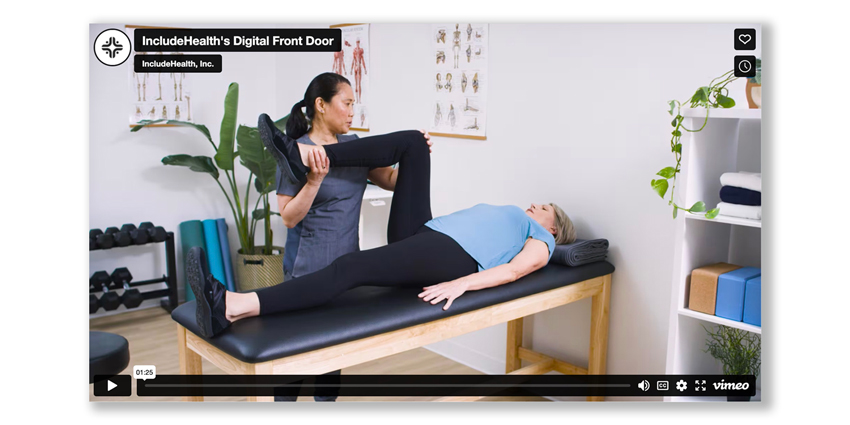
IncludeHealth’s digital front door is designed to enhance the patient’s intake experience. It was created to engage the patient and provide essential information, all before the patient enters the orthopedic practice. Patients are able to use their own devices at home to complete real time movement assessments. All without the need for download, sensors, or passwords.
Patients are able to access the digital front door from either a targeted marketing campaign or from the orthopedic practice’s website. Once the patient accesses the digital front door, the patient completes an interactive movement assessment via computer vision and then completes a pain survey. The data is then immediately shared with the patient and the orthopedic practice.
SocialClimb CEO Ty Allen commented, “Our mission at SocialClimb has always been to enable our customers to attract the patients they need for growth.”
Allen continued, “Bringing IncludeHealth’s patented computer vision capabilities into the marketing tools we offer is changing the way orthopedic patients engage with practices creating a differentiated patient experience.”
Author
React:
Discussion
This is a fascinating development. In my practice we've seen similar outcomes with the revised protocol. The key differentiator seems to be patient selection criteria. Has anyone else noticed the correlation with BMI thresholds?
Great point. I'd push back slightly on the conclusion, the sample size in the cited study is too small to draw population-level inferences. That said, the directional signal is compelling and worth a larger RCT.
We implemented a similar approach last year. Early results are promising but we're still gathering 12-month follow-up data. Happy to share our protocol if anyone is interested.
Join the conversation
Orthopedic professionals are discussing this. Sign in and upgrade to read every comment and add your voice.