
What can you tell about gender equality (or inequality) when perusing old meeting programs? Quite a bit says new research from Rothman Orthopaedic Institute and Drexel University.
Women Underrepresented on Spine Podiums: New Study
2 min read Premium comments
Secondary#northamericanspinesociety#rothmanorthopaedicinstitute#drexeluniversity
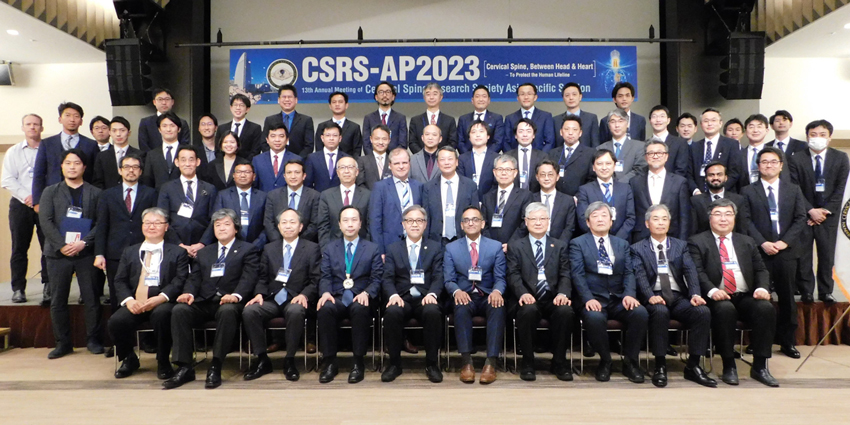
Along with colleagues, Alan Hilibrand, M.D., the vice chairman for Academic Affairs and Faculty Development at Rothman, examined meeting programs across ten years and six societies—North American Spine Society (NASS), Scoliosis Research Society (SRS), International Meeting on Advanced Spine Techniques (IMAST), Global Spine Congress (GSC), American Association of Neurological Surgeons/Congress of Neurological Surgeons (AANS/CNS) Spine Summit, and the Cervical Spine Research Society (CSRS).
Their work, “Gender Disparities Among Speakers at Major Spine Conferences,” appears in the September 8, 2023 edition of The Spine Journal.
Dr. Hilibrand, co-director of Spine Surgery and director of the Spine Fellowship at Rothman, told OTW, “Having the opportunity to present at spine conferences can facilitate career growth. We already know that women are underrepresented in our field…our team wanted to get another perspective on gender disparity in orthopedics.”
So, they dove into data on 20,181 conference speakers over 10 years.
The researchers determined that of all the conference speakers, women constituted 9.0% (1,816) of the total. Female representation, they found, was highest at the North American Spine Society (12.2%, N=680) but lowest at the Cervical Spine Research Society (6.6%) and the Global Spine Conference (7.1%).
Spine Summit (7.4%), the International Meeting on Advanced Spine Techniques (9.92%), and the Global Spine Conference (9.87%) had the largest annual percent increases in female representation. Institutions in Middle East and Africa (1.4%), and Central and South America (1.8%) had the lowest percent of female speakers.
“I would argue that women in orthopedics are at least as engaged in academic medicine as their male peers,” stated Dr. Hilibrand to OTW. “While some women do present papers and posters at conferences, few are symposia speakers. One explanation may be that because these women are younger, they have yet to achieve the experience for such a role…the alternative is that there is genuine discrimination underway.”
“There is a higher percent of women among neurosurgeons. We just don’t have good answers as to why more women do not choose a career as an orthopedic spine surgeon. Is it self-selection or are there external factors or subconscious prompts that people pick up on?”
“I think what will move the needle on this over time is that as we get more females selecting orthopedic surgery, that will become the new normal and then women can feel more comfortable in the field. The other issue is that there are few female faculty…that too will change with each woman who steps into a faculty role.”
“I think one realistic goal is to raise the percentage of female applicants for spine fellowship to be consistent with the number of women in orthopedic residency programs…it shouldn’t be too high of a bar in 2023.”
“Ours is the first analysis of the representation of women at major spine conferences. Perhaps if this work is repeated in 5-10 years things will be much more advanced for women in spine.”
Author
React:
Discussion
This is a fascinating development. In my practice we've seen similar outcomes with the revised protocol. The key differentiator seems to be patient selection criteria. Has anyone else noticed the correlation with BMI thresholds?
Great point. I'd push back slightly on the conclusion, the sample size in the cited study is too small to draw population-level inferences. That said, the directional signal is compelling and worth a larger RCT.
We implemented a similar approach last year. Early results are promising but we're still gathering 12-month follow-up data. Happy to share our protocol if anyone is interested.
Join the conversation
Orthopedic professionals are discussing this. Sign in and upgrade to read every comment and add your voice.