
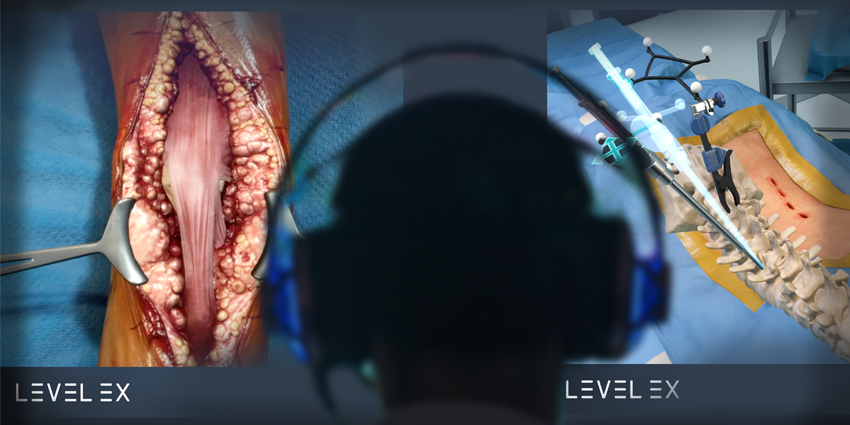
Level Ex, a medical video game studio based in Chicago, Illinois, is expanding the world of video games to include surgery and, the game they have launched (which you can try out—read to the end of this article) is sophisticated enough to be an education and training tool for physicians.
Wanna Play? Learn Surgery on a Video Game
1 min read Premium comments
#levelex#videogames
The Level Ex team has designed a suite of intriguing video games which are available across several platforms (mobile devices, for example) and incorporate simulation technology and a cloud-based gaming platform.
Level Ex has designed their “games” for medical and healthcare companies, surgeons, and others who may want to develop or advance their surgical skills, complete continuing medical education all while also learning about new medical devices, drug therapies, and clinical best practices.
The guiding principle behind Level Ex is that “play can advance the practice of medicine” by making the learning process more interactive, engaging and, ultimately, effective.
According to the company, “Hands-on experience through video games has helped physicians learn better and faster, leading to a 28% improvement in device competency.”
Furthermore, according to Level Ex, companies who employ this gaming style of education have increased their surgeon conversion rates 65%, increased sales 6% and, on average, booked a $5 million increase in revenue.
Level Ex gave OTW the opportunity to try out its Virtual Technique Guides. The game options provided to OTW included knee replacement, ultrasound simulator, and spine displacement challenge.
During the knee replacement game, OTW went through the steps of knee replacement surgery. The steps included the following: placing the retractors on either side of the incision, pulling the retractors to open the incision, bending the knee into position for further preparation, positioning the IM rod near the distal femur, inserting the IM rod into the femoral canal, turning the valgus angle dial to the highlighted position, advancing the cut guide toward the distal femur, and turning the cut level dial until the guide is flush with the distal femur.
Try out the Level Ex Virtual Technique Guides for yourself.
Author
React:
Discussion
This is a fascinating development. In my practice we've seen similar outcomes with the revised protocol. The key differentiator seems to be patient selection criteria. Has anyone else noticed the correlation with BMI thresholds?
Great point. I'd push back slightly on the conclusion, the sample size in the cited study is too small to draw population-level inferences. That said, the directional signal is compelling and worth a larger RCT.
We implemented a similar approach last year. Early results are promising but we're still gathering 12-month follow-up data. Happy to share our protocol if anyone is interested.
Join the conversation
Orthopedic professionals are discussing this. Sign in and upgrade to read every comment and add your voice.