
Have you been sued? If you are an orthopedic physician, an OB-GYN or general surgeon, your odds are high. In fact, the American Medical Association (AMA) has found that it may be just a matter of time.
Ortho Surgeons Highest Risk of Lawsuits
1 min read Premium comments
#malpractice#physicianlawsuit
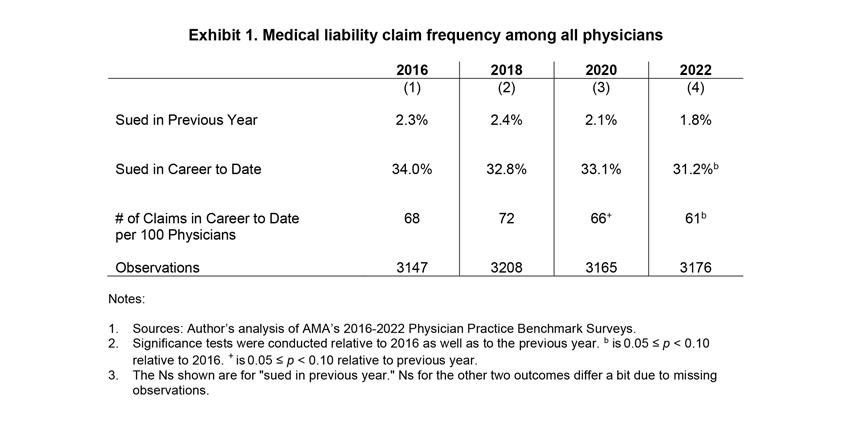
A recently released AMA paper used data from AMA’s 2016-2022 physician practice benchmark surveys to estimate claim frequency for all physicians. José R. Guardado, Ph.D., authored the paper titled “Medical Liability Claim Frequency Among U.S. Physicians.” It looked at whether the likelihood of being sued as a physician varied by any of the following: age, gender, specialty, census division, and employment status.
According to the paper, “the widest variation in claim frequency comes from physician specialty.” Notably, “surgical specialties are generally at highest risk.”
Specifically, the highest percentage of physicians who’ve faced a litigation claim were in the following specialties:
- OB/GYNs: 62.4%
- General surgeons: 59.3%
- Other surgeons: 55.5%
- Orthopedic surgeons: 47.2%
If a physician hasn’t been sued, it may just be a matter of time. According to the AMA study, when compared to a shorter period of time, “a much higher proportion of physicians are at risk of getting sued over the longer term.” As of last year (2022), almost one-third (31.2%) of physicians reported that they had been sued at some point during their careers.
The data provides insight into not only who is likely to be sued but also the potential outcome. AMA President Jack Resneck Jr., M.D. commented, “Even the most highly qualified and competent physicians in the U.S. may face a medical liability claim in their careers, however, getting sued is not indicative of medical errors.”
Dr. Resneck continued, “All medical care comes with risks, yet physicians are willing to perform high-risk procedures that offer hope of relief from debilitating symptoms or life-threatening conditions. When physicians are sued, two-thirds of civil liability claims are dropped, dismissed, or withdrawn without a finding of fault. When claims proceed to trial and are decided by a verdict, the defendants prevail in nearly 9 out 10 cases.”
Author
React:
Discussion
This is a fascinating development. In my practice we've seen similar outcomes with the revised protocol. The key differentiator seems to be patient selection criteria. Has anyone else noticed the correlation with BMI thresholds?
Great point. I'd push back slightly on the conclusion, the sample size in the cited study is too small to draw population-level inferences. That said, the directional signal is compelling and worth a larger RCT.
We implemented a similar approach last year. Early results are promising but we're still gathering 12-month follow-up data. Happy to share our protocol if anyone is interested.
Join the conversation
Orthopedic professionals are discussing this. Sign in and upgrade to read every comment and add your voice.