
According to a new study, using traditional measures to predict osteoarthritis (OA) progression—age, sex, body mass index, and radiographic severity—does not go far enough in predicting structural worsening.
New Blood-Based Biomarkers Target OA
2 min read Premium comments
Secondary#kneeosteoarthritis#bloodbiomarker#jointdisorder
Researchers at Duke University and the Duke Molecular Physiology Institute, both in Durham, North Carolina, found that there is evidence that using biomarkers in drug development enhances the potential of FDA approval as well as predict OA progression.
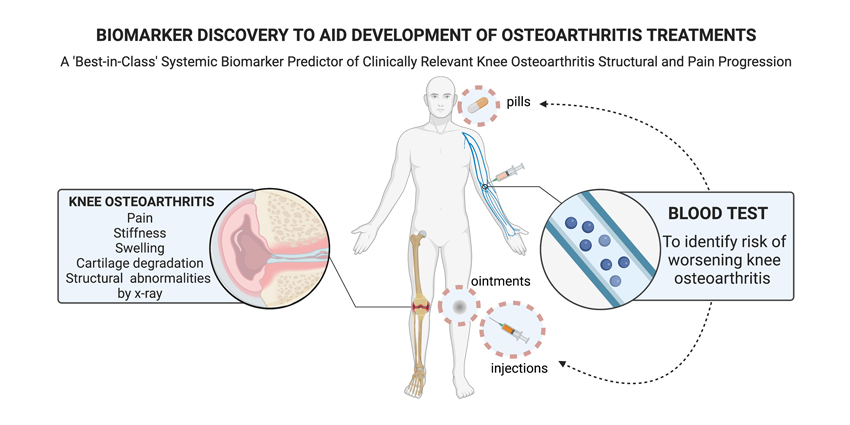
Their work, “A ‘best-in-class’ systemic biomarker predictor of clinically relevant knee osteoarthritis structural and pain progression,” appeared in the January 25, 2023, edition of ScienceAdvances.
The researchers developed a new proteomic/serum panel to predict and evaluate radiographic knee OA progression (radiographic and pain worsening). Prior evidence showed that urinary C-terminal cross-linked telopeptide of type II collagen (uCTXII) was the strongest prognostic biomarker of clinically relevant OA progression. The Duke research team used this validated test as the reference for comparing their best-in-class serum proteomic biomarker sets.
The final analyses consisted of 107 peptides from 64 proteins. Using a pool of 596 patients with knee OA, the researchers found that 15 markers (corresponding to 13 proteins) accurately predicted 73% of progressors from non-progressors (the control group).
The authors determined that assessing baseline structural osteoarthritis and pain severity was only 59% predictive. The current best biomarker from urine (uCTXII) was similarly only 58% predictive.
“In addition to being better able to identify OA progressors, this new biomarker has an additional advantage of being a blood-based test,” said Virginia Byers Kraus, M.D., Ph.D., a professor in the departments of Medicine, Pathology and Orthopedic Surgery at Duke University School of Medicine.
Dr. Kraus, senior author of the study, added, “Blood is a readily accessible bio-specimen, making it an important way to identify people for clinical trial enrollment and those most in need of treatment.”
When asked why we haven’t had a biomarker like this before, Dr. Kraus noted, “Prior studies were based on specific candidates and did not start from a discovery approach in synovial fluid that progressed to looking into blood.”
Overall, says Dr. Kraus, “It was most interesting to implement advanced statistical methods and evaluate such a large number of protein markers and exciting to see how well they worked.”
Author
React:
Discussion
This is a fascinating development. In my practice we've seen similar outcomes with the revised protocol. The key differentiator seems to be patient selection criteria. Has anyone else noticed the correlation with BMI thresholds?
Great point. I'd push back slightly on the conclusion, the sample size in the cited study is too small to draw population-level inferences. That said, the directional signal is compelling and worth a larger RCT.
We implemented a similar approach last year. Early results are promising but we're still gathering 12-month follow-up data. Happy to share our protocol if anyone is interested.
Join the conversation
Orthopedic professionals are discussing this. Sign in and upgrade to read every comment and add your voice.