
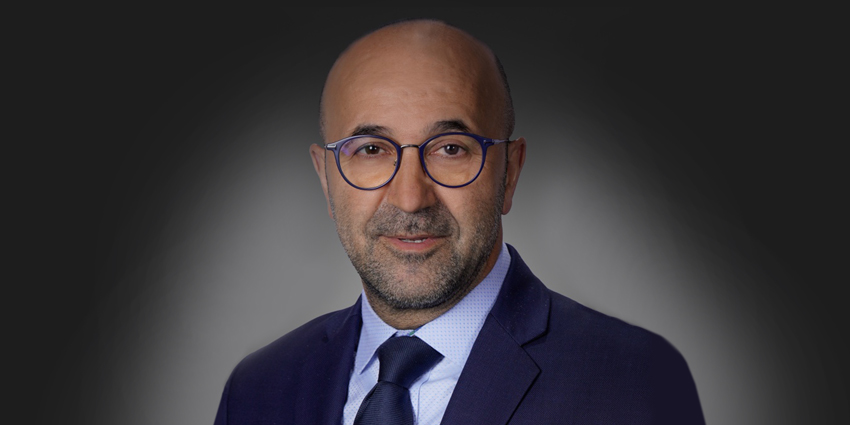
Javad Parvizi, M.D., the James Edward Professor of Orthopedic Surgery at Sidney Kimmel School of Medicine and Rothman Orthopaedics in Philadelphia, has been named as the 33rd President of the American Association of Hip and Knee Surgeons (AAHKS).
Javad Parvizi, M.D. Now President of AAHKS
2 min read Premium comments
#aahks#javadparvizi
Dr. Parvizi completed his medical school education in the UK and then undertook a residency in orthopedic surgery at Mayo Clinic. He then headed to Switzerland where he did a fellowship in the management of hip disorders in young adults.
A renown surgeon and researcher, Dr. Parvizi has received multiple awards from global societies and research funding from the National Institute of Health, Department of Defense, Orthopedic Research and Education Foundation, Musculoskeletal Transplant Foundation and Arthritis Foundation. He has been given the honorary membership of over 30 societies around the world, but as a leader, he has served as President of the MusculoSkeletal Infection Society (2013) and Eastern Orthopedic Association (2018).
Dr. Parvizi is also the founder and CEO of Parvizi Surgical Innovation (PSI) LLC, an incubator and accelerator that develops innovative products in healthcare to improve patient care.
“I am humbled and honored to be a servant leader of the most respected and admired arthroplasty organization in the world. Forward, to improve patient care,” said Dr. Parvizi, an AAHKS member since 2004, who has served on the Nominating Committee, as a Board Member-at-Large, Chair of the Research Committee and Associate Editor for The Journal of Arthroplasty.
Reflecting on how his past leadership positions might inform his AAHKS term, Dr. Parvizi told OTW, “Having served in previous leadership positions will obviously allow me to better handle the challenges that the leader of any organization will face.”
“In addition to prior issues related to physician fee reductions, we are now facing newer problems such as the rising cost of care, staff shortage and so on. I believe the experience I gathered from serving the previous societies will help me have a more mature approach to the numerous challenges that our community is facing.”
When OTW asked where he thinks the field of infection sciences is headed, Dr. Parvizi commented, “Tough to know. What we do know is that the current approach to management of orthopedic infections is far from perfect.”
“We have challenges. Diagnosing implant-related infections, treatment of periprosthetic joint infection has a very high failure rate, our patients face numerous morbidities and even mortality in their journey when PJI [prosthetic joint infection] diagnosis is handed to them.”
“We are beginning to understand the role that microbiome and loss of integrity of gut epithelium plays in clinical infections and sophisticated methods for detection of viable, but not culturable (VBNC) organisms is being developed. So, the future of infection sciences in general, and orthopedic infections in particular, is going to be very different than the current state of affairs. We are witnessing a re-approach to the problem of infection already and the emerging science of microbiome is changing the face of medicine.”
Author
React:
Discussion
This is a fascinating development. In my practice we've seen similar outcomes with the revised protocol. The key differentiator seems to be patient selection criteria. Has anyone else noticed the correlation with BMI thresholds?
Great point. I'd push back slightly on the conclusion, the sample size in the cited study is too small to draw population-level inferences. That said, the directional signal is compelling and worth a larger RCT.
We implemented a similar approach last year. Early results are promising but we're still gathering 12-month follow-up data. Happy to share our protocol if anyone is interested.
Join the conversation
Orthopedic professionals are discussing this. Sign in and upgrade to read every comment and add your voice.