
Matthew F. Gornet, M.D., a veteran of many clinical studies and new technologies for the treatment of difficult spine maladies, is a lead investigator for an interesting new look at the use of viable cell therapies to treat degenerative disc disease.
New Evidence Supports Viable Cell Spine Treatment
3 min read Premium comments
#degenerativediscdisease#discgenics#celltherapy
This newly released work was conducted at 13 centers in 12 states and enrolled 60 patients. The study sites included not only Gornet’s The Orthopedic Center of St. Louis, but also the University of Southern California’s Keck School of Medicine, the Carolina Neurosurgery & Spine Associates center and The Spine Institute of Louisiana.
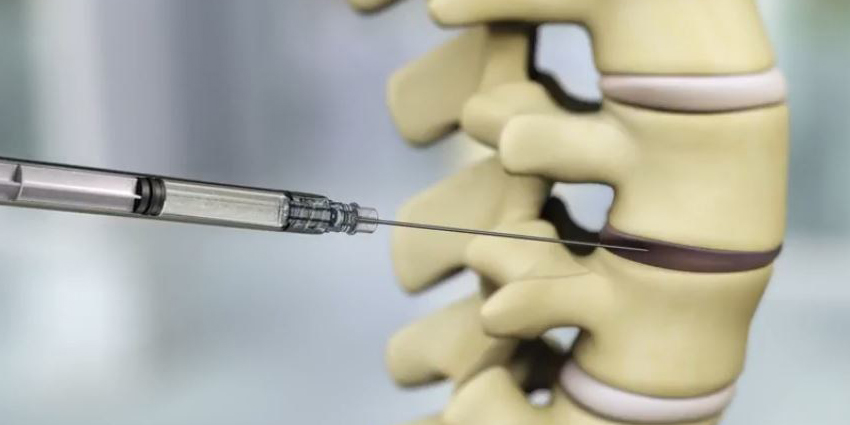
The study was designed to test an allogenic progenitor cell therapy (study sponsor was Salt Lake City-based DiscGenics, Inc.) to treat patients with lumbar degenerative disc disease (DDD). Patients were divided into four treatment groups:
- low dose IDCT (3,000,000 cells/mL; n=20)
- high dose IDCT (9,000,000 cells/mL; n=20)
- vehicle alone (1mL injection of a viscous sodium hyaluronate solution and excipients—no cells) (n=10)
- saline placebo (n=10).
Patients were then tracked for two years. The research teams collected data regarding low back pain levels, level of function, quality of life, and disc volume. Additionally, the team was hoping to collect evidence, if it existed, of any regenerative effect on the intervertebral discs following a single injection.
The results, said Dr. Gornet to OTW were extraordinary: “These clinical results demonstrate the incredible potential of progenitor cell therapy to safely treat not only the pain and disability associated with degenerative disc disease with a single injection, but also to address the underlying cause of the disease—the degenerating disc.”
“This is unlike any treatment I have seen in 30 years of practice and unlike any treatment currently available on the market. The improvements we observed in disc volume through MRI image analysis suggest DiscGenics’s IDCT produces a regenerative effect within the degenerating disc which indicates the ability to halt and possibly reverse the progression of DDD.”
Here are other findings which included, notably, that there was a dose response curve detected.
- Clinical improvements were sustained at six months, one year, 1.5 years, and two years post-injection and statistically exceeded the Minimal Clinically Important Difference in each respective outcome measure, which reflect changes following a clinical intervention that are meaningful for the patient.
- Statistically significant improvements in disc volume were also observed in the high dose group, where MRI imaging-derived mean change in disc volume increased steadily from baseline and reached statistical significance at week 52 (249.01 mm3) and Week 104 (402.1 mm3).
- In contrast, changes in disc volume for the control groups decreased, although not at a statistically significant level.
- The high dose treatment group was the only group in this study to show a decrease in both opioid and nonsteroidal anti-inflammatory drug (NSAID, e.g., aspirin, ibuprofen, etc.) use.
- At 2 years, overall patient follow-up was 85.0%.
“The data from the initial FDA Phase I/II study has shown compelling safety and efficacy.” Said Dr. Gornet, “There has been no significant immunologic response. Animal studies have shown no evidence of tumor formation or cancer and adverse events in our initial clinical trial supported the previous studies.”
“Most surgeons want to benefit their patients and I believe that this new treatment is an alternative for patients who sit on the sidelines, not ready to have surgery, but who have failed other forms of conservative care. I think most surgeons would be excited to offer this to their patients.”
“The most promising aspect of this treatment is that it has the potential to transform the treatment of low back pain. Based on the objective nature of the study, it clearly shows the beneficial effect that is far better than spinal fusion and demonstrates the ability to regrow the disc and improve disc height and disc volume. The fact that we have a potential treatment that may regenerate the disc gives patients a new option for what is often a disabling condition and a frequent reason to seek medical care.”
For more information, contact the study sponsor.
Author
React:
Discussion
This is a fascinating development. In my practice we've seen similar outcomes with the revised protocol. The key differentiator seems to be patient selection criteria. Has anyone else noticed the correlation with BMI thresholds?
Great point. I'd push back slightly on the conclusion, the sample size in the cited study is too small to draw population-level inferences. That said, the directional signal is compelling and worth a larger RCT.
We implemented a similar approach last year. Early results are promising but we're still gathering 12-month follow-up data. Happy to share our protocol if anyone is interested.
Join the conversation
Orthopedic professionals are discussing this. Sign in and upgrade to read every comment and add your voice.