
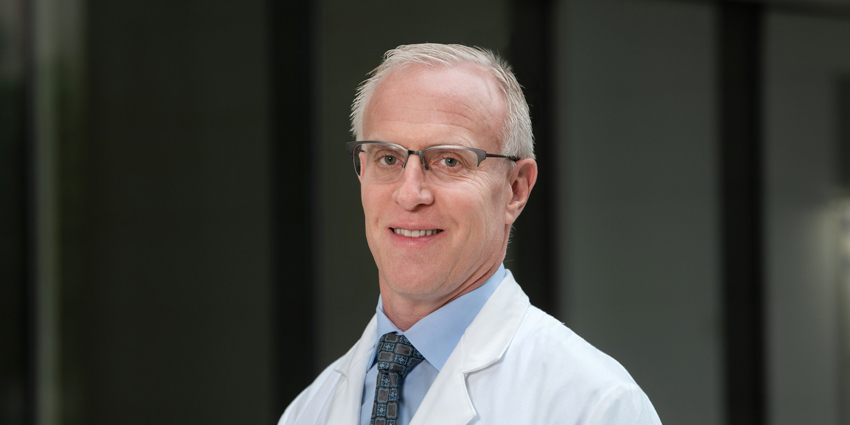
Kevin J. Bozic, M.D., M.B.A. has been named the new president of The American Academy of Orthopaedic Surgeons (AAOS) for 2023–2024. Dr. Bozic, who specialized in simple and complex primary and revision hip and knee arthroplasty, is the inaugural chair of surgery and perioperative care at the Dell Medical School at The University of Texas at Austin.
Kevin J. Bozic, M.D., M.B.A. Named New President of AAOS
3 min read Premium comments
#aaos#kevinbozic
Widely respected for his contributions to the field, Dr. Bozic led the way on value-based healthcare payment and delivery models. At Dell Bozic built a department with more than 250 faculty from numerous surgical disciplines. Dr. Bozic formerly served as the William R. Murray Endowed Professor and vice chair of Orthopaedic Surgery at the University of California San Francisco (UCSF) School of Medicine and core faculty of the Philip R. Lee Institute for Health Policy Studies.
Dr. Bozic holds an undergraduate degree in biomedical engineering from Duke University, where he graduated magna cum laude, and an M.D. with Thesis degree from UCSF. He completed a residency in the Harvard Combined Orthopaedic Residency Program, and a fellowship in adult reconstructive surgery from Rush University Medical College. Dr. Bozic earned an M.B.A. from Harvard Business School, where he continues on as a senior institute associate in Professor Michael Porter’s Institute for Strategy and Competitiveness.
Release the Pressure on Surgeons
“Throughout my career, I have dedicated myself to advocating for changes to the health system that make it easier for orthopaedic surgeons to focus on the aspects of the job that we enjoy the most—improving the lives of our patients—rather than the inherent, crushing administrative burden and misaligned incentives of our current health system which contribute to physician burnout,” Dr. Bozic added. “As president of the AAOS, I look forward to working with our Board of Directors, our talented staff and our many committed physician volunteers to build on the AAOS’ reputation as a leader in health system transformation that aligns our incentives with those of our patients. Because when our goals, responsibilities, professional duties and incentives are aligned with those of our patients, everyone wins.”
An expert on value-based health care, Dr. Bozic has furthered the implementation and evaluation of value-based payment and delivery models. His research has been funded by the Agency for Health Care Research & Quality, the National Institutes for Health (NIH), the Robert Wood Johnson Foundation, and the Orthopaedic Research and Education Foundation (OREF).
Whether for clinical care or research, Dr. Bozic has been honored with a multitude of awards during his career. These include the UCSF Exceptional Physician of the Year Award; the OREF Clinical Research Award; the American Association of Hip & Knee Surgeons James A. Rand Young Investigator Award and Lawrence D. Dorr Award; the Orthopaedic Research Society William Harris Award; the Hip Society John Charnley Award; and the Knee Society Chitranjan Ranawat Award.
Time for Alignment
When OTW asked what health systems might do to aid physicians in preventing and addressing burnout, Dr. Bozic replied, “I believe the primary driver of physician burnout is what Dr. Robby Pearl, former CEO of the Permanente Medical Group, refers to as ‘moral injury,’ or the systemic misalignment between the burden and the purpose of our work. Therefore, we must take steps to align our responsibilities, duties, and incentives with those of our patients.”
“Payment and delivery models that reward and incentivize us based on the value of care we deliver to patients are an effective strategy to address moral injury and physician burnout. When doctors are able to turn their focus on what we enjoy the most and do best—improving the lives of our patients—rather than the many non-clinical and administrative tasks that have been layered into our jobs—everyone wins.”
In the Forefront? Surgeon AND Patient Well-Being
“What do you want to look back and see?” asked OTW, to which Dr. Bozic replied, “I am committed to working with our Board of Directors, senior leadership team, and physician volunteers to execute on our strategic goals of:
- Delivering a personalized and seamless member experience;
- Equipping our members to thrive in value-based environments and advance the quality of orthopaedic care; and
Creating a more diverse, inclusive, and equitable culture in our specialty. This goal is essential to giving all current and future members a sense of belonging in our specialty and allowing us to address significant health disparities across populations that limit our ability to achieve our vision of becoming the trusted leaders in musculoskeletal care for ALL people.
Author
React:
Discussion
This is a fascinating development. In my practice we've seen similar outcomes with the revised protocol. The key differentiator seems to be patient selection criteria. Has anyone else noticed the correlation with BMI thresholds?
Great point. I'd push back slightly on the conclusion, the sample size in the cited study is too small to draw population-level inferences. That said, the directional signal is compelling and worth a larger RCT.
We implemented a similar approach last year. Early results are promising but we're still gathering 12-month follow-up data. Happy to share our protocol if anyone is interested.
Join the conversation
Orthopedic professionals are discussing this. Sign in and upgrade to read every comment and add your voice.