
The hard work of the team at Centinel Spine, LLC has paid off in a most tangible way for spine surgeons and their patients across the U.S.
NEW CPT Add-On Code for Two-Level Lumbar TDR
1 min read Premium comments
#centinelspine#cpt#prodiscl
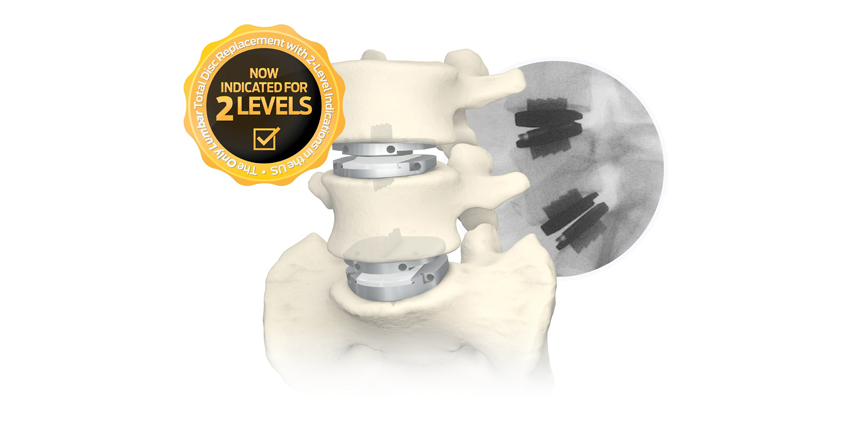
The American Medical Association (AMA) has now created a NEW Category I CPT add-on code to cover a 2nd level of lumbar total disc replacement. This will have a direct and positive effect on behalf of patients and their surgeons because it opens up a Medicare, Medicaid, and private insurer reimbursement pathway.
This announcement comes as a direct result of the persistence of the team at Centinel Spine®, LLC, a spinal implant and instrument supplier based in West Chester, Pennsylvania.
Centinel Spine CEO Steve Murray said, “Through the efforts of physician partners and medical societies, this new CPT code expands access to life changing technologies for patients by opening new reimbursement pathways.”
Murray continued, “The prodisc L device is the only disc that has FDA approval for two-level indications and has been a benefit for patients with lumbar disc disease of this severity. Having two-level approval has helped Centinel pursue its mission to provide clinically proven products that allow individuals to continue to function at a high level.”
The CPT Editorial Panel maintains and updates the CPT code set. The CPT Editorial Panel is made up of expert volunteers from diverse parts of the health care industry. According to the American Medical Association website, a proposal for a new Category I code must satisfy all of the following:
- All devices and drugs necessary for performance of the procedure of service have received FDA clearance or approval when such is required for performance of the procedure or service.
- The procedure or service is performed by many physicians or other qualified health care professionals across the United States.
- The procedure or service is performed with frequency consistent with the intended clinical use (i.e., a service for a common condition should have high volume).
- The procedure or service is consistent with current medical practice.
- The clinical efficacy of the procedure or service is documented in literature that meets the requirements set forth in the CPT code-change application.
Author
React:
Discussion
This is a fascinating development. In my practice we've seen similar outcomes with the revised protocol. The key differentiator seems to be patient selection criteria. Has anyone else noticed the correlation with BMI thresholds?
Great point. I'd push back slightly on the conclusion, the sample size in the cited study is too small to draw population-level inferences. That said, the directional signal is compelling and worth a larger RCT.
We implemented a similar approach last year. Early results are promising but we're still gathering 12-month follow-up data. Happy to share our protocol if anyone is interested.
Join the conversation
Orthopedic professionals are discussing this. Sign in and upgrade to read every comment and add your voice.