
Miach Orthopaedics, Inc. has closed a successful $40 million financing round to expand the commercialization of its Bridge-Enhanced ACL Restoration (BEAR®) Implant.
Miach Orthopaedics Raises $40M
1 min read Premium comments
#bridgeenhancedaclrestoration#miachorthopaedicsSecondary#bearimplant
Lead investors and existing investors contributed $30 million in Series B equity.
Sectoral Asset Management and Endeavour Vision acted as lead investors with the following existing investors: Amzak Health, Smith+Nephew, DSM Venturing, and the NFL Players Association. According to the press release, Miach Orthopaedics has also signed a “$10 million venture debt term sheet with Silicon Valley Bank with the intent to close the loan shortly following the Series B closing.”
Both Sectoral Asset Management and Endeavour Vision will have representation on the Miach Orthopaedics Board of Directors.
Miach Orthopaedics is a privately held company based in Westborough, Massachusetts. It is focused on creating bio-engineered surgical implants for connective tissue restoration. Its current efforts are directed towards its BEAR® Implant for the treatment of anterior cruciate ligament (ACL) tears.
Miach Orthopaedics Board of Directors Chair and Amzak Health Managing Partner Joyce Erony said, “The Miach team has made significant progress in U.S. commercialization of the BEAR Implant over the last year and is well-poised for rapid growth in the ACL repair market.”
Erony continued, “The ability to attract sizeable investment from leading venture capital firms and banks in a difficult fundraising environment is a testament to the Miach team and the potential of the BEAR Implant to become the standard of care.”
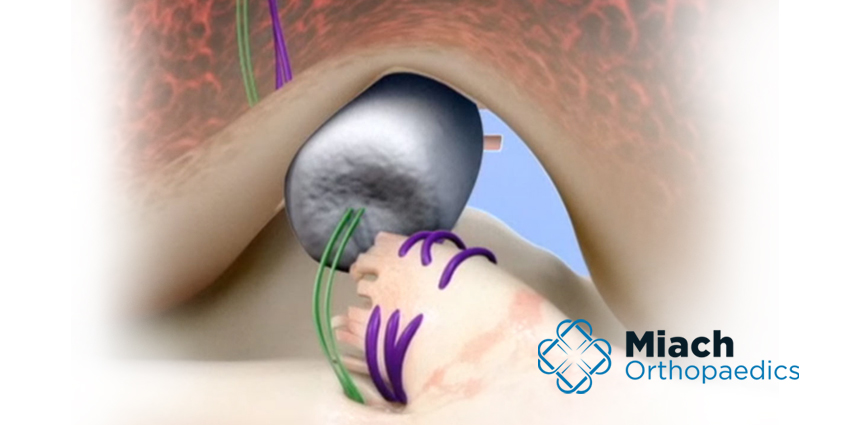
According to the company, the Bear Implant acts as a “bridge to restore the patient’s own ACL.” It is unique because it is the “first medical technology that has been clinically proven to enable healing of a torn ACL.”
In December 2020, the U.S. Food and Drug Administration (FDA) granted the De Novo request for the Bear Implant. For OTW’s coverage see, “FDA Announces De Novo Authorization for New ACL Rupture Treatment.”
Author
React:
Discussion
This is a fascinating development. In my practice we've seen similar outcomes with the revised protocol. The key differentiator seems to be patient selection criteria. Has anyone else noticed the correlation with BMI thresholds?
Great point. I'd push back slightly on the conclusion, the sample size in the cited study is too small to draw population-level inferences. That said, the directional signal is compelling and worth a larger RCT.
We implemented a similar approach last year. Early results are promising but we're still gathering 12-month follow-up data. Happy to share our protocol if anyone is interested.
Join the conversation
Orthopedic professionals are discussing this. Sign in and upgrade to read every comment and add your voice.