
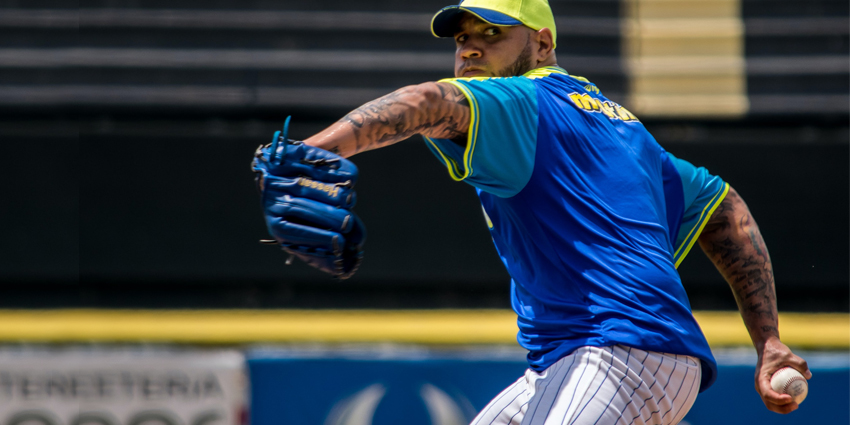
Professional baseball pitchers with faster pitch velocity were linked to a highest risk of elbow injury and subsequent ulnar collateral ligament reconstruction in a new study.
Faster Pitch Velocity Creates Higher Risk of Elbow Injury
2 min read Premium comments
Secondary#baseballpitcher#elbowinjury#pitchvelocity
The study, “Increased Pitch Velocity is Associated with Throwing Arm Kinetics, Injury Risk, and Ulnar Collateral Ligament Reconstruction in Adolescent, Collegiate, and Professional Baseball Pitchers: A Qualitative Systematic Review,” was published online on January 14, 2023, in the journal Arthroscopy.
This study, which was conducted by research teams at Monmouth Medical Center, Princeton University, Thomas Jefferson School of Medicine, The Rothman Institute, Weill Cornell Medicine and the Hospital for Special Surgery, collected data which mapped out the relationship between pitch velocity and throwing arm kinetics, injury, and ulnar collateral ligament reconstruction.
The study subjects were high school, college, and professional baseball pitchers. The multi-center research team collected Cochrane Database of Systematic Reviews, the Cochrane Central Register of Controlled Trials, PubMed and OVID data.
In total, the team found 24 relevant studies which provided data for 2,896 pitchers.
Based on intergroup analysis, the team documented that pitch velocity was significantly correlated with elbow varus torque in high school (R = 0.36), collegiate (R = 0.29), and professional (R =0.076) pitchers.
Elbow distraction force was positively associated with ball velocity in inter-pitcher analyses of high school (R =0.373), professional (R =0.175), and mixed cohort evaluations (R =0.624).
Intragroup analysis also showed a strong association between pitch velocity and elbow varus torque (R =0.922-0.957) and elbow distraction force (R =0.910) in professional pitchers. The researchers also found that faster ball velocity was positively associated with a history of throwing arm injury (R =0.194) in non-adult pitchers.
In addition, the team also observed a positive association between the need for ulnar collateral reconstruction and pitch velocity (R =0.036) in professional pitchers.
“Professional baseball pitchers with faster pitch velocity may be at the highest risk of elbow injury and subsequent ulnar collateral ligament reconstruction, potentially through the mechanism of increased distractive forces on the medial elbow complex,” said the research team in their published study. “When a pitcher ultimately undergoes ulnar collateral reconstruction, decreases in pitching performance are unlikely, but may occur, which should encourage pitchers to caution against maximizing pitch velocity.”
Study authors include Joseph Manzi, BS, and Jacob Zeitlin, BS of the Weill Cornell Medicine in New York, New York and Michelle Kew, Kyle N. Kunze, M.D., Heather Haeberle, M.D., and Joshua S. Dines, M.D. of the Hospital for Special Surgery in New York.
Suleiman Y. Sudan, M.D., of Monmouth Medical Center, Long Branch, New Jersey, Tyler Sandoval of Princeton University in Princeton, New Jersey, Michael C. Ciccotti, M.D. of Rothman Orthopaedics at Thomas Jefferson University in Philadelphia, PA and James B. Carr, II, M.D. of the Hospital for Special Surgery Florida in West Palm Beach, Florida, also contributed to the study.
Author
React:
Discussion
This is a fascinating development. In my practice we've seen similar outcomes with the revised protocol. The key differentiator seems to be patient selection criteria. Has anyone else noticed the correlation with BMI thresholds?
Great point. I'd push back slightly on the conclusion, the sample size in the cited study is too small to draw population-level inferences. That said, the directional signal is compelling and worth a larger RCT.
We implemented a similar approach last year. Early results are promising but we're still gathering 12-month follow-up data. Happy to share our protocol if anyone is interested.
Join the conversation
Orthopedic professionals are discussing this. Sign in and upgrade to read every comment and add your voice.