
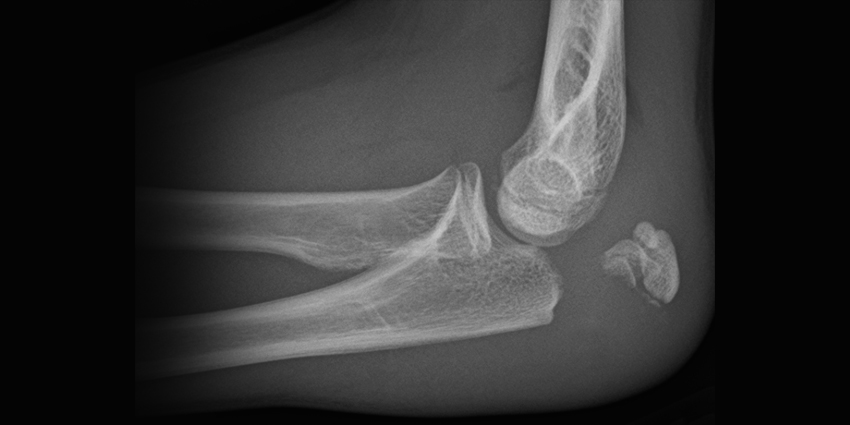
A new study, indeed, a critical analysis review, looked at a particular type of elbow fracture, the olecranon fractures, which typically are complicated by the fact they may involve multiple fragments and create ulnohumeral instability, and asked the question, should these patients be treated surgically or not?
Elbow Fractures: Surgery or Not?
2 min read Premium comments
Secondary#olecranonfracture#plateosteosynthesis
The study, “Olecranon Fractures: A Critical Analysis Review,” was published online on January 13, 2023 in The Journal of Bone & Joint Surgery.
An olecranon fracture—the break in the pointy bone of the elbow that sticks out when you bend your arms—usually occurs in isolation, but it can also be a part of a more complex injury.
The Wrightington Hospital in Wigan and Royal Infirmary of Edinburgh based team of researchers found that olecranon fractures account for 10% of all elbow fractures. A displaced fracture with a stable ulnohumeral joint is the most common type. They also noted that olecranon fractures are more likely to be caused by a low energy injury.
Whether to treat an isolated olecranon fracture with surgery or with nonoperative management, the authors noted, is based on patient factors such as age, functional demand, and whether the patient is medically fit to undergo surgery as well as certain characteristics of the fracture including displacement, fragmentation, and elbow stability.
After conducting their critical review analysis, the research team recommended nonoperative management for undisplaced fractures and displaced fractures in frail patients with lower functional demands.
For patients with a displaced olecranon fracture with a stable ulnohumeral joint with significant articular surface fragmentation, tension band wiring, plate osteosynthesis, intramedullary fixation or suture repair can be used.
The research team recommended that physicians use plate osteosynthesis—where the broken parts of the bone are fixed with a plate—for multifragmentary fractures and fractures with ulnohumeral instability. The researchers said that it is essential to consider the anatomy of the proximal ulna during surgery.
Study authors include Zaid Hamoodi, MBCHB, MRCS, MSc, Andrew D. Duckworth, BSc(Hons), MBChB, MSc, FRCSED (Tr&Orth), Ph.D., and Adam C. Watts, MBBS, BSc, FRCS (Tr&Orth) of the Upper Limb Unit at the Wrightington Hospital in Wigan, United Kingdom. Andrew D. Duckworth, BSc(hons), MBChB, MSc, FRCSED (Tr7Orth), Ph.D., of the Edinburgh Orthopaedic Trauma, Royal Infirmary of Edinburgh, Edinburgh, United Kingdom.
Author
React:
Discussion
This is a fascinating development. In my practice we've seen similar outcomes with the revised protocol. The key differentiator seems to be patient selection criteria. Has anyone else noticed the correlation with BMI thresholds?
Great point. I'd push back slightly on the conclusion, the sample size in the cited study is too small to draw population-level inferences. That said, the directional signal is compelling and worth a larger RCT.
We implemented a similar approach last year. Early results are promising but we're still gathering 12-month follow-up data. Happy to share our protocol if anyone is interested.
Join the conversation
Orthopedic professionals are discussing this. Sign in and upgrade to read every comment and add your voice.