
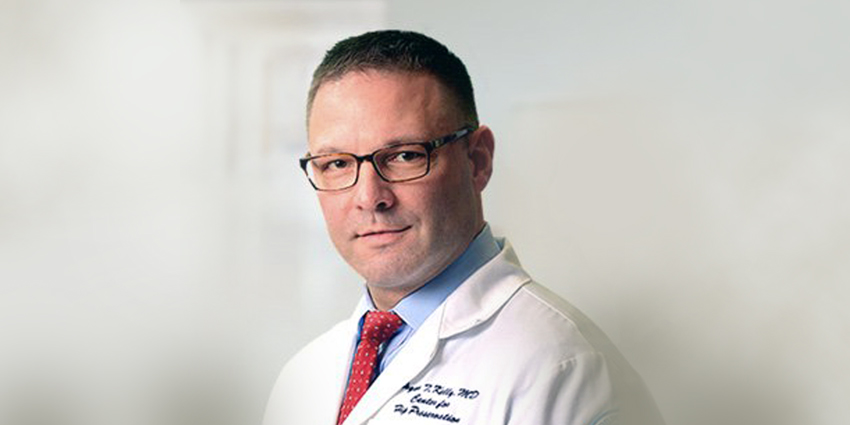
New York, New York-based Hospital for Special Surgery (HSS), a leading medical center for musculoskeletal health, has announced that Bryan Kelly, M.D., MBA will be succeeding Louis Shapiro as president and chief executive officer.
Dr. Bryan Kelly to Lead HSS as President and CEO
2 min read Premium comments
#hospitalforspecialsurgery#bryankelly
Dr. Kelly will take over for Shapiro in a phased transition that will take place over the course of 2023. His appointment as president is effective immediately. He will become CEO after the transition period is complete.
Dr. Kelly has served as HSS surgeon-in-chief and medical director since 2019. He will be the first surgeon to lead HSS since its founding in 1863. He plans to continue to serve a limited number of surgical patients in addition to his leadership responsibilities.
Dr. Kelly is a surgeon, scientist, and educator. He is a graduate of Brown University and Duke University School of Medicine. He joined HSS in 1996 where he completed his residency and fellowship. He went on to complete additional fellowships at the University of Pittsburgh Medical Center and at the Landeskliniken Hospital in Salzburg, Austria. In 2019 he completed his MBA at NYU Stern School of Business.
Dr. Kelly has spent his career focused on sports medicine and hip preservation. He has already built a legacy at HSS which includes the founding of the Hip Preservation Service in 2010 and serving as chief of the HSS Sports Medicine Institute.
Dr. Kelly commented, “It is hard to imagine anyone better suited than Lou [Shapiro] to lead the evolution of HSS to become an outsized influence, not only on musculoskeletal care, but also on how better-quality healthcare can be achieved at large scale.”
Shapiro has served as HSS president and CEO since 2006. He has accomplished much during his tenure with HSS. According to HSS, during his time with HSS Shapiro “led the expansion of the HSS physical care delivery system to four states, a nationwide rehabilitation network, and a robust innovation portfolio, including a global first in on-site 3D printing, and a national first in virtual triage and physical therapy.” Additionally, Shapiro “oversaw the relocation of the HSS Research Institute to expanded facilities, and the development of the HSS campus in Palm Beach County, Florida.”
Under Shapiro’s leadership, HSS has grown “organically more than 300 percent, dramatically improved its balance sheet, and improved its performance in virtually all metrics across clinical quality, patient experience, employ engagement, financial, and market positioning.”
HSS Board Co-chairs Thomas Lister and Robert Steel stated, “Lou shaped and cultivated a groundbreaking vision for HSS that saw the institution transform from a specialty hospital in New York to an international network with universal prominence.”
The pair continued, “Having led the enterprise through unprecedented growth and challenges, including COVID, Lou decided the time is right to make this change. HSS is well positioned to continue to strengthen and expand its global preeminence in musculoskeletal health under Dr. Kelly’s proven leadership and extraordinary capability.”
Author
React:
Discussion
This is a fascinating development. In my practice we've seen similar outcomes with the revised protocol. The key differentiator seems to be patient selection criteria. Has anyone else noticed the correlation with BMI thresholds?
Great point. I'd push back slightly on the conclusion, the sample size in the cited study is too small to draw population-level inferences. That said, the directional signal is compelling and worth a larger RCT.
We implemented a similar approach last year. Early results are promising but we're still gathering 12-month follow-up data. Happy to share our protocol if anyone is interested.
Join the conversation
Orthopedic professionals are discussing this. Sign in and upgrade to read every comment and add your voice.