
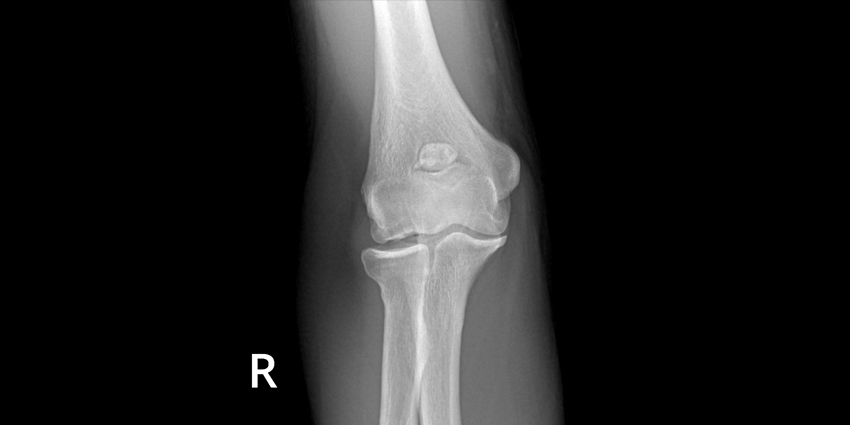
Arthroscopic debridement is not the best option to treat grade 3 or grade 4 capitellar osteochondritis dissecans (OCD) lesions, according to a new study.
Debridement Not Recommended for Elbow OCD Lesions
2 min read Premium comments
Secondary#arthroscopicabridement#elbowocdlesions
The study, “Long-Term Patient-Reported Outcomes After Arthroscopic Debridement of Grade 3 or 4 Capitellar Osteochondritis Dissecans Lesions,” was published online December 21, 2022, in The American Journal of Sports Medicine.
While arthroscopic debridement for osteochondritis dissecans lesions of the capitellum is a common surgical option, the long-term outcomes are still not the clear, the researchers said.
The Mayo Clinic based team collected data on 53 patients 18 years old or younger who presented with International Cartilage Repair Society grades 3 and 4 and had been treated with arthroscopic debridement. Some of the patients required loose body removal and direct debridement. Marrow stimulation with drilling or microfracture was also performed at the discretion of each surgeon. The team used the Visual Analog Scale for pain, motion, subjective satisfaction, Quick Disabilities of the Arm, Shoulder and Hand scores, reoperation, and rate of return to sports to rate outcomes.
The median Visual Analog Scale score for pain was 0 at a mean 11 years of follow-up. In addition, 96% of the patients reported being in better condition after the surgery than they were before it. The mean ± SD QuickDASH score was 4 ± 9 points (range, 0-52 points), and the return to sport rate was 80%. The arc of motion significantly improved from 115°± 28° preoperatively to 130°± 17° at latest follow-up (p = .026).
Seven of the elbows required revision surgery for osteochondritis dissecans lesions. Overall survivorship free of revision surgery was 90% (95% CI, 80%-96%) at 5 years and 88% (95% CI, 76%-94%) at 10 years.
“At final follow-up, 7 all-cause reoperations were performed without revision surgery on the OCD lesion,” the researchers wrote.
“Arthroscopic debridement of grade 3 or 4 osteochondritis dissecans lesions of the capitellum produced satisfactory patient-reported outcomes in a majority of elbows, although a subset of patients experienced residual symptoms. The inherent selection bias of our cohort should be considered when applying these results to the overall population with osteochondritis dissecans lesions, as we do not recommend this procedure for all patients.”
Study authors included Daniel C. Austin, M.D., M.S., Bryant Song, B.S., Jorge L. Rojas Lievano, M.D., MSc., Thomas H. Rogers, M.D., Jonathan D. Barlow, M.D., Christopher L. Camp, M.D., Mark E. Morrey, M.D., Joaquin L. Sanchez-Sotelo, M.D., Ph.D., James S. Fitzsimmons, BSc., and Shawn W. O’Driscoll, Ph.D., M.D., all of the Mayo Clinic in Rochester, Minnesota.
Author
React:
Discussion
This is a fascinating development. In my practice we've seen similar outcomes with the revised protocol. The key differentiator seems to be patient selection criteria. Has anyone else noticed the correlation with BMI thresholds?
Great point. I'd push back slightly on the conclusion, the sample size in the cited study is too small to draw population-level inferences. That said, the directional signal is compelling and worth a larger RCT.
We implemented a similar approach last year. Early results are promising but we're still gathering 12-month follow-up data. Happy to share our protocol if anyone is interested.
Join the conversation
Orthopedic professionals are discussing this. Sign in and upgrade to read every comment and add your voice.