
In other words, not general nor spinal anesthesia, but a modified anesthesia protocol for elderly patients who present with hip fractures. Could less anesthesia not only manage pain effectively, but also reduce postoperative cognition decline and other issues?
Modified Anesthesia for Elderly Hip Fractures?
3 min read Premium comments
#hipfractureSecondary#anesthesia#hipblock
A group of New York University researchers designed a study—the first of its kind—to see if there was, indeed, a difference. The results of that work, “The Lateral Femoral Cutaneous and Over the Hip (LOH) Block for the Surgical Management of Hip Fractures: A Safe and Effective Anesthetic Strategy,” appears in the October 17, 2022, of the Journal of Orthopaedic Trauma.
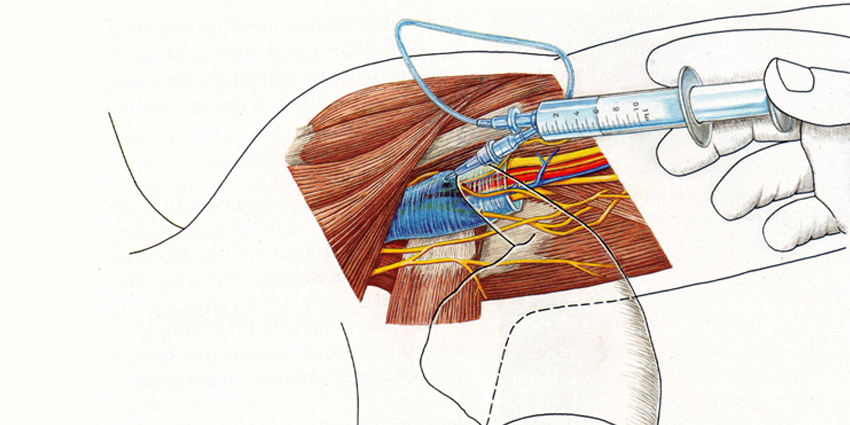
The NYU team began with a pericapsular nerve group block (regional) and modified it by adding a lateral femoral cutaneous nerve block, naming it the “lateral femoral with over the hip” block. This is the first study to look at the efficacy of this kind of regional nerve block as compared to both general and spinal anesthesia in hip fracture surgery.
“We have done much in the area of anesthesia and orthopedic outcomes,” said co-author Kenneth Egol, M.D. of NYU Langone Health, to OTW. “We have already reported on using local only for certain hip fractures, which is published. There is also literature on using regional blocks such as this for postoperative pain control.”
40x40x40
The NYU team looked at 40 patients (November 2021-February 2022) surgically treated for intertrochanteric and femoral neck hip fractures who had the lateral femoral with over the hip block and sedation, a regional hip analgesic that targets the lateral femoral cutaneous nerve, articular branches of femoral nerve, and accessory obturator nerve. They used a matched cohort of 40 patients who underwent general anesthesia and 40 patients who had spinal anesthesia.
The team found evidence that physiologic parameters during surgery were more stable in the lateral femoral with over the hip block group. They reported having less bradycardia throughout the duration of their procedure as compared with those in the general or spinal cohorts (69.33 ± 13.3 bpm vs. 65.28 ± 12.6 bpm vs. 61.87 ± 10.5 bpm).
As for systolic blood pressure patients, the lateral femoral with over the hip block cohort had less of a blood pressure drop throughout the duration of their procedure compared with those in the general or spinal cohorts (98.62 ± 23.8 mm Hg vs. 92.13 ± 15.2 mm Hg vs. 86.35 ± 15.5 mm Hg).
In addition, the total OR time was at least 30 minutes shorter for those who had the lateral femoral with over the hip block cohort when compared with those who had general or spinal blocks (108.58 ± 32.3 minutes vs. 140.98 ± 38.4 minutes vs. 152.65 ± 41.9 minutes). Additionally, anesthesia time was the shortest for patients in the lateral femoral with over the hip block cohort (15.63 ± 6.8 minutes vs. 25.70 ± 11.6 minutes vs. 27.93 ± 17.4 minutes).
Dr. Egol told OTW, “We have taken it a step further and demonstrated that regional only (as opposed to general or spinal) is a safe and effective way to perform the actual surgery. The intraoperative physiologic parameters were very stable with this method. By using regional anesthesia only for hip fracture surgery, we are able to theoretically avoid some undesired effects of anesthesia such as post op delirium, spinal headache, and sore throats. In addition, patients have less postoperative pain and are able to ambulate almost immediately post op. This led to earlier hospital discharges.”
Boon for Outpatient Care
Although the researchers weren’t caught off guard by the results, said Dr. Egol to OTW, “But it is difficult to get anesthesiologists to change their engrained ways and consider this approach to patients. Over time and with more data I think that will change.”
“We are doing more and more outpatient surgery with regional anesthesia, and I think this is an advance in the care of the sickest patients we treat—hip fracture patients.”
Author
React:
Discussion
This is a fascinating development. In my practice we've seen similar outcomes with the revised protocol. The key differentiator seems to be patient selection criteria. Has anyone else noticed the correlation with BMI thresholds?
Great point. I'd push back slightly on the conclusion, the sample size in the cited study is too small to draw population-level inferences. That said, the directional signal is compelling and worth a larger RCT.
We implemented a similar approach last year. Early results are promising but we're still gathering 12-month follow-up data. Happy to share our protocol if anyone is interested.
Join the conversation
Orthopedic professionals are discussing this. Sign in and upgrade to read every comment and add your voice.