
A new UK-based company is marketing a genetic sequencing test to screen patients who are more likely to develop an adverse reaction to joint replacement implant metals. This company, which is based in Newcastle Upon Tyne, England, is named ExplantLab and, incidentally, has no contracts with orthopedic implant manufacturers.
Using Genetics to Screen Patients for Metal Sensitivities
2 min read Premium comments
Secondary#bloodmetaliontesting#explantlab#metalhypersensitivity
David Langton, M.R.C.S., Ph.D., director of ExplantLab and an orthopedic surgeon, told OTW, “Over twenty years ago, at University Hospital of North Tees in the United Kingdom, we began to implant several hundred hip resurfacings and large diameter metal on metal hips. We followed the patients closely, with regular clinical review, blood metal ion testing, and cross-sectional imaging.”
“For patients who underwent revision, the explanted prostheses were analyzed to determine the volumetric wear (from the bearings and taper junctions), and periprosthetic tissue specimens were examined to identify and grade the severity of delayed type metal hypersensitivity/aseptic lymphocyte-dominant vasculitis-associated lesion.”
“It became clear that greater wear rates were associated with an increased risk of failure secondary to delayed type metal hypersensitivity/aseptic lymphocyte-dominant vasculitis-associated lesion. But the magnitude of wear alone did not explain the entirety of the adverse clinical outcomes. It was clear that individuals can respond very differently to varying levels of metal exposure.”
“To investigate this further, we initially stratified patients into extreme phenotype groups. By this we mean that we first identified patients who developed delayed type metal hypersensitivity/aseptic lymphocyte-dominant vasculitis-associated lesion in response to relatively low wear, and we compared their human leukocyte antigen (HLA) genes to those who appeared resistant to developing aseptic lymphocyte-dominant vasculitis-associated lesion despite exposure to implants wearing at high rates.”
“We identified significant differences in the gene distributions between these groups. As a result of these promising findings—which went on to win the British Hip Society Best Translational Research in 2019—we extended the research over the subsequent years to include more patients and centres in other countries.”
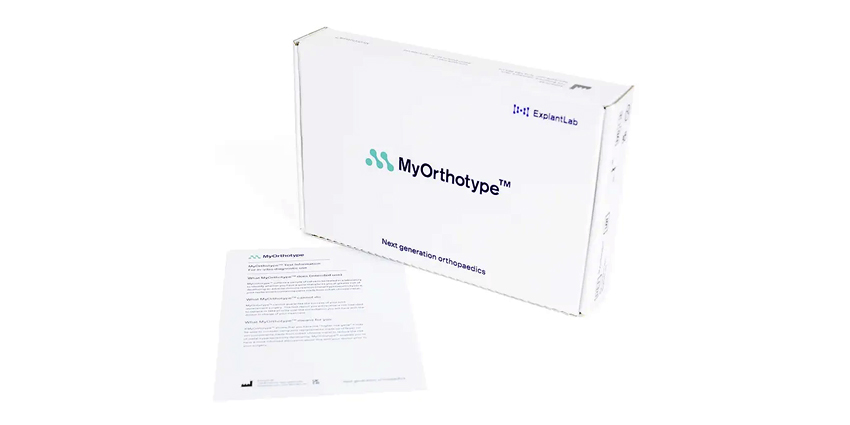
“Orthotype is a machine learning algorithm based on 15 years of international research involving over 600 patients, 176 of whom experienced prosthesis failure. The Orthotype Pre Op test incorporates a patient’s genotype, age and gender to present the risk of a patient developing delayed type metal hypersensitivity/aseptic lymphocyte-dominant vasculitis-associated lesion following implantation with a CoCr component.”
“With Orthotype Post Op, the patient’s genotype, age and sex are input, as well as the post op duration. Importantly, the concentrations of cobalt and chromium are also measured in the same blood sample using mass spectrometry. Orthotype Post Op can also give the surgeon an indicator of the current and future risk of lymphocyte involvement.”
“We hope that the launch of Orthotype could herald a new surgical era of personalized medicine in orthopaedics in which individuals routinely undergo genetic testing prior to receiving medical implants. This can help ensure implants are more likely to be well-tolerated first time round reducing the need for post-operative chronic pain management and repeat surgery—delivering better orthopaedic care and health outcomes for patients as well as potentially reducing the burden on healthcare systems.”
Author
React:
Discussion
This is a fascinating development. In my practice we've seen similar outcomes with the revised protocol. The key differentiator seems to be patient selection criteria. Has anyone else noticed the correlation with BMI thresholds?
Great point. I'd push back slightly on the conclusion, the sample size in the cited study is too small to draw population-level inferences. That said, the directional signal is compelling and worth a larger RCT.
We implemented a similar approach last year. Early results are promising but we're still gathering 12-month follow-up data. Happy to share our protocol if anyone is interested.
Join the conversation
Orthopedic professionals are discussing this. Sign in and upgrade to read every comment and add your voice.