
As a general proposition in orthopedic surgery, where metal, predominately, is implanted into bone, osseointegration—the term used to describe a biologic interface between bone tissue and metal—is a good thing. As the science of osseointegration has progressed, as porous metal constructs, new surface technologies and new osseoinductive coatings have emerged from various labs, the quality of osseointegration has improved significantly.
Osseointegrative Prosthetics: Live Longer or Shorter?
3 min read Premium comments
#amputation#osseointegration#intactlimb#suctionprostheses
And that, in turn, has encouraged surgeons to look at ever more aggressive applications of the osseointegration concept. In dental surgery, advanced osseointegration is the foundation for dental implants.
More recently, advanced osseointegration technologies have opened up an entire new specialty in treating people who have had a limb amputation.
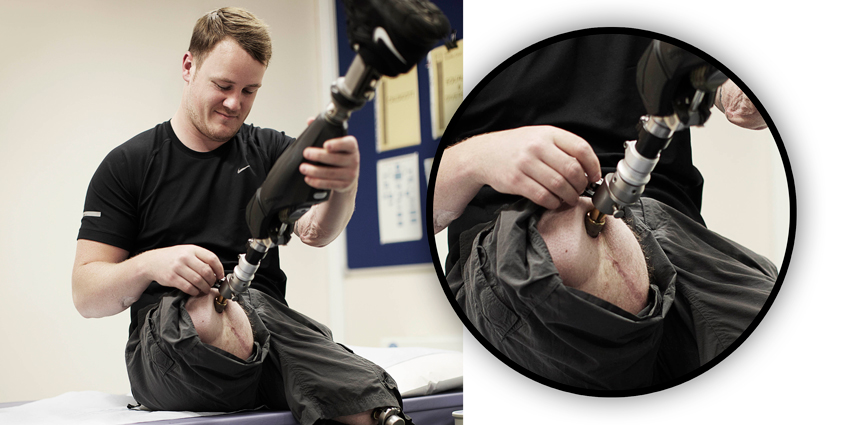
In those cases, osseointegration refers to inserting a metal implant into the bone of a residual limb, which then attaches directly to a prosthesis, indeed integrated directly to the skeleton. No longer does the amputee deal with socket-related issues.
Benefits seem clear, risks and long-term adverse events, not so much.
Benefits include:
- Higher level of customization and personalization
- Better alignment with the bone of the residual limb
- improves mobility (control of the prosthetic leg), energy transfer and control of the limb, thereby opening up athletics and a more vigorous lifestyle for the amputee
- Creates a more intimate, emotional connection with the prosthetic and increases the amputee’s awareness of position and movement
- Less nerve pain
- Finally, again, no more sockets and their related issues
Not surprisingly, for patients who have had femur, tibia, humerus, radius or ulna amputations, the idea of choosing an osseointegration implant is appealing and the practice of osseointegration is one of the faster growing sectors in orthopedics.
However, wondered a multi-national research team from the U.S., Australia, and Scotland, do the risks inherent in choosing an osseointegration prosthesis affect mortality rates?
The resulting study, “Association Between Osseointegration of Lower Extremity Amputation and Mortality Among Adults,” appears in the October 13, 2022, edition of JAMA Network Open.
Data for the study was collected from a prospectively maintained osseointegration registry, using the following criteria—“skeletally mature adults who:
- report pain or mobility dissatisfaction with their traditional compression and suction prostheses;
- have an intact limb with incapacitating pain, complex deformity, or profound distal weakness whose functional capacity is considered likely to be improved by amputation; or
- have recently undergone amputation and prefer osseointegration to traditional socket prosthesis rehabilitation.”
To establish a baseline for their study, the research team first identified all patients who had died—regardless of cause—using both medical records and a review of the osseointegration registry. This was not a trivial activity and required the team to reach out to long gone patients. “For patients for whom the interval since their most recent review was longer than one year,” wrote the authors, “we attempted to contact them or their family; if unsuccessful, we performed searches in Google and on social media platforms (Facebook, Instagram, Tik Tok, and Twitter).”
“Of 485 patients, 398 (82.1%) were contacted within the prior 1 year, 455 (93.8%) were contacted within the prior two years, and 30 (6.2%) were contacted more than two years before this study. The circumstances leading to death were ascertained either by medical record review or from information provided by family members.
All authors jointly discussed how to categorize each patient’s cause of death.
- unrelated to osseointegration,
- directly due to osseointegration-related complications, and/or
- due to preexisting health problems exacerbated by osseointegration.”
Co-author Jason Shih Hoellwarth, M.D., with the Limb Salvage and Amputation Reconstruction Center at Hospital for Special Surgery in Manhattan, summarized the team’s results to OTW: “In this cohort study of 485 patients who underwent transcutaneous osseointegration post amputation and were followed up for as long as 10 years, 19 patients (4%) died, including 17 who died of causes unrelated to osseointegration and two who died of osseointegration-related causes. Risk factors for mortality included increased age at osseointegration and the indication for amputation being either for vascular or infectious etiology; factors not associated with mortality risk included post-osseointegration infection and sex.”
“It is hoped that patients and clinicians have a lower concern of potentially dying from reasons associated with osseointegration, and therefore be more willing to consider having the very enabling surgery.”
Author
React:
Discussion
This is a fascinating development. In my practice we've seen similar outcomes with the revised protocol. The key differentiator seems to be patient selection criteria. Has anyone else noticed the correlation with BMI thresholds?
Great point. I'd push back slightly on the conclusion, the sample size in the cited study is too small to draw population-level inferences. That said, the directional signal is compelling and worth a larger RCT.
We implemented a similar approach last year. Early results are promising but we're still gathering 12-month follow-up data. Happy to share our protocol if anyone is interested.
Join the conversation
Orthopedic professionals are discussing this. Sign in and upgrade to read every comment and add your voice.