
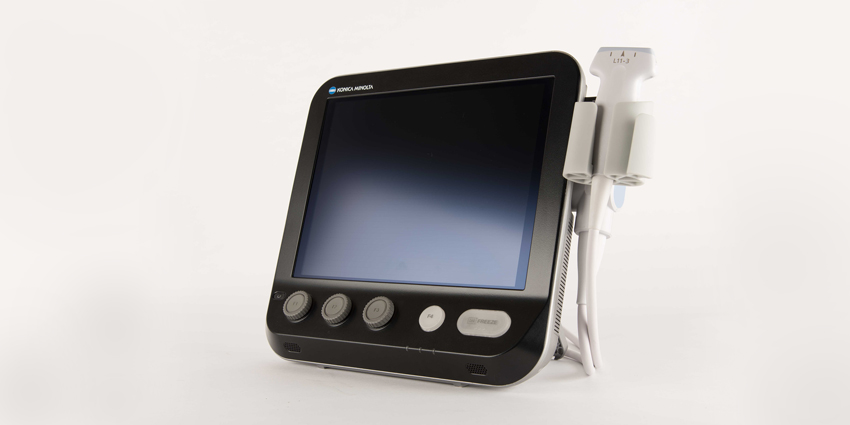
A new highly portable ultrasound imaging system is so small that physicians can pick it up and bring it to the bedside, exam room, or the OR. The detailed resolution of the system is meant to enhance the image quality of the color and grayscale modes, provide speckle reduction, and reduce grainy effects—even on smaller screens.
New Ultra-Portable Imaging System Unveiled
1 min read Premium comments
Secondary#imaging#konicaminoltahealthcareamericas#sonimagemx1platinumsystem
The new system is battery powered and is capable of delivering a continuous two-hour scan time. It also includes a suite of powerful transducers, including the L18-4 and HL18-4 wide-band frequency linear probes for musculoskeletal imaging exams.
The manufacturer of the new system is Konica Minolta Healthcare Americas, Inc. of Wayne, New Jersey. The system is branded: SONIMAGE MX1 Platinum System. The company plans to debut the system at the November 27-December 1, 2022, Annual Meeting of the Radiological Society of North American.
Joan Toth, Senior Product Marketing Manager, at Konica Minolta Healthcare Americas provided additional information about the new system to OTW. “In the development of the SONIMAGE MX1 Platinum, we combined musculoskeletal imaging from prior generations of Konica Minolta ultrasound systems with a new imaging algorithm developed by our engineers. That algorithm provides improved resolution and crystal-clear image quality, while maintaining frame rate. It provides improved image quality of the color and grayscale modes, delivers speckle reduction and applies a smoothing effect to reduce graininess—even on a compact monitor.”
Additionally, Toth explained, “The MX1 Platinum also offers one-touch image optimization as well as multiple imaging parameters, such as frequency, focus and compounding—all of which can be changed automatically by adjusting the depth. The Vascular NAVI also automatically adjusts the doppler cursor position, gate size, angle correction and steering angle; Simple Needle Visualization, an advanced algorithm, combines in-plane and out-of-plane method in order to improve needle visibility which, we hope, will help clinicians achieve optimal and accurate needle placement.”
Author
React:
Discussion
This is a fascinating development. In my practice we've seen similar outcomes with the revised protocol. The key differentiator seems to be patient selection criteria. Has anyone else noticed the correlation with BMI thresholds?
Great point. I'd push back slightly on the conclusion, the sample size in the cited study is too small to draw population-level inferences. That said, the directional signal is compelling and worth a larger RCT.
We implemented a similar approach last year. Early results are promising but we're still gathering 12-month follow-up data. Happy to share our protocol if anyone is interested.
Join the conversation
Orthopedic professionals are discussing this. Sign in and upgrade to read every comment and add your voice.