
Revision Bankart repair has a failure rate of 44%. To what extent is bone loss a factor? A new Walter Reed National Medical Center study, with contributions from U.S. military hospitals and institutions, found that bone loss did NOT seem to be a determining factor.
Is Bone Loss a Primary Factor in Bankart Failure?
2 min read Premium comments
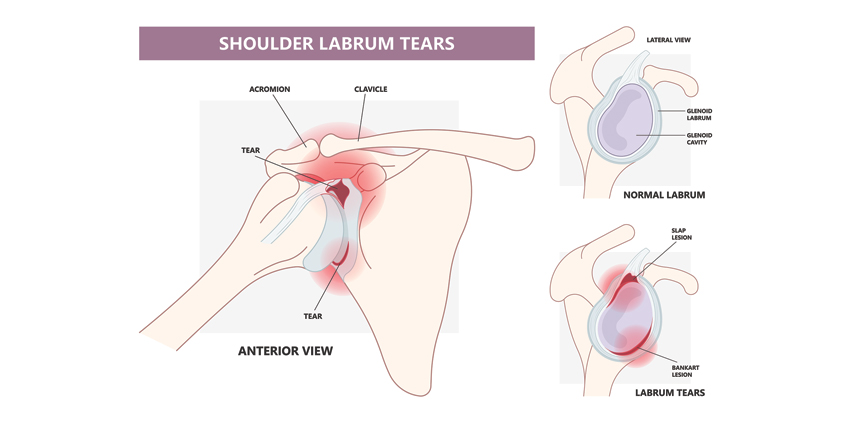
#shoulderinstabilitySecondary#boneloss#returntoduty
The new research, “Revision Arthroscopic Bankart Repair Results in High Failure Rates and a Low Return to Duty Rate Without Recurrent Instability,” was published online October 6, 2022 in the journal Arthroscopy.
In this study, the authors wanted to know what the rate of recurrent instability after revision arthroscopic stabilization for failed primary arthroscopic Bankart repair would be in a military population without critical bone loss.
Overall, 41 revision arthroscopic stabilizations conducted at a single military institution between 2005 and 2016 were included in the analysis. The average age at the revision surgery was 22.9 ± 4.3 years, and the majority of the patients were either service academy cadets or active duty combat arms soldiers.
Over a mean follow up of 7.8 years, 23 patients returned to duty without recurrent instability. Eighteen patients had recurrent instability after returning to duty. Glenoid bone loss was 6.2% (95% CI 3.2%, 9.2%) in the group that successfully return to duty and 5.7% (95% CI 3.1%, 8.3%) in the group who had recurrent instability (p = 0.808).
“Revision arthroscopic stabilization of failed primary arthroscopic Bankart repair has a failure rate of 44% in a young military population. The similar amounts of bone loss between groups indicates that bone loss is not the primary determinant of failure in revision arthroscopic stabilization,” the researchers wrote.
Study authors include Sean E. Slaven, M.D., Walter Reed National Military Medical Center, Bethesda, Maryland; Michael A. Donohue, M.D., Keller Army Hospital, United States Military Academy, West Point, New York; Robert A. Tardif, M.D., Naval Medical Center Portsmouth, Portsmouth, Portsmouth, Virginia; Kevin A. Foley, M.D., Naval Medical Center Portsmouth, Portsmouth, Virginia; Lance E. LeClere, M.D., Vanderbilt University Medical Center, Nashville, Tennessee; Kenneth L. Cameron, Ph.D., MPH, ATC, Keller Army Hospital, United States Military Academy, West Point, New York; Jeffrey R. Giuliani, M.D., INOVA Orthopaedics & Sports Medicine, Fairfax, Virginia; Matthew A. Posner, M.D., Keller Army Hospital, United States Military Academy, West Point, New York; and Jonathan F. Dickens, M.D., of Duke University Athletics, Durham, North Carolina.
Author
React:
Discussion
This is a fascinating development. In my practice we've seen similar outcomes with the revised protocol. The key differentiator seems to be patient selection criteria. Has anyone else noticed the correlation with BMI thresholds?
Great point. I'd push back slightly on the conclusion, the sample size in the cited study is too small to draw population-level inferences. That said, the directional signal is compelling and worth a larger RCT.
We implemented a similar approach last year. Early results are promising but we're still gathering 12-month follow-up data. Happy to share our protocol if anyone is interested.
Join the conversation
Orthopedic professionals are discussing this. Sign in and upgrade to read every comment and add your voice.