
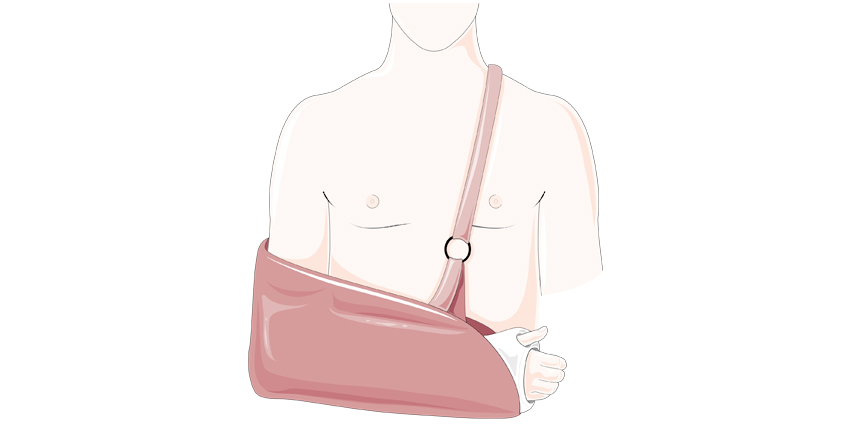
Sling compliance is known to improve outcomes after shoulder surgery, but not all patients follow their surgeon’s instructions completely. A new study finds that certain factors appear to predict if a patient will comply with wearing a sling after surgery.
How to Predict Which Patients Will Wear Their Slings
2 min read Premium comments
#shouldersurgerySecondary#slingcompliance
The study, “The Effect of Patients’ Understanding of Sling Necessity and Home Assistance on Sling Wear After Shoulder Surgery,” was published online on November 9, 2022, in The American Journal of Sports Medicine.
In their study, the University of Maryland research team wanted to determine the extent to which perioperative education and socioeconomic factors, particularly postoperative home assistance and social compliance influence sling compliance.
For the study, the team collected data from 66 patients who had been treated with shoulder surgery between 2018 and 2020. All patients were 18 years of age or older and had been asked to wear a sling for at least 1 month after the procedure.
Sling wear compliance was measured using a temperature-sensing device. At 6 weeks postoperatively patients were asked to complete the Medical Adherence Measure questionnaire to evaluate their understanding of sling necessity. Patient responses were quantified using the Patient Understanding Grading Scale with grade 1 indicating the least technical knowledge. The researchers also evaluated patient characteristics, social deprivation (Area Deprivation Index), and home assistance.
Overall, there were no significant baseline characteristic differences between the patients.
Patients with grade 2 (β, 48.2 hours; p = .007) and grade 3 (β, 59.5 hours; p = .003) on the Patient Understanding Grading Scale wore their slings significantly more than grade 1 patients.
In addition, patients with home assistance had significantly greater day hours (73.5 ± 33.0 vs 44.0 ± 24.5 hours; p = .037) of sling wear per week. There was no difference in night sling hours.
The researchers also found that patients older than 60 wore their slings more, but that men and those with a higher body mass index wore theirs less. Area Deprivation Index was not significantly associated with sling wear though.
Finally, the evidence from the study showed that the greater a patient’s understanding for sling necessity and home assistance the more likely they were to comply with sling usage.
Study authors include Michael G. Livesey, M.D., Tristan B. Weir, M.D., Jacqueline L. Addona, B.S., Ryan A. Curto, B.A., Anuj Apte, B.S., Marcus Hughes, B.S., Blessing Enobun, M.D., M.P.H., R. Frank Henn, III, M.D., S. Ashfaq Hasan, M.D., and Mohit N. Gilotra, M.D., M.S., all of the University of Maryland School of Medicine in Baltimore, Maryland.
Author
React:
Discussion
This is a fascinating development. In my practice we've seen similar outcomes with the revised protocol. The key differentiator seems to be patient selection criteria. Has anyone else noticed the correlation with BMI thresholds?
Great point. I'd push back slightly on the conclusion, the sample size in the cited study is too small to draw population-level inferences. That said, the directional signal is compelling and worth a larger RCT.
We implemented a similar approach last year. Early results are promising but we're still gathering 12-month follow-up data. Happy to share our protocol if anyone is interested.
Join the conversation
Orthopedic professionals are discussing this. Sign in and upgrade to read every comment and add your voice.