
The U.S. Food and Drug Administration (FDA) has granted 510(k) clearance to a smaller-diameter, intramedullary implant for pelvic fracture fixation.
FDA Clears Curved Pelvis Fracture Fixation Nail
2 min read Premium comments
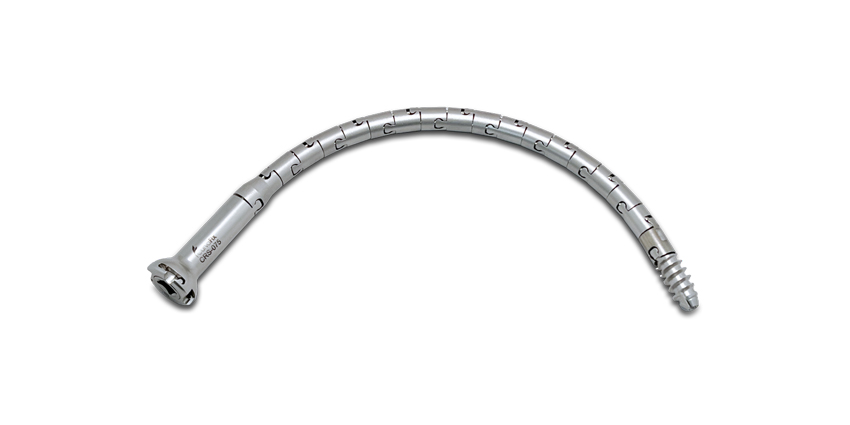
Secondary#curvafixOrthopaedic Crossfire®#curvafiximsystem
According to the device summary, the system is a “collection of flexible intramedullary devices for pelvic fracture fixation. The devices have a threaded, self-tapping distal end and a driving torque interface at the proximal end.”
Additionally, “An integral shape lock feature changes the IM Implant from a flexible to rigid state after implantation. The IM Implant can be returned to a flexible state should device explant be required. The implants are available in two diameters (7.5mm and 9.5mm) and lengths ranging from 90mm to 180mm to accommodate a variety of anatomic requirements.”
The device name is CurvaFix® IM System. Per the summary, it is intended for fixation of fractures of the pelvis.
The primary predicate device is the CurvaFix Intramedullary Rodscrew System. The CurvaFix IM System and the predicate device have identical indications for use with the exception of the product name. According to the device summary, the differences between the two include “major diameter, length range, minor diameter, attachment of the distal end, cable pathway, cable design, bead shape and orientation, and minor instrument modifications.”
Bellevue, Washington-based CurvaFix, Inc. is a privately held medical device company. It submitted the 510(k) application.
CurvaFix CEO Steve Dimmer told OTW, “CurvaFix is the only company developing a curved implant for pelvic fracture fixation. Existing fixation methods require lengthy, morbid surgical procedures and can result in suboptimal bone fixation, which causes pain, slows recovery, and contribute to long-term disability. Moreover, current surgical procedures with straight screws can be prone to fixation failure, and procedures with bone plates can require hours of operating room time.”
Dimmer continued, “The CurvaFix® IM Implant is the only implant capable of following the natural bone curvature to fill space within the bone, designed to offer a less invasive, shorter surgery for pelvic fracture patients with a quicker recovery. The implant has interlocking segments that provide flexibility during implantation over a steerable guidewire. After implantation, the surgeon locks the CurvaFix Implant curvature—making the device rigid—by setting the patented lock. Now that we have FDA clearance for our new, 7.5mm device, we can offer our novel, curved device in two diameters and lengths, meeting the needs of surgeons for a vast majority of patients of all sizes. Our new device may be especially helpful for petite women.”
Per the press release, the system has been shown to address pelvic fracture fixation challenges like dysmorphic sacra and curved superior rami. It also allows surgeons to address fragility fractures of the pelvis in geriatric patients by “providing strong fixation in weak bone with a minimally invasive procedure.”
Author
React:
Discussion
This is a fascinating development. In my practice we've seen similar outcomes with the revised protocol. The key differentiator seems to be patient selection criteria. Has anyone else noticed the correlation with BMI thresholds?
Great point. I'd push back slightly on the conclusion, the sample size in the cited study is too small to draw population-level inferences. That said, the directional signal is compelling and worth a larger RCT.
We implemented a similar approach last year. Early results are promising but we're still gathering 12-month follow-up data. Happy to share our protocol if anyone is interested.
Join the conversation
Orthopedic professionals are discussing this. Sign in and upgrade to read every comment and add your voice.