
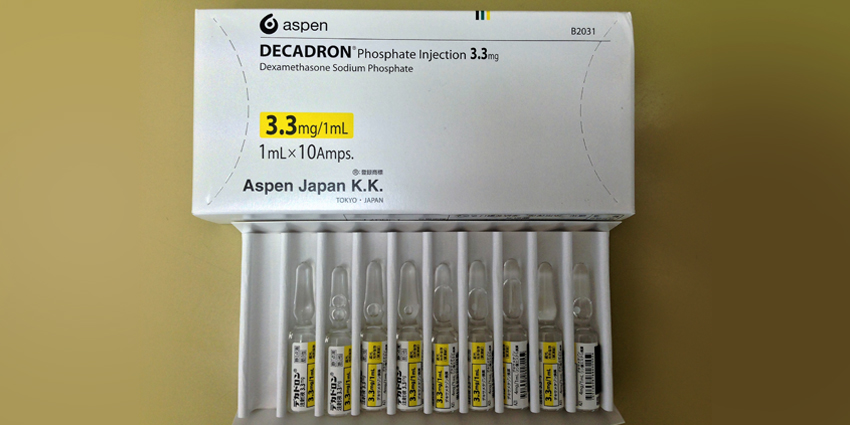
New work from Keck Medicine of the University of Southern California (USC) tackled the, perhaps, provocative question, What’s the connection, if any, between intraoperative dexamethasone use and rates of periprosthetic joint infection?
What’s the Connection Between Dexamethasone and Joint Infection?
2 min read Premium comments
#periprostheticjointinfection#totaljointarthroplastySecondary#dexamethasone
The study, which collected data from a large population-wide cohort, was titled, “Is Intraoperative Dexamethasone Utilization Associated With Increased Rates of Periprosthetic Joint Infection Following Total Joint Arthroplasty?” It appears in the August 28, 2022, edition of The Journal of Arthroplasty.
Co-author Nathanael Heckmann, M.D., orthopedic surgeon with Keck Medicine of USC, explained the genesis of the study to OTW, “In the last few years, dexamethasone utilization has become increasingly common in multimodal regimens for management of pain and postoperative nausea and vomiting following total joint arthroplasty (TJA).”
“However, little is known about its association with periprosthetic joint infections (PJI) as only a few studies with limited sample sizes have sought to characterize this relationship. Additionally, PJIs are relatively rare complications, which further limits our ability to understand these events.”
“Given the paucity of literature around this increasingly utilized medication, our group felt it necessary to investigate the association between perioperative dexamethasone and periprosthetic joint infections using a large, nationally-representative database.”
The researchers used the Premier Healthcare Database, a nationally representative database with information from over 1,000 hospitals, to obtain information on all patients who underwent primary elective total hip arthroplasty (THA) or total knee arthroplasty (TKA) from January 1, 2015, to December 31, 2020. Of those considered for this study, 857,496 patients (64.1%) had THA and 474,707 (35.9%) had TKA. Of THA and TKA combined, 56.6% received intraoperative dexamethasone (THA: 56.8%; TKA: 56.5%) and 43.4% did not receive dexamethasone.
In TKA patients, dexamethasone was found to be associated with a lower risk of periprosthetic joint infection (adjusted odds ratio: 0.87) as well as other endpoints such as pulmonary embolism, deep vein thrombosis, and acute kidney injury. In patients who had THA, dexamethasone was associated with a lower risk of periprosthetic joint infection (adjusted odds ratio: 0.80) as well as other endpoints such as pulmonary embolism, deep vein thrombosis, acute kidney injury, and pneumonia.
Kevin Liu, an M.D. candidate at the USC Keck School of Medicine and co-author on this work, said, “Our data demonstrated a decreased risk of periprosthetic joint infection in TJA patients who received dexamethasone compared to those who did not. Ultimately, our study showed dexamethasone was not associated with increased risk of infectious complications, supporting its use in primary total hip and knee arthroplasty.”
“The growing demand for dexamethasone in the last few years was impressive. In 2015, we estimated 33,000 patients received dexamethasone compared to over 110,000 in 2020!”
Author
React:
Discussion
This is a fascinating development. In my practice we've seen similar outcomes with the revised protocol. The key differentiator seems to be patient selection criteria. Has anyone else noticed the correlation with BMI thresholds?
Great point. I'd push back slightly on the conclusion, the sample size in the cited study is too small to draw population-level inferences. That said, the directional signal is compelling and worth a larger RCT.
We implemented a similar approach last year. Early results are promising but we're still gathering 12-month follow-up data. Happy to share our protocol if anyone is interested.
Join the conversation
Orthopedic professionals are discussing this. Sign in and upgrade to read every comment and add your voice.