
Poor sagittal balance has only a limited role in the risk for revisions for adjacent segment disease after lumbar spine fusion for degenerative lumbar spine disorders, according to a new study.
Sagittal Balance Plays Limited Role in Adjacent Segment Disease
1 min read Premium comments
Secondary#riskfactors#sagittalbalanceadjacentsegmentdisease#spinalfusion
The study, “Postoperative Sagittal Balance Has Only a Limited Role in the Development of Adjacent Segment Disease After Lumbar Spine Fusion for Degenerative Lumbar Spine Disorders: A Subanalysis of the 10-year Follow-up Study,” was published in the October 1, 2022 issue of the journal Spine.
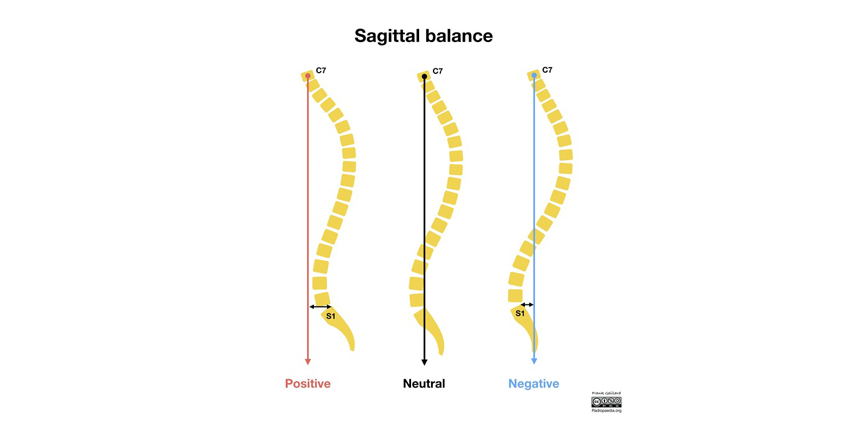
Multiple risk factors can play a role in the need for revisions for adjacent segment disease after lumbar spine fusion for degenerative disease, the researchers say. While postoperative sagittal balance is one of those risk factors, it hasn’t been shown to be a major one.
The researchers analyzed data for 215 patients who had consecutively undergone an elective lumbar spine fusion surgery for spinal stenosis with or without spondylolisthesis. Eighty percent of the patients had spondylolisthesis. They evaluated preoperative and postoperative sagittal alignment using standing radiographs and compared spinal reoperations.
According to their findings, poor postoperative balance [pelvic incidence−lumbar lordosis (LL) >9°] did not significantly increase the risk of revision for adjacent segment disease: crude hazard ration (HR) = 1.5 [95% CI: 0.8-2.7], adjusted (by age, sex, pelvic incidence, fusion length, and the level of the caudal end of fusion): HR = 1.7 (95% CI: 0.9-3.3).
The researchers also found higher pelvic incidence-lumbar lordosis outside the fusion segment to decrease the risk of revisions for adjacent segment disease: HR = 0.9 (95% CI: 0.9-1.0).
“Poor sagittal balance has only a limited role as a risk factor for the revisions for adjacent segment disease among patients with degenerative spinal disease. However, the risk for adjacent segment disease might be the greatest among patients with reduced spinal mobility,” the researchers wrote.
Study authors included Leevi A. Toivonen, M.D., Heikki Mäntymäki, M.D., and Marko H. Neva, M.D., Ph.D., all of the University of Tampere, Tampere, Finland. Arja Häkkinen, Ph.D. of the University of Jyyäskylä, Jyyäskylä, Finland and Hannu Kautiainen, Ph.D., of Kuopio University Hospital, in Kuopio, Finland and Folkhälsan Research Center, Helsinki, Finland, also contributed to the study.
Author
React:
Discussion
This is a fascinating development. In my practice we've seen similar outcomes with the revised protocol. The key differentiator seems to be patient selection criteria. Has anyone else noticed the correlation with BMI thresholds?
Great point. I'd push back slightly on the conclusion, the sample size in the cited study is too small to draw population-level inferences. That said, the directional signal is compelling and worth a larger RCT.
We implemented a similar approach last year. Early results are promising but we're still gathering 12-month follow-up data. Happy to share our protocol if anyone is interested.
Join the conversation
Orthopedic professionals are discussing this. Sign in and upgrade to read every comment and add your voice.