
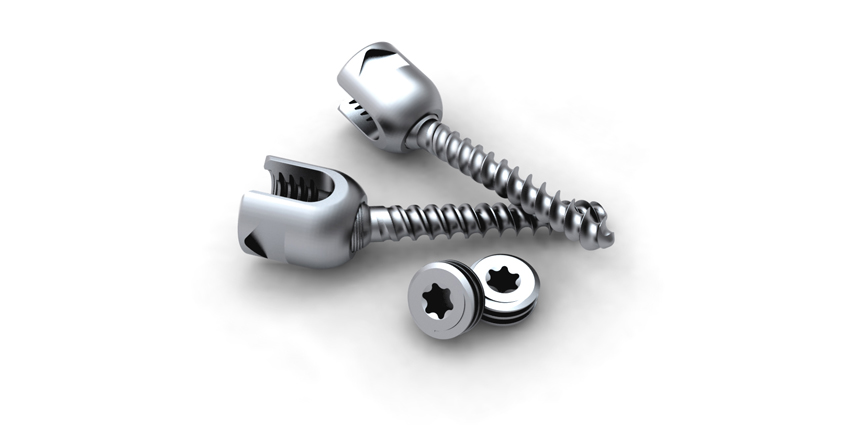
Robotic and/or navigation assisted pedicle screw placement is both safer and more accurate than fluoroscopic freehand screw placement in spine surgery, according to a new retrospective, systematic review.
Robotic Assist vs Free-Hand Screw Placement: Which Wins?
1 min read Premium comments
Secondary#fluoroscopicfreehandscrews#roboticandnavigatedpediclescrews
The study, “Robotic and Navigated Pedicle Screws Are Safer and More Accurate than Fluoroscopic Freehand Screws: A Systematic Review and Meta-Analysis,” was published online in The Spine Journal on October 20, 2022.
“Navigated and robotic pedicle screw placement systems have been developed to improve the accuracy of screw placement. However, the literature comparing the safety and accuracy of robotic and navigated screw placement with fluoroscopic freehand screw placement in thoracolumbar spine surgery has been limited,” wrote the research team from both the University of Cincinnati and University of Texas Southwestern Medical School.
The study only included randomized controlled trials comparing robotic-assisted or navigated pedicle screws placement with freehand pedicle screw placement in the thoracolumbar spine. The primary outcome measure was the odds ratio estimated for screw accuracy based on the Gertzbein-Robbins scale and relative risk for surgical complications.
The final analysis included 14 papers, 12 randomized controlled trials, 892 patients and 4,046 screws. In the pooled analysis, the robotic and navigated pedicle screw placement techniques were associated with higher odds of screw accuracy (OR 2.66, 95% CI 1.24-5.72, p = 0.01).
The robotic and screw placement was also associated with a lower risk of facet joint violations (RR 0.09, 95% CI 0.02-0.38, p < 0.01) and major complications (RR 0.31, 95% CI 0.11-0.84, p = 0.02).
When it came to nerve root injury (RR 0.50, 95% CI 0.11-2.30, p = 0.37) or return to operating room for screw revision (RR 0.28, 95% CI 0.07-1.13, p = 0.07), there were no observed differences between the groups.
The researchers said additional randomized controlled trials will be needed to further validate their findings.
Study authors included Abhijith V. Matur, Paolo Palmisciano, Henry O. Duah, Joseph S. Cheng and Owoicho Adogwa, all of the University of Cincinnati in Cincinnati, Ohio. Sai S. Chilakapati from the University of Texas Southwestern Medical School in Dallas, Texas also contributed to the study.
Author
React:
Discussion
This is a fascinating development. In my practice we've seen similar outcomes with the revised protocol. The key differentiator seems to be patient selection criteria. Has anyone else noticed the correlation with BMI thresholds?
Great point. I'd push back slightly on the conclusion, the sample size in the cited study is too small to draw population-level inferences. That said, the directional signal is compelling and worth a larger RCT.
We implemented a similar approach last year. Early results are promising but we're still gathering 12-month follow-up data. Happy to share our protocol if anyone is interested.
Join the conversation
Orthopedic professionals are discussing this. Sign in and upgrade to read every comment and add your voice.