
There exist a number of different joint preserving techniques for treating pre-arthritic, constitutional static (type C1) posterior shoulder instability. Among them would be, say the research team behind this new study, posterior glenoid open wedge osteotomy or bone graft augmentation. However, these are demanding techniques, and the reported complication and reoperation rates tend to be high. Furthermore, posterior decentering cannot be easily or reliably reversed.
PACS Shoulder Surgery Shines in New Study
2 min read Premium comments
Secondary#clinicaloutcomes#posteriorshoulderstability#shoulderpain
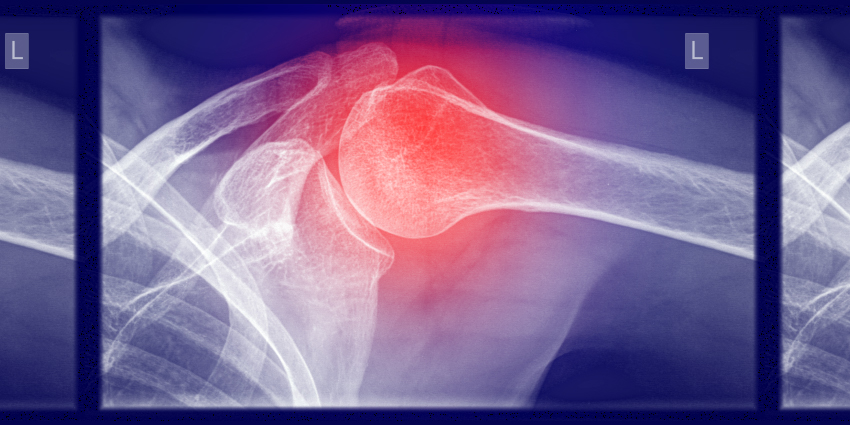
Enter arthroscopic Posterior Articular Coverage and Shift Surgery or PACS. According to a new study from the famous Charité hospital in Berlin, this procedure significantly improved outcome scores in patients who had pre-osteoarthritic constitutional static posterior shoulder instability—particularly for younger patients with less severe glenoid retroversion and posterior decentering of the humeral head.
This retrospective analysis was based on data from 14 shoulders in 13 patients who had undergone an arthroscopic PACS procedure for symptomatic pre-osteoarthritic constitutional static posterior instability (type C1). All the patients had gone through prior nonsurgical treatments that had failed.
The research team clinically evaluated each patient before surgery and at 3, 6, 12, and 24 months postoperatively and collected patient reported data regarding satisfaction and pain levels. The team also conducted a standardized physical examination, measured Subjective Shoulder Value, Western Ontario Shoulder Instability Index scores, Constant scores, and Rowe scores.
The team found that all patient reported outcome scores and pain levels improved significantly from preoperatively to postoperatively, and that the improvement was sustained over the follow-up period of 2 years (pain level, 6.4 preoperatively vs 3.3 at 2 years, p < .001; Subjective Shoulder Value, 40 vs 70, p = .001; Western Ontario Shoulder Instability Index score, 33 vs 56, p = .001; Constant, 70 vs 79, p = .049; Rowe, 52 vs 76, p < .001).
The mean glenohumeral and scapulohumeral subluxation indices were also significantly lower in the early postoperative period compared with preoperative measurements (glenohumeral, 52% ± 6% vs 58% ± 10%, p = .02; scapulohumeral, 70% ± 8%; vs 77% ± 9%, p = .002, respectively); however, they returned to baseline values at follow-up (57% ± 7% vs 58% ± 10%, p = .7; 75% ± 6% vs 77% ± 9%, p = .4, respectively).
Overall, the team found, a high scapulohumeral subluxation index, excessive glenoid retroversion, and increased posterior positioning of the humeral head in relation to scapular blade axis and older age was associated with worse clinical outcomes.
The researchers emphasized that although the PACS procedure led to improved outcome scores, that like other techniques, doctors and patients need to understand that it cannot reverse the underlying cause or stop the progression of the disease.
The study, “Arthroscopic Posterior Articular Coverage and Shift (PACS) Procedure for Treatment of Preosteoarthritic Constitutional Static Posterior Shoulder Instability (Type C1),” was published online September 30, 2022, in The American Journal of Sports Medicine.
Study authors included Henry Gebauer, Alp Paksoy, Paul Siegert, M.D., Christian Festbaum, M.D., Katja Rüttershoff, Lucca Lacheta, M.D., Kathi Thiele, M.D., and Doruk Akgün, M.D., all of Charité Universitaetsmedizin Berlin, in Berlin, Germany. Phillipp Moroder, M.D., of Schulthess Clinic in Zurich, Switzerland was the corresponding author.
Author
React:
Discussion
This is a fascinating development. In my practice we've seen similar outcomes with the revised protocol. The key differentiator seems to be patient selection criteria. Has anyone else noticed the correlation with BMI thresholds?
Great point. I'd push back slightly on the conclusion, the sample size in the cited study is too small to draw population-level inferences. That said, the directional signal is compelling and worth a larger RCT.
We implemented a similar approach last year. Early results are promising but we're still gathering 12-month follow-up data. Happy to share our protocol if anyone is interested.
Join the conversation
Orthopedic professionals are discussing this. Sign in and upgrade to read every comment and add your voice.