
The U.S. Food and Drug Administration has granted 510(k) clearance to a shoulder replacement system that facilitates the surgeon’s ability to adapt their approach to individual patient’s anatomy. The system is indicated for “anatomic, reverse and revision shoulder replacement.”
FDA 510(k) Clears Personalized Shoulder Replacement
2 min read Premium comments
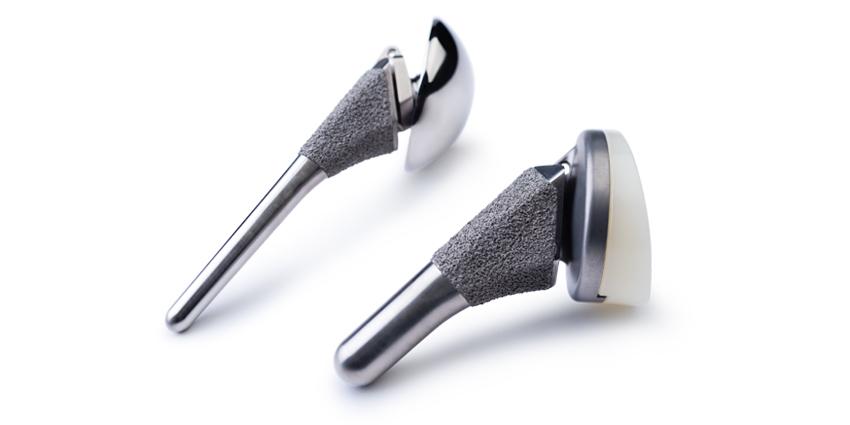
#shoulderarthroplasty#zimmerbiometSecondary#identityshouldersystem
Specifically, the indications for this new shoulder arthroplasty system, brand named The Identity™ Shoulder System and manufactured by Zimmer Biomet, are for hemiarthroplasty/conventional total shoulder replacement applications in cases of “non-inflammatory degenerative joint disease including osteoarthritis and avascular necrosis; rheumatoid arthritis; correction of functional deformity; fractures of the proximal humerus, where other methods of treatment are deemed inadequate; difficult clinical management problems, including cuff arthropathy, where other methods of treatment may not be suitable or may be inadequate.”
Furthermore, it is meant to be used “in patients whose shoulder joint has a grossly deficient rotator cuff with severe arthropathy and/or previously failed shoulder joint replacement with a grossly deficient rotator cuff. The patient must be anatomically and structurally suited to receive the implants and a functional deltoid muscle is necessary.”
Notably, this version of a shoulder arthroplasty system “uses proprietary technologies to align each surgeon’s approach to an individual patient’s anatomy, with the goal of alleviating pain and optimizing range of motion.” The proprietary technologies include “infinite humeral head offset placement” as well as glenoid options. The system was designed by the manufacturer to create and deploy patient specific surgical plans.
This system expands on the inlay and onlay reverse shoulder prosthesis designs with eight humeral tray combinations. The system gives “surgeons increased options for aligning the humerus (upper arm bone) with the glenoid (shoulder socket), without lengthening the arm.”
Additionally, the system is “designed to offer adaptability for potential revision procedures in the future.” This is provided via an allowance of additional joint space below resection.
Warsaw, Indiana-based Zimmer Inc. submitted the application.
William N. Levine, M.D., a member of the Identity Shoulder System development team and chair of the Department of Orthopedic Surgery at Columbia University’s College of Physicians and Surgeons added, “The Identity Shoulder System was designed to help surgeons restore center of rotation and achieve optimal range of motion after reverse shoulder replacements, a main goal of these procedures. Shoulder specialists will value this system’s adaptability and flexibility to support their unique surgical approaches and complement diverse patient anatomies.”
Author
React:
Discussion
This is a fascinating development. In my practice we've seen similar outcomes with the revised protocol. The key differentiator seems to be patient selection criteria. Has anyone else noticed the correlation with BMI thresholds?
Great point. I'd push back slightly on the conclusion, the sample size in the cited study is too small to draw population-level inferences. That said, the directional signal is compelling and worth a larger RCT.
We implemented a similar approach last year. Early results are promising but we're still gathering 12-month follow-up data. Happy to share our protocol if anyone is interested.
Join the conversation
Orthopedic professionals are discussing this. Sign in and upgrade to read every comment and add your voice.