
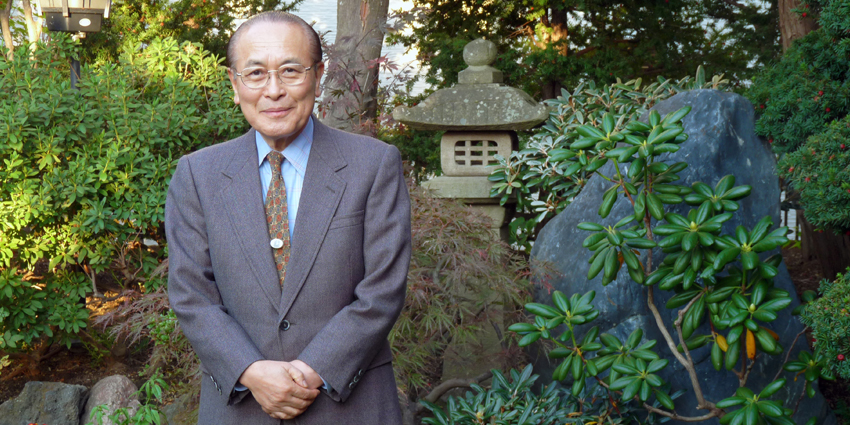
The ever patient teacher, lecturer, and early pioneer of spine surgery, Professor Kiyoshi Kaneda passed away in his beloved Sapporo, Japan, on October 9, 2022, at the age of 86 years.
A Giant Upon Whose Shoulders We Stand Has Died
4 min read Premium comments
Remembrances#obituary#kanedadevice#klyoshikaneda
Well known to multiple generations of spine and neurosurgeons, Professor Kaneda won the prestigious Wiltse Award twice—once from the International Society for Study of the Lumbar Spine (ISSLS’s Wiltse Lifetime Achievement Award) in 2004 and in 2011 from the North American Spine Society (NASS).
In 2010, Professor Kaneda was awarded the Harrington Award by the Scoliosis Research Society at the spectacular Kyoto International Conference Center. In 2000 he won the Orthopaedic Research Society’s Arthur B. Steindler Award.
Professor Kaneda’s pivotal role in the history and development of Japanese and global spine surgery in advancing the care of patients with severe spinal deformities cannot be overstated. He is, among his other many accomplishments, the inventor of the Kaneda Dual Rod system.
In 2011, OTW was privileged to meet and interview Professor Kaneda. Here is a portion of that interview.
OTW: Professor Kaneda, congratulations on being selected the 2011 winner of the North American Spine Society’s prestigious Leon Wiltse Award. What were some of the most important influences in your career and development as a Professor and international leader in spine surgery?
Professor Kaneda: “Thank you. I am honored and privileged to receive the Leon Wiltse Award from the Society. Looking back, I would like to first recognize Harvard University’s Professor John Hall. He extended an invitation to me to be a spine fellow with him at Harvard University in the 1970s. I didn’t speak very much English at the time. But I went to Boston. After his lectures, Professor Hall would take the time to explain further his lectures. It was from Professor Hall that I began to learn anterior approaches for treating spinal deformities. I studied the Zielke, Dwyer, and Texas Scottish Rite approaches. In 1979 I returned to Japan and brought the anterior rod approach with me. But we had problems and difficulties. The single rod system couldn’t handle the loads.”
OTW: Can you describe how you developed the Kaneda Dual Rod System?
Professor Kaneda: “Biomechanically, the single rod system has weaknesses. It only works in two dimensions. So, we started testing a two rod design. With a dual rod, we were able to address spinal instability within a three dimension approach. The rods in the dual rod system were skinnier, but they provided more stability than a single rod. We have found that the dual rod system is effective for stabilization in many indications including deformities and vertebral fractures.”
Professor’s Kaneda served as professor and chairman of orthopedic surgery at Hokkaido University in Sapporo, Japan. Kaneda worked with Professor Manohar M. Panjabi, a Yale University expert on spinal trauma, and inspired his spine fellows to publish a significant body of biomechanical research.
Kaneda served as President of the International Society for the Study of the Lumbar Spine in 1996, an organization he’d been part of since 1981.
Kaneda was born in Fukushima Prefecture in Japan in 1936. He earned his medical degree at Hokkaido University School of Medicine in Sapporo, Japan, in 1962, completed an internship at Kyoto University Hospital and finished his orthopedic residency at Hokkaido University.
Kaneda was awarded a visiting clinical fellowship to learn scoliosis surgery and spinal instrumentation from Professor John E. Hall at Harvard Medical School and The Children’s Hospital Medical Center in Boston. He was inspired by Hall’s surgical techniques for anterior thoracolumbar instrumentation surgery known as “Dwyer instrumentation” and went on to further develop the techniques in his own practice.
After his fellowship, he returned to Hokkaido University and focused on scoliosis and spine surgeries. It was in early 1980s that he developed the Kaneda device and applied it treating thoracolumbar spinal injuries.
“Amazingly, even after making historic achievement, he read abstract book end to end and kept acquiring new knowledge throughout his life. He was a great surgeon, a great researcher, and a great teacher for us,” wrote Mashairo Kanayma, of the International Society for the Study of the Lumbar Spine.
Professor Kaneda’s legacy lives on in two principal forms – the patients he healed and the surgeons he trained. Here is a partial list of Professor Kaneda’s fellows and a small measure of the esteem his colleagues, to this day, hold him.
Partial List of Kaneda’s Spine Research Fellows
Osamu Shirado, M.D., Ph.D.
Assistant Professor, Saitama Medical University, Saitama, Japan
Received Ph.D., 1990, Hokkaido University.
Yasuhiro Shono, M.D., Ph.D.
Lecturer, Hokkaido University School of Medicine, Sapporo, Japan
Received Ph.D., 1992, Hokkaido University.
Yoshihisa Kotani, M.D., Ph.D.
Assistant Professor, Hokkaido University School of Medicine, Sapporo, Japan
Received Ph.D., 1994, Hokkaido University.
Masahiro Kanayama, M.D., Ph.D.
Assistant Professor, Hokkaido University School of Medicine, Sapporo, Japan
Received Ph.D., 1997, Hokkaido University.
Itaru Oda, M.D., Ph.D.
Lecturer, Hokkaido University School of Medicine, Sapporo, Japan
Received Ph.D., 1999, Hokkaido University.
Norimichi Shimamoto, M.D., Ph.D.
Lecturer, Hokkaido University School of Medicine, Sapporo, Japan
Received Ph.D., 2001 Hokkaido University.
Jun Kikkawa, M.D., Ph.D.
Lecturer, Saitama University School of Medicine, Saitama, Japan
Received Ph.D., 2009, Saitama University.
Hidemasa Umekoji, M.D., Ph.D.
Lecturer, Saitama University School of Medicine, Saitama, Japan
Received Ph.D., 2011, Saitama University.
Research Awards Presented to Kaneda’s Fellows
2009 Whitecloud Award for Best Basic Science Paper. 16th Annual Meeting of the International Meeting of Advanced Spine Techniques (IMAST).
2002 Best Paper of the Society Award – Japanese Scoliosis Research Society.
2002 North American Spine Society (NASS) Award for Basic Science Spinal Research
2001 North American Spine Society (NASS) Award for Basic Science Spinal Research
2001 Moe Exhibit Award, Scoliosis Research Society
1998 Moe Exhibit Award, Scoliosis Research Society
1998 Japanese Spine Research Society Award for Basic Science
1992 Cervical Spine Research Society (CSRS) Basic Science Research Award
1991 North American Spine Society (NASS) Award for Spinal Research
1991 American Orthopaedic Association (AOA) Award for Orthopaedic Spinal Research
1991 Cervical Spine Research Society (CSRS) Residents Award for Cervical Spine Research
Author
React:
Discussion
This is a fascinating development. In my practice we've seen similar outcomes with the revised protocol. The key differentiator seems to be patient selection criteria. Has anyone else noticed the correlation with BMI thresholds?
Great point. I'd push back slightly on the conclusion, the sample size in the cited study is too small to draw population-level inferences. That said, the directional signal is compelling and worth a larger RCT.
We implemented a similar approach last year. Early results are promising but we're still gathering 12-month follow-up data. Happy to share our protocol if anyone is interested.
Join the conversation
Orthopedic professionals are discussing this. Sign in and upgrade to read every comment and add your voice.