
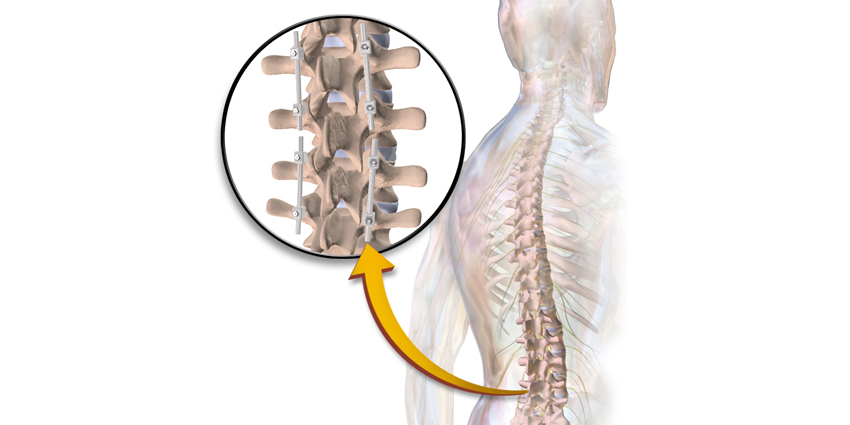
New work from Shriners Children’s Philadelphia has examined whether anterior vertebral body tethering for adolescent idiopathic scoliosis (AIS) is better at preserving trunk motion than posterior spinal fusion. The study, “Trunk Range of Motion and Patient Outcomes After Anterior Vertebral Body Tethering Versus Posterior Spinal Fusion: Comparison Using Computerized 3D Motion Capture Technology,” appears in the September 7, 2022, edition of The Journal of Bone and Joint Surgery.
Tethering vs Fusion for Adolescent Scoliosis: New Study
2 min read Premium comments
#adolescentidiopathicscoliosisSecondary#anteriorvertebralbodytethering#posteriorspinalfusion
Joshua Pahys, M.D., co-author on the work explained the background of the study to OTW, “After its FDA approval in 2019, the number anterior vertebral body tethering procedures being performed as an alternative to traditional posterior spinal fusion for AIS increased.”
“Anterior vertebral body tethering is postulated to preserve motion compared to posterior spinal fusion, however there is very little data on postoperative motion that exists to date. Therefore, our center began assessing every anterior vertebral body tethering and posterior spinal fusion patient using a validated computerized 3D model in an effort to objectively evaluate patients’ trunk motion before and after surgery to help answer this question.”
Level Matters
“We found that patients undergoing posterior spinal fusion lose approximately 7 degrees of flexion for every additional level fused below L1, whereas anterior vertebral body tethering patients experienced predominantly less motion loss at two years postoperatively regardless of the lowest instrumented vertebra.”
“Most interestingly, we found that thoracic posterior spinal fusion (lowest instrumented vertebra at or above L1) and thoracic anterior vertebral body tethering (lowest instrumented vertebra at or above L1) patients had relatively similar trunk motion at two years postop.”
“Complication and revision rates have been reported in several studies as being considerably higher for anterior vertebral body tethering compared to posterior spinal fusion.”
“Therefore, given these findings coupled with similar outcome scores for both groups, we advocate for thoracic posterior spinal fusion over anterior vertebral body tethering for most Lenke 1 and 2 curves if the lowest instrumented vertebra is at or above L1, as the additional preservation of motion with anterior vertebral body tethering would be expected to be relatively modest at best.”
“Significant differences in postoperative motion were only seen in lumbar posterior spinal fusion vs. lumbar anterior vertebral body tethering patients. We also found that the preoperative curve size and flexibility did not have any impact on trunk motion before or after surgery. Both anterior vertebral body tethering and posterior spinal fusion groups had similar significant improvements in their outcome scores.”
“We have already changed our practice and are currently performing considerably fewer thoracic-only anterior vertebral body tethering procedures. Our thoracic posterior spinal fusion patients are doing well, and the vast majority have returned to their preoperative activities/sports.”
“We will continue to collect trunk motion data on all of our anterior vertebral body tethering and posterior spinal fusion patients to confirm if the aforementioned findings persist with a larger patient cohort. We hope this study will help educate surgeons and families and assist in the shared decision-making and informed consent process.”
Author
React:
Discussion
This is a fascinating development. In my practice we've seen similar outcomes with the revised protocol. The key differentiator seems to be patient selection criteria. Has anyone else noticed the correlation with BMI thresholds?
Great point. I'd push back slightly on the conclusion, the sample size in the cited study is too small to draw population-level inferences. That said, the directional signal is compelling and worth a larger RCT.
We implemented a similar approach last year. Early results are promising but we're still gathering 12-month follow-up data. Happy to share our protocol if anyone is interested.
Join the conversation
Orthopedic professionals are discussing this. Sign in and upgrade to read every comment and add your voice.