
Elective total joint arthroplasty (TJA) was suspended in mid-March 2020 in New York and re-started, at one major New York City facility, Mount Sinai Hospital on June 8, 2020. Researchers from Icahn School of Medicine at Mount Sinai wondered if the pause because of COVID had any effect on total joint arthroplasty care patterns.
How Did COVID Change Arthroplasty Care Patterns?
2 min read Premium comments
#totalkneereplacement#totalhipreplacementSecondary#covid19
Their work, “Comparison of total joint arthroplasty care patterns prior to the Covid-19 pandemic and after resumption of elective surgery during the Covid-19 Outbreak: A retrospective, large urban academic center study,” was published in the October 1, 2022, edition of The Knee.
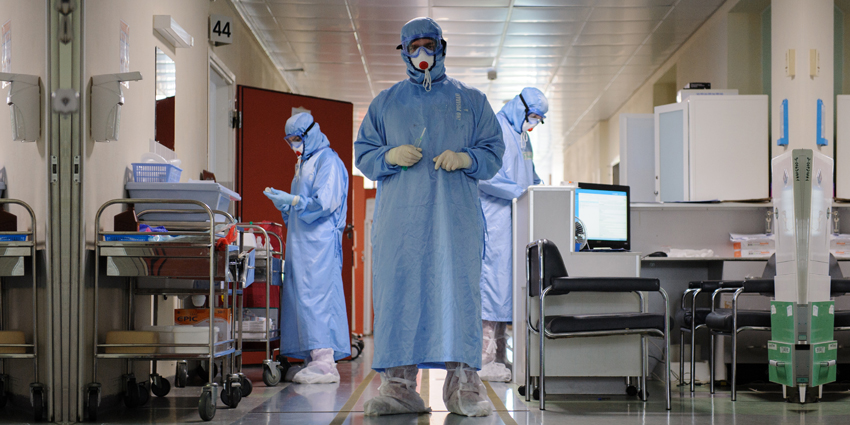
“The COVID-19 pandemic hit NYC particularly hard,” co-author Brett Hayden, M.D. told OTW. “The hospitals had to make rapid adjustments to accommodate the influx of inpatients and those with higher acuity of illness.”
“This forced orthopedic surgeons and the health system to re-evaluate the meaning of urgent, non-elective, and elective surgeries to care meet the public health need of those with musculoskeletal disease in the context of the larger pandemic. Even after the resumption of elective surgeries in June 2020, total joint replacement surgeons had to adjust patient pre- and postoperative care to make room for COVID patients.”
“This meant utilizing telemedicine, remote education, and decreasing length of stay after surgery, reducing readmissions, and discharging more often to home rather than acute or sub-acute rehabilitation facilities.”
Looking at 7,699 TJAs performed before and during the COVID-19 pandemic, the team collected data for three time periods:
- pre-pandemic (June 8–December 8, 2019); 4,221 procedures,
- initial period post-resumption of elective surgeries (June 8–September 8, 2020); 1,629 procedures, and
- later period post-resumption (September 9–December 8, 2020); 1,849 procedures.
Lower Length of Stays, Lower Readmission Risk
“In our analysis,” explained Dr. Hayden, “we found that patients who had total hip and knee replacement in the period immediately after the resumption of elective surgery had a significantly lower (>2-day) length of stay than patients prior to the pandemic.”
“In addition, we found a lower risk of readmission during the first 30 days after surgery in the initial resumption period compared to prior to the pandemic. We also found that patients were discharged to post-acute care facilities (acute and sub-acute rehab) at a lower rate than prior to the pandemic. These findings are surprising, considering the groups of patients had similar levels of comorbidities.”
“The COVID-19 pandemic provided the impetus to shorten length of hospital stay and decrease postoperative rehabilitation facility stays all while avoiding increased complications and readmissions. These findings reinforce the continued push towards improving value in total joint replacement while maintaining excellent outcomes and patient satisfaction.”
Author
React:
Discussion
This is a fascinating development. In my practice we've seen similar outcomes with the revised protocol. The key differentiator seems to be patient selection criteria. Has anyone else noticed the correlation with BMI thresholds?
Great point. I'd push back slightly on the conclusion, the sample size in the cited study is too small to draw population-level inferences. That said, the directional signal is compelling and worth a larger RCT.
We implemented a similar approach last year. Early results are promising but we're still gathering 12-month follow-up data. Happy to share our protocol if anyone is interested.
Join the conversation
Orthopedic professionals are discussing this. Sign in and upgrade to read every comment and add your voice.