
A team of Stanford University researchers set out to assess the use of extended trochanteric osteotomy (ETO) with cerclage fixation when contending with a periprosthetic joint infection (PJI).
Do Cerclage Wires Affect Infection Rates?
2 min read Premium comments
Secondary#cerclagefixation#extendedtrochantericosteotomy#periprostheticfractures
Their study, “The Impact of Extended Trochanteric Osteotomy with Cerclage Fixation in Revision Total Hip Arthroplasty for Prosthetic Joint Infection,” appears in the August 27, 2022, edition of The Journal of Arthroplasty.
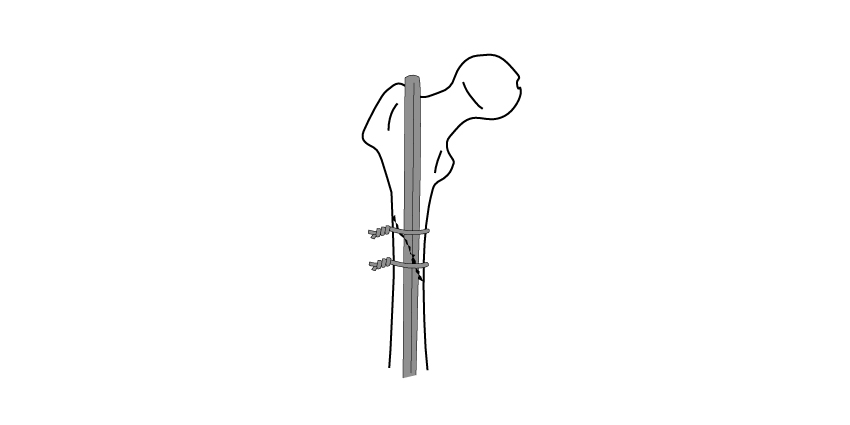
According to co-author Derek F. Amanatullah, M.D., Ph.D., a member of Stanford University’s Department of Orthopaedic Surgery, cerclage (using a bone fragment fixation/stabilization wire) is common in periprosthetic fractures, but it remains unclear how well (or not) extended trochanteric osteotomies work when periprosthetic joint infections are involved, particularly as compared to an aseptic revision approach.
Amanatullah and his team also looked at the impact of immediate cerclage fixation after extended trochanteric osteotomy on the risk of recurrent PJI. Finally, they looked at whether retaining or exchanging extended trochanteric osteotomy cerclage fixation during second stage revision arthroplasty influenced:
- the rate of recurrent PJI;
- operative time;
- estimated blood loss; and/or
- the surgical complication rate.
The team collected data for 76 extended trochanteric osteotomies for revision total hip arthroplasties (THA) between January 1, 2008, and December 31, 2019, with the research subjects separated into two groups: periprosthetic joint infections (49 patients) and aseptic revision (27 patients).
The periprosthetic joint infections group was further divided based on second stage exchange versus retention of the initial cerclage fixation.
The researchers found no significant difference in operative times, postoperative complications, or rate of repeat revision surgery between the groups.
Of the 49 individuals in the PJI group, 40 (82%) retained cerclage fixation while 9 (18%) underwent cerclage exchange. The team found that cerclage exchange did not significantly impact operative time, blood loss, rate of repeat revision surgery, or postoperative complications, including infection.
Dr. Amanatullah summarized the results of the study for OTW, “The presence of a periprosthetic joint infections and the introduction of foreign material for cerclage fixation following ETO do not appear to increase the risk of persistent or recurrent infection with the number of patients available at a busy tertiary care center. I might exchange wires less in the setting of treated periprosthetic joint infections with this data. It was my preference prior.”
Author
React:
Discussion
This is a fascinating development. In my practice we've seen similar outcomes with the revised protocol. The key differentiator seems to be patient selection criteria. Has anyone else noticed the correlation with BMI thresholds?
Great point. I'd push back slightly on the conclusion, the sample size in the cited study is too small to draw population-level inferences. That said, the directional signal is compelling and worth a larger RCT.
We implemented a similar approach last year. Early results are promising but we're still gathering 12-month follow-up data. Happy to share our protocol if anyone is interested.
Join the conversation
Orthopedic professionals are discussing this. Sign in and upgrade to read every comment and add your voice.