
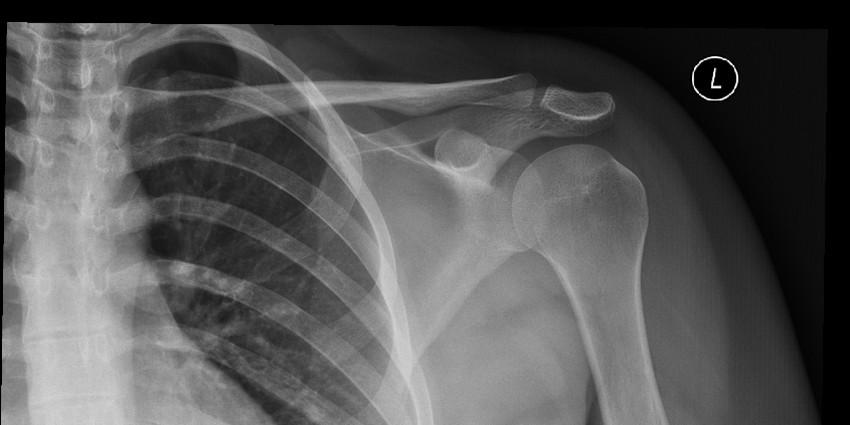
Patients with anterior shoulder dislocation, especially active men in their 20s and 30s, have lower recurrent instability and less need for a future stabilization procedure when they undergo surgical stabilization, according to a new study.
What’s the Connection Between Age and Shoulder Stabilization?
2 min read Premium comments
Secondary#anteriorshoulderdislocation#immobilization#surgicalstabilization
The study, “Shoulder Stabilization Versus Immobilization for First-Time Anterior Shoulder Dislocation: A Systematic Review and Meta-analysis of Level 1 Randomized Controlled Trials,” was published online on February 11, 2022, in The American Journal of Sports Medicine.
The researchers sought to systematically review literature that compares the rates of recurrent instability and subsequent instability surgery in patients undergoing treatment for a first-time anterior shoulder dislocation with either surgical stabilization or shoulder immobilization.
They conducted the review using PubMed, the Cochrane Library and Embase databases. Level 1 randomized studies that compared outcomes of surgical versus immobilization were included. Patients with soft tissue disruption alone as well as those with additional minor bony lesions were included.
They collected data on recurrent instability and subsequent instability surgery rates, the Western Ontario Shoulder Instability Index and range of motion.
Five studies were included in the review. One hundred and twenty-six patients underwent surgical stabilization (mean age, 23.6 years; range, 15.0-39.0 years) and 133 patients were immobilized in a sling (mean age, 23.1 years; range, 15.0-31.0 years). Mean follow-up was 59.7 months.
At the latest follow-up, 6.3% of the surgical patients experienced recurrent instability compared with 46.6% of the nonoperative patients (p < .00001). In addition, 4.0% of surgical patients had a subsequent instability surgery compared with 30.8% of nonoperative patients (p < .00001).
“These same trends were demonstrated when data were isolated to nonoperative patients immobilized in internal rotation. When comparing the operative and nonoperative groups at latest follow-up, 1 study found significantly improved Western Ontario Shoulder Instability Index scores among operative patients and 1 study found significantly improved abducted external rotation in nonoperative patients,” the researchers wrote.
“Patients, particularly active men in their 20s and 30s, undergoing treatment for a first-time anterior shoulder dislocation with a surgical stabilization procedure can be expected to experience significantly lower rates of recurrent instability and a significantly decreased need for a future stabilization procedure when compared with patients treated nonoperatively.”
Study authors include John W. Belk, Benjamin R. Wharton, Darby A. Houck, Jonathan T. Brayman, M.D., Braden Mayer, M.D. Thomas J. Noonan, M.D., Adam J. Seidl, M.D., Rachel M. Frank, M.D. and Eric C. McCarty, M.D., all of the University of Colorado, Aurora. Matthew J. Kraeutler, M.D., of Saint Joseph’s University Medical Center in Paterson, New Jersey, also contributed to the study.
Author
React:
Discussion
This is a fascinating development. In my practice we've seen similar outcomes with the revised protocol. The key differentiator seems to be patient selection criteria. Has anyone else noticed the correlation with BMI thresholds?
Great point. I'd push back slightly on the conclusion, the sample size in the cited study is too small to draw population-level inferences. That said, the directional signal is compelling and worth a larger RCT.
We implemented a similar approach last year. Early results are promising but we're still gathering 12-month follow-up data. Happy to share our protocol if anyone is interested.
Join the conversation
Orthopedic professionals are discussing this. Sign in and upgrade to read every comment and add your voice.