
The renown minimally invasive spine surgeon—Frank Phillips, M.D. of Midwest Orthopaedics at Rush—has been honored with the 2021 Leon Wiltse Award from the North American Spine Society (NASS). An accomplished clinician and researcher, Dr. Wiltse was known for his selflessness, saying during his 1994 address to the North American Spine Society, “In our work, we must do what the best in our profession have always done:
Frank Phillips, M.D. Receives NASS’ Wiltse Award
2 min read Premium comments
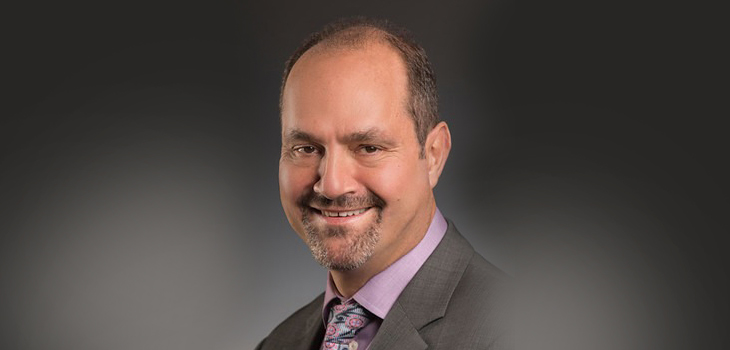
#leonwiltseaward#frankphillips#midwestorthopaedicsatrush
- put the patient first;
- put the community and society second;
- put ourselves last.”1
The Leon Wiltse Award recognizes Dr. Phillips’ excellence in leadership and/or clinical research in spine care.
Dr. Phillips earned his M.D. from the University of Witwatersrand in Johannesburg, South Africa, which was followed by an orthopedic residency at The University of Chicago Medical Center. Dr. Phillips then went on to complete a spine fellowship at Case Western Reserve University School of Medicine.
“I am deeply honored to receive the Wiltse award,” stated Dr. Phillips to OTW. “To even be considered amongst the luminaries in spine surgery who are prior recipients of this prestigious award is indeed humbling. When arriving in the U.S. from South Africa all those years ago, I could not have dreamed of the exciting and fulfilling path my career would take. The journey has been made special by my mentors, colleagues, trainees and spine friends, from whom I have learned so much.”
Providing details on his research interests, Dr. Phillips added, “My research is focused on advancing minimally invasive spine surgery and enabling technologies that improve safety and efficiency of the procedures. Our team continues to strive for quality research to identify and predict the outcomes and value of less invasive approaches. I remain deeply interested in researching cutting edge technologies, like augmented reality, enhanced biologics and alternative approaches to accessing the spine (single-position lateral approaches) to improve patient outcomes.”
When not directing his clinical practice, Dr. Phillips can be found fulfilling his role of Professor, Director, Section of Minimally Invasive Spine Surgery, and Director, Division of Spine Surgery, at Rush University Medical Center. The author of more than 200 clinical papers, Dr. Phillips has trained more than 50 spine fellows, paving the way for those individuals to rise to positions of leadership in the field.
Not only is he a specialist in minimally invasive cervical and lumbar reconstructive surgery, but Dr. Phillips is an expert in motion preserving procedures and served as a principal investigator in FDA trials on cervical disc replacement. He is a founder, board member and past president of the Society of Minimally Invasive Spine Surgery.
References:
- Wiltse LL. My first 80 years: NASS presidential guest speaker address. Spine. 1995;20(16):1751–1760. doi:10.1097/00007632-199508150-00002.
Author
React:
Discussion
This is a fascinating development. In my practice we've seen similar outcomes with the revised protocol. The key differentiator seems to be patient selection criteria. Has anyone else noticed the correlation with BMI thresholds?
Great point. I'd push back slightly on the conclusion, the sample size in the cited study is too small to draw population-level inferences. That said, the directional signal is compelling and worth a larger RCT.
We implemented a similar approach last year. Early results are promising but we're still gathering 12-month follow-up data. Happy to share our protocol if anyone is interested.
Join the conversation
Orthopedic professionals are discussing this. Sign in and upgrade to read every comment and add your voice.