
Patients with subgluteal space pathologies have a high complication rate with hip endoscopy, according to a new study.
Study Tracks Hip Endoscopy Complication Rates
1 min read Premium comments
Secondary#complicationrate#hipendoscopy#sciaticnerveentrapment
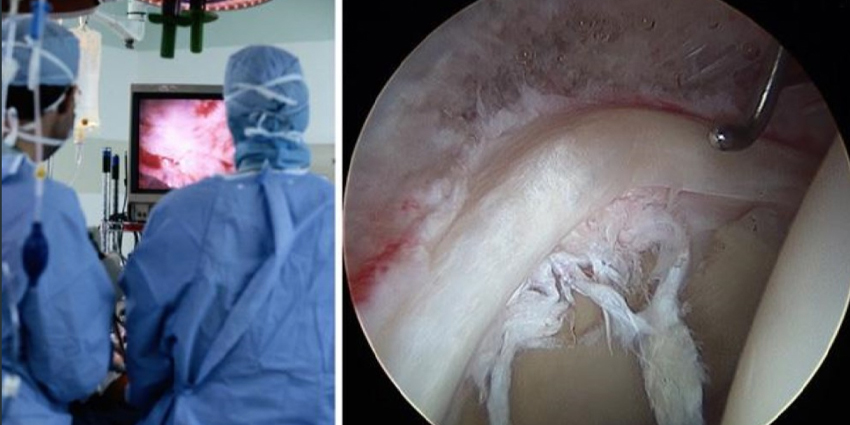
In the study, “Complications of hip endoscopy in the treatment of subgluteal space pathologies,” published on February 19, 2021 in the journal Arthroscopy, the researchers assessed complications of hip endoscopy in patients with subgluteal space pathologies.
The retrospective study focused on patients diagnosed with sciatic nerve entrapment, ischiofemoral impingement and rupture of the proximal origin of the hamstring muscles who underwent a hip endoscopy from January 2012 to December 2018.
All of them had at least a minimum of 3 months of conservative management without satisfactory results. Complications were graded using the Clavien-Dindo and revision surgeries were considered treatment failure.
According to the data collected, a total of 97 hips with subgluteal space pathologies were treated with hip endoscopy. Seventy-seven hips had sciatic nerve entrapment, 5 ischiofemoral impingement, 12 with sciatic nerve entrapment and ischiofemoral impingement and 3 hips with rupture of the proximal origin of the hamstring muscles.
Both minor (Clavien-Dindo I-II) and major (Clavien-Dindo III-V) complications were reported in 7.22% (95% CI: 3.5% to 14.15%) and 12.37% (95% CI: 7.22% to 20.39%). Grade II, III and IV complications were reported in 7.22%, 7.22% and 5.15% hips, respectively.
The most common grade II, grade III and grade IV complications were temporary nerve injury of sciatic nerve, hematoma and permanent nerve injury of posterior femoral cutaneous nerve.
The researchers evaluated function using the Western Ontario McMaster Universities Osteoarthtritis Index (WOMAC) before and 12 months after the endoscopy. They found no statistically significant differences between the cases with and without complications in the WOMAC score before and after surgery.
The researchers also wrote that the revision rate was 6.19% and entrapment of the sciatic nerve was the main cause of reoperation.
“A high rate of complications associated with hip endoscopy were observed in patients with sciatic nerve entrapment, ischiofemoral impingement and rupture of the proximal origin of the hamstring muscles,” they wrote.
Author
React:
Discussion
This is a fascinating development. In my practice we've seen similar outcomes with the revised protocol. The key differentiator seems to be patient selection criteria. Has anyone else noticed the correlation with BMI thresholds?
Great point. I'd push back slightly on the conclusion, the sample size in the cited study is too small to draw population-level inferences. That said, the directional signal is compelling and worth a larger RCT.
We implemented a similar approach last year. Early results are promising but we're still gathering 12-month follow-up data. Happy to share our protocol if anyone is interested.
Join the conversation
Orthopedic professionals are discussing this. Sign in and upgrade to read every comment and add your voice.