
An Israel-based study of a novel, screwless spinal fusion implant has just been started by the senior spine surgeon at Rambam Health Care Campus and principal investigator, Dr. Lior Merom. The first clinical case was a laminotomy and facet stabilization using two of the novel implants to achieve relief of back pain due to facet arthritis and spinal nerve compression (foraminal stenosis).
Screwless Spine Fusion Implant Focus of New Study
2 min read Premium comments
Secondary#zygofix#israelinnovationauthority#zlock
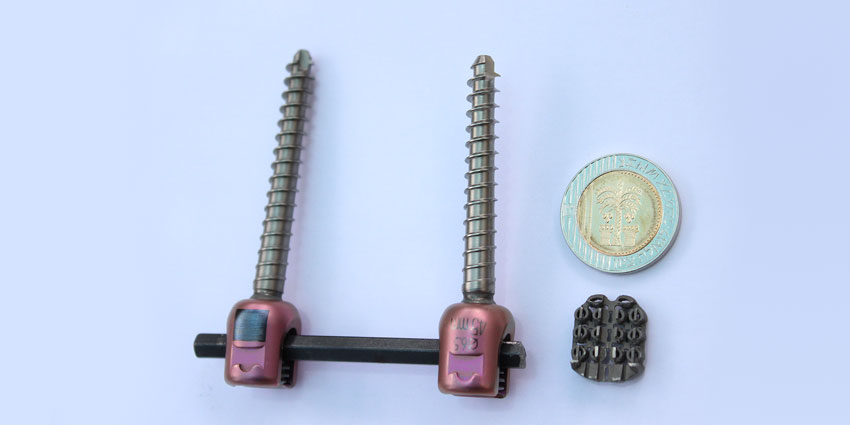
The implant is a miniature screwless implant that is able to delivery spinal stability and fusion by bending and adjusting to specific joint shapes during insertion. The manufacturer, ZygoFix Ltd, which has brand named the new implant ‘zLOCK’, says that it is a least invasive and simplist fusion option that could, potentially, replace complex screw stabilization.
The new clinical study will be used to measure how effective and safe zLOCK is. According to ZygoFix CEO Ofer Levy, “The first patient to undergo the procedure in Israel, was admitted to surgery due to facet degeneration in L4/5 and reported VAS [Visual Analog Score] pain levels of 10 Back, 6 Leg. Today, three weeks post-op, she reports a reduction in VAS to 2 Back, 2 Leg. Placement of the zLOCK took less than 30 minutes (bi-lateral).”
Furthermore, says Levy, “The study in Israel is following the EU pilot study that is ongoing since April 2018. The principal investigator of the study in the EU, Professor Attila Schwarcz stated: ‘zLOCK is a no-risk surgery: the procedure is performed far from the nerve roots, the neurological complication rate is expected to be close to zero.’ The first patients that completed the study (24 months follow up) report an average reduction of 70% in VAS and 62% in ODI [Oswestry Disability Index].”
In Levy’s view, the technology could rethink spinal stability. “We leverage the natural anatomical structure of the spine and insert the zLOCK implant which locks the motion in the joint.”
And, says Levy, it is more simple than traditional pedicle screw based systems. “This customization doesn’t require any effort from the surgeon as it is performed automatically while inserting the implant into the joint.”
The current study, according to Levy, will continue to expand. “Following the opening of the Israel site and starting to recruit patients, we are looking into opening a wider pivotal study in the EU. The Israeli study will include an additional site in Assuta Medical Center and in total with the EU study will enroll 40 patients.”
Concerning future system and tools enhancements, Levy told OTW, “We are enhancing the implant and tools for an easier implantation process, further improvement in primary stability and better visualization of bone growth.”
Author
React:
Discussion
This is a fascinating development. In my practice we've seen similar outcomes with the revised protocol. The key differentiator seems to be patient selection criteria. Has anyone else noticed the correlation with BMI thresholds?
Great point. I'd push back slightly on the conclusion, the sample size in the cited study is too small to draw population-level inferences. That said, the directional signal is compelling and worth a larger RCT.
We implemented a similar approach last year. Early results are promising but we're still gathering 12-month follow-up data. Happy to share our protocol if anyone is interested.
Join the conversation
Orthopedic professionals are discussing this. Sign in and upgrade to read every comment and add your voice.