
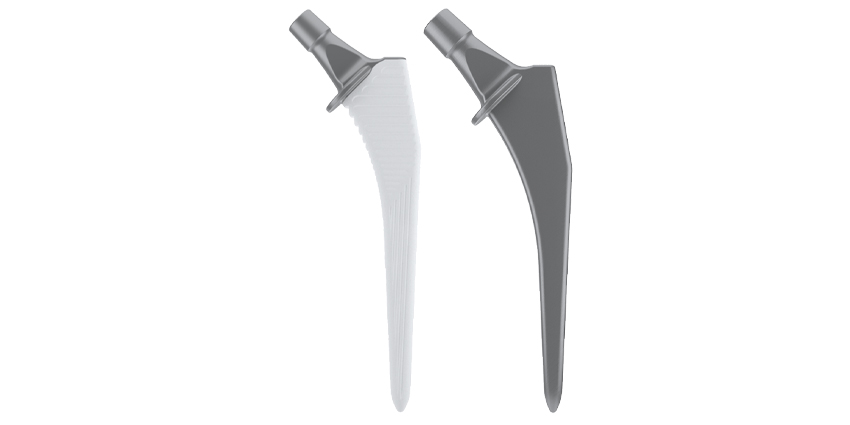
Hip surgeons now have more options with the recent launch by MicroPort Orthopedics, Inc. of its Profemur Gladiator HA (hydroxyapatite) Collared Stem and Profemur Gladiator Cemented Collared Stem. According to the company, along with its existing Profemur Gladiator Plasma Stem, the Gladiator Hip Stem System is now complete.
MicroPort: HA Coated and Cemented Collared Hip Stems
1 min read Premium comments
Secondary#microportorthopedics#directanteriorapproach#profemurgladiatorhacollaredstem
China-based MicroPort, with U.S. operations in Arlington, Tennesse (the former Wright Medical total joint manufacturing plant), designed the Profemur Gladiator Hip Stems with a triple wedge tapered design with distinct geometry. “The hip stem is designed with a reduced lateral shoulder convenient for tissue-sparing techniques, making it perfectly suited to be used with MicroPort’s disruptive innovation through the Anterior Path surgical approach,” says the company. “The Profemur line of Hip Stems gives surgeons the versatility to address their patients’ needs with one set of instruments in this truly comprehensive system.”
“By allowing surgeons to cater a femoral hip system to their preferred techniques, we have created a customizable hip system that is Simply Versatile in its ability to exceed the needs of each surgeon, designed to help our surgeons more effectively treat patients,” said Benny Hagag, company president. “This customization to tissue-sparing techniques allows for streamlined preoperative planning, excellent patient outcomes, and a quicker recovery. The proof is in our patients.”
OTW asked Hagag about the unique elements of Microport’s DAA approach. “There is nothing direct about the Direct Anterior Approach (DAA)—until Anterior PATH. Anterior PATH allows surgeons unbridled access to both the femur and acetabulum and may result in reduced femoral complications, concentric reaming, and reduced neuropraxia. With our Gladiator family now complete, we trust surgeons will find the right balance in all of our products between historic, orthopedic relevancy and consistent innovation.”
Author
React:
Discussion
This is a fascinating development. In my practice we've seen similar outcomes with the revised protocol. The key differentiator seems to be patient selection criteria. Has anyone else noticed the correlation with BMI thresholds?
Great point. I'd push back slightly on the conclusion, the sample size in the cited study is too small to draw population-level inferences. That said, the directional signal is compelling and worth a larger RCT.
We implemented a similar approach last year. Early results are promising but we're still gathering 12-month follow-up data. Happy to share our protocol if anyone is interested.
Join the conversation
Orthopedic professionals are discussing this. Sign in and upgrade to read every comment and add your voice.