
Mainstay Medical Holdings plc has raised $108 million in equity financing, enabling the company to expand its reach and continue post-market clinical studies and research.
Mainstay Medical Expands Thanks to $108 Million Equity Financing
2 min read Premium comments
Secondary#mainstaymedical#reactiv8
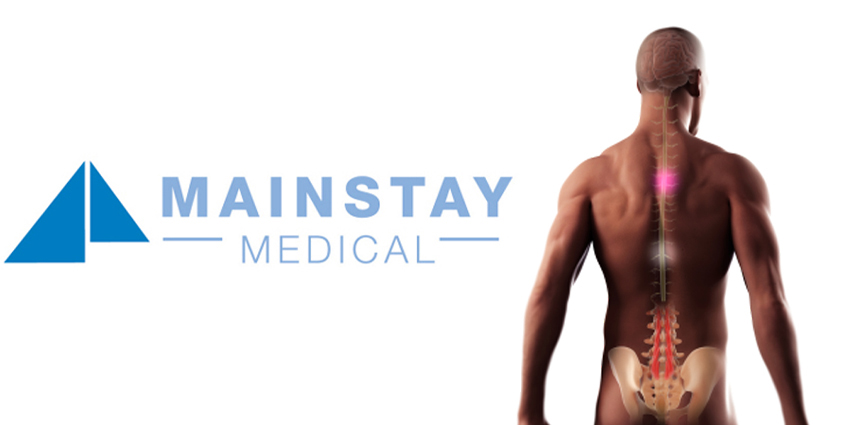
Headquartered in Dublin, Ireland, with subsidiaries in the United States, Australia, Germany, and the Netherlands, Mainstay is commercializing its implantable restorative neurostimulation system, ReActiv8®.
According to the press release, the financing was co-led by new investors Ally Bridge Group and Sofinnova Partners, through its crossover fund. It included an unnamed global medical device company and existing investors as well.
OTW spoke with Mainstay CEO Jason Hannon about the financing. Hannon emphasized that the financing will be used for commercial launches and additional clinical data. Hannon told OTW that the “biggest thing coming up is our U.S. launch” and that Mainstay is “lined up for U.S. launch by the end of the second quarter.” At the same time, Mainstay is expanding in Europe, including its German business and it will also “get going in the U.K.” Notably, ReActiv8 has also been approved in Australia, so the company will be focused on “getting started in Australia as well.”
ReActiv8 is “designed to treat adults with intractable chronic low back pain associated with dysfunction of the lumbar multifidus muscle, a key stabilizing muscle of the low back, as evidenced by imaging or physiological testing in adults who have failed therapy, including pain medications and physical therapy, and are not candidates for spine surgery.”
OTW asked Hannon about ReActiv8. Hannon told OTW, “The most exciting thing is this is the first restorative therapy for people with back pain. It is a neurostimulation device. Unlike other neurostimulation devices, it’s not intended to be palliative. It doesn’t cover up pain or mask pain.”
Hannon continued, “It is intended to restore the functioning of the key stabilizing muscle in your low back. And when that muscle is reestablished, hence the name ReActiv8, when it’s firing again, it applies stability to your spinal segments in your low back. Helping you then to heal from your underlying source of pain. The most exciting thing is this is a novel mechanism of action. It’s not a spinal cord stimulator. It’s not a substantial surgery. We are not removing bone or decompressing the spine. We are reactivating the core stabilizing muscles so that you can then heal from your underlying pain contributors.”
Looking forward, Mainstay will focus on launching commercially. Additionally, Hannon told OTW that Mainstay “will continue to run clinical studies and gather more clinical data in support of it.”
Author
React:
Discussion
This is a fascinating development. In my practice we've seen similar outcomes with the revised protocol. The key differentiator seems to be patient selection criteria. Has anyone else noticed the correlation with BMI thresholds?
Great point. I'd push back slightly on the conclusion, the sample size in the cited study is too small to draw population-level inferences. That said, the directional signal is compelling and worth a larger RCT.
We implemented a similar approach last year. Early results are promising but we're still gathering 12-month follow-up data. Happy to share our protocol if anyone is interested.
Join the conversation
Orthopedic professionals are discussing this. Sign in and upgrade to read every comment and add your voice.