
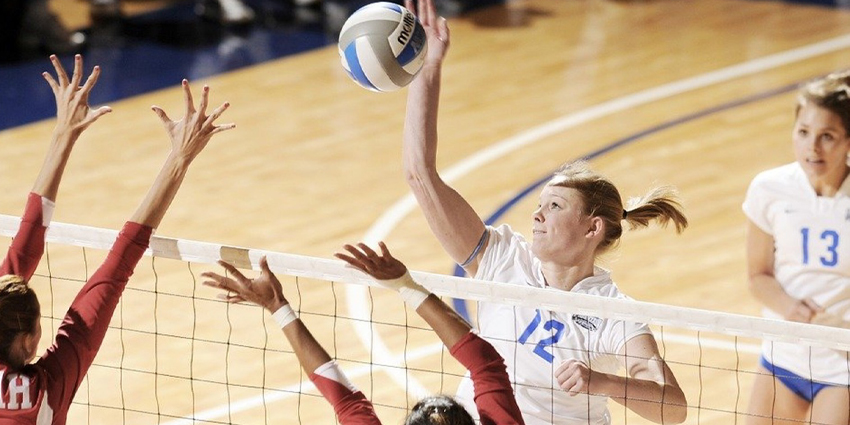
A new study of more than 2,000 volleyball player injuries has quantified the extent to which in-season injuries can affect the quality of life (QOL) of the athlete.
How Much do Sports Injuries Affect Athletes’ QOL?
1 min read Premium comments
Secondary#inseasoninjuries#qualityoflife#volleyball
The study, “Impact of in-season injury on quality of life and sleep duration in female youth volleyball athletes: a prospective study of 2,073 players,” published online on February 24, 2020 in the British Journal of Sports Medicine, evaluated the influence of injury on quality of life and sleep in female high school volleyball athletes.
The researchers used mixed effects linear regression models to compare changes in quality of life and sleep duration during the season between injured and injured athletes, and injured athletes who did or did not suffer a season-ending injury.
The researchers asked 2,073 female high school volleyball players to fill out the Pediatric Quality of Life survey (total QOL, physical, social, school, emotional and psychological function) report average sleep duration at the start and end of the season. School athletic trainers collected injury data on each of the athletes.
A total of 187 athletes experienced time-loss injuries. Overall, these injured athletes reported a greater decrease in total QOL (β = -1.3±0.5; p = 0.012) as well as physical function (β= -1.6±0.6; p = 0.012), school function (β= -2.0±0.76; p = 0.001) and psychosocial function domains (β= -1.2±0.6; p = 0.039) during the season compared with the uninjured athletes.
In addition, athletes who sustained a season-ending injury had a greater decrease in total QOL (β= 6.8±2.0; p = 0.06) and physical function (β= 17 ±2.9; p < 0.001) compared with injured athletes who were able to return to play during the season.
“In-season injuries are associated with significant decreases in total QOL as well as physical and psychosocial function. Healthcare providers should consider the impacts of injuries on QOL and sleep in youth athletes in order to optimize management and improve overall health,” the researchers wrote.
Author
React:
Discussion
This is a fascinating development. In my practice we've seen similar outcomes with the revised protocol. The key differentiator seems to be patient selection criteria. Has anyone else noticed the correlation with BMI thresholds?
Great point. I'd push back slightly on the conclusion, the sample size in the cited study is too small to draw population-level inferences. That said, the directional signal is compelling and worth a larger RCT.
We implemented a similar approach last year. Early results are promising but we're still gathering 12-month follow-up data. Happy to share our protocol if anyone is interested.
Join the conversation
Orthopedic professionals are discussing this. Sign in and upgrade to read every comment and add your voice.