
We have written countless articles about the dangers and treatments of concussions on athletes and soldiers. But very few about mitigating the effects of concussions.
FDA Authorizes Device to Mitigate Effects of Concussions
3 min read Premium comments
#concussion#fdaauthorization#q30sportsscience
On February 26, 2021, the FDA announced the authorization of the Q-Collar made by Q30 Sports Science, LLC, to “aid in the protection of the brain from the effects associated with repetitive sub-concussive head impacts.”
The company cites data from the Centers for Disease Control and Prevention which estimate the yearly incidence of sports- and recreation-related brain injuries in the U.S. to be between 1.6 and 3.8 million. “Increasingly, there is growing concern in the sports medicine community around the effects of smaller, repeated head impacts, also known as RHI (repeated head impacts).”
The Q-Collar
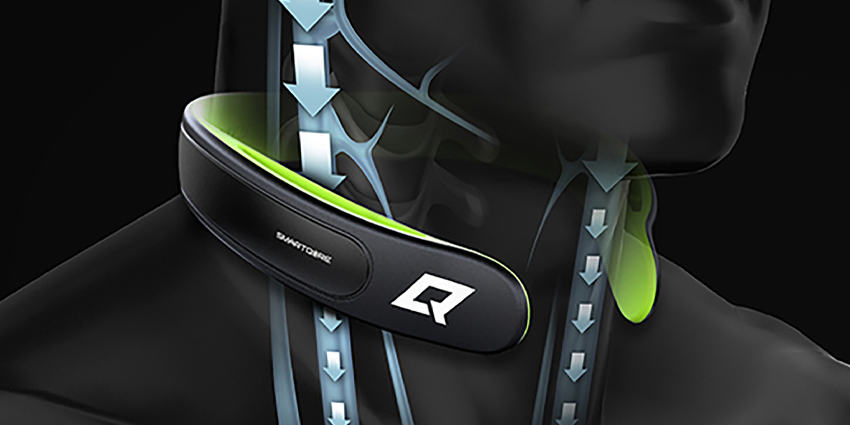
The theory behind the Q-Collar is that if you squeeze the jugular veins, you’ll increase blood volume in the skull and reduce movement of the brain in the cranial space. Click here to watch a short company video about the collar.
The Q-Collar is a C-shaped collar that, according to the FDA, “may reduce the occurrence of specific changes” in the brain that are associated with brain injury. The collar is intended to be worn around the neck of athletes aged 13 years and older.
Specifically, here is how the FDA says the collar works. The collar “provides compressive force to the internal jugular veins, which in turn increases the blood volume in the skull’s blood vessels. Typically, when people experience blunt trauma accidents, the brain moves unrestrained in the skull, which is known as a ‘slosh.’”
Increasing the blood volume in those blood vessels “creates a tighter fit of the brain inside the skull and reduces the ‘slosh’ movement. By reducing the movement of the brain within the cranial space, the Q-Collar may aid in the protection of the brain from the effects of head impacts.”
The device can be worn for up to four hours at a time and should be replaced after two years of active use or upon the product’s expiration date listed on the package, whichever comes first.
Studies
The FDA said it used several studies to determine the safety and effectiveness of the collar through the De Novo premarket review pathway.
One study was a prospective, longitudinal study in the U.S. with 284 subjects 13 years or older who were participants on a high school football team. Of 284 players, 139 wore the collar and 145 did not. All the players wore an accelerometer device that measured every impact to the head sustained during play.
All players underwent a magnetic resonance imaging (MRI) scan pre-season and post-season. The scans were used to generate Diffusion Tensor Imaging (a specialized MRI image) of the brain that allowed researchers to compare structural changes in the participants’ brain, after a season of play.
The results?
“Significant changes were found in deeper tissues of the brain involved in the transmission of electrical nerve signals (white matter regions) in 106 of the 145 (73%) participants in the no-Collar group, while no significant changes in these regions were found in 107 of the 139 (77%) of the group who wore the Q-Collar. These differences appear to indicate protection of the brain associated with device use. No significant adverse events were associated with device use.”
Additionally, the company claims, “28 independent, arms-length laboratory and clinical studies” have been conducted by leading research institutions in North America, including 17 peer-reviewed, published studies, “that support the Q-Collar’s effectiveness and safety at all levels of exertion and performance.”
The FDA says the data “do not demonstrate that the device can prevent concussion or serious head injury.”
Christopher M. Loftus, M.D., acting director of the Office of Neurological and Physical Medicine Devices in the FDA’s Center for Devices and Radiological Health, said the FDA action, “provides an additional piece of protective equipment athletes can wear when playing sports to help protect their brains from the effects of repetitive head impacts while still wearing the personal protective equipment associated with the sport.”
Author
React:
Discussion
This is a fascinating development. In my practice we've seen similar outcomes with the revised protocol. The key differentiator seems to be patient selection criteria. Has anyone else noticed the correlation with BMI thresholds?
Great point. I'd push back slightly on the conclusion, the sample size in the cited study is too small to draw population-level inferences. That said, the directional signal is compelling and worth a larger RCT.
We implemented a similar approach last year. Early results are promising but we're still gathering 12-month follow-up data. Happy to share our protocol if anyone is interested.
Join the conversation
Orthopedic professionals are discussing this. Sign in and upgrade to read every comment and add your voice.