
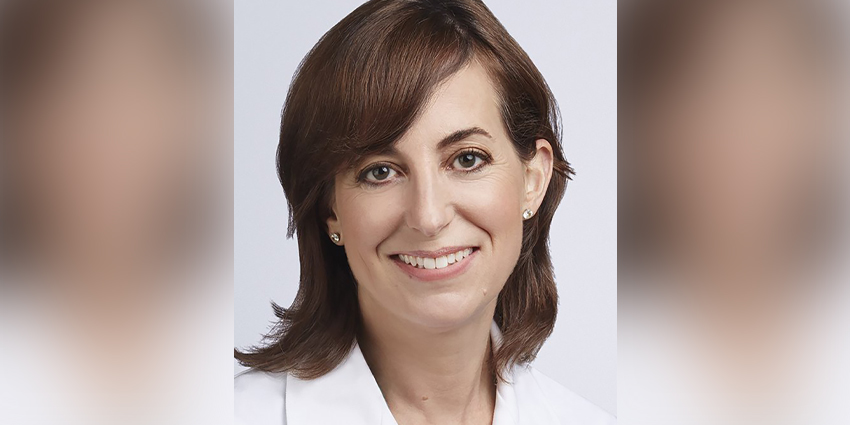
The Orthopaedic Research Society recently recognized Leesa Galatz, M.D., professor and chair of the Leni and Peter W. May Department of Orthopedic Surgery at the Icahn School of Medicine at Mount Sinai and the Mount Sinai Health System with the 2021 Women’s Leadership Forum Award for her outstanding leadership and mentorship. She received the 2021 Women’s Leadership Forum Award at the virtual ORS 2021 Annual Meeting.
Leesa Galatz Honored by the Orthopaedic Research Society
1 min read Premium comments
#leesagalaz
Recipients of the Orthopaedic Research Society (ORS) award are honored for their contributions to the understanding of the musculoskeletal system and musculoskeletal diseases and injuries as well as their commitment to service and mentorship.
“This award reflects ORS’ commitment to the support and advancement of women in science and medicine,” Dr. Galatz said. “Moments like this energize me to continue to pursue excellence in orthopedic practice and research.”
Dr. Galatz specializes in shoulder and elbow surgery, particularly shoulder instability, rotator cuff disease and shoulder arthroplasty. She has served as chair of orthopedics at Mount Sinai since 2015.
She is also a leading researcher in the basic science of rotator cuff disease and tissue engineering strategies for tender healing as part of two major projects funded by the National Institutes of Health.
Dr. Galatz received the Charles S. Neer Award for Basic Science Research from the American Shoulder and Elbow Surgeons in 2009 and the 2014 Kappa Delta Ann Doner Vaughan Award from the American Academy of Orthopaedic Surgeons for her research on the natural history of rotator cuff disease.
She also spent time in 2007 as a European Shoulder and Elbow Traveling Fellow, which was sponsored by American Shoulder and Elbow Surgeons. In 2009 she was an American British Canadian Traveling Fellow.
She has also served as a Member at Large on the board of the American Academy of Orthopaedic Surgeons and as a delegate on the board of the American Optometric Association.
Prior to joining Mount Sinai, Dr. Galatz was the chief of the shoulder and elbow service at Washington University in St. Louis.
Author
React:
Discussion
This is a fascinating development. In my practice we've seen similar outcomes with the revised protocol. The key differentiator seems to be patient selection criteria. Has anyone else noticed the correlation with BMI thresholds?
Great point. I'd push back slightly on the conclusion, the sample size in the cited study is too small to draw population-level inferences. That said, the directional signal is compelling and worth a larger RCT.
We implemented a similar approach last year. Early results are promising but we're still gathering 12-month follow-up data. Happy to share our protocol if anyone is interested.
Join the conversation
Orthopedic professionals are discussing this. Sign in and upgrade to read every comment and add your voice.