
The FDA has 510(k) cleared for a second application an important and novel new bioresorbable polymer—the result of a 15-year research effort from Northwestern University and Penn State.
Citrate Based, Anti-Inflammatory Polymer Lands 2nd FDA Clearance
2 min read Premium comments
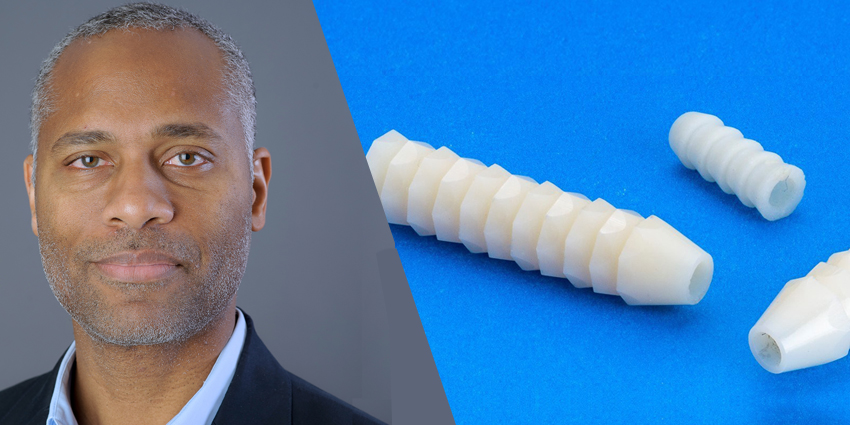
#acuitivetechnologies#guillermoameer#tissueregeneration
The company bringing this new polymer to market, New Jersey based Acuitive Technologies, Inc., has branded the new thermoset bioresorbable synthetic polymer, Citregen.
The clearance of the Citrefix knotless suture anchor on February 5, 2021, follows the clearance of the company’s tendon interference screw in October 2020.
Anti-Microbial, Anti-Inflammatory, Tissue Regenerative
According to Acuitive, Citregen is the first thermoset biodegradable synthetic polymer ever approved for use in an implantable medical device. The polymer, according to the company, protects the soft tissue graft during insertion and optimize graft fixation to bone.
Thermoset polymers, as opposed to thermoplastic polymers, can be formed into extremely precise parts, cannot be remolded or heated after initial forming, and deliver excellent strength to weight characteristics. They have excellent stability.
Citregen, however, combines the advantages of a thermoset polymer with anti-microbial and anti-inflammatory characteristics and the ability to guide tissue regeneration.
Here’s how it works.
Citregen was designed at the molecular level “to guide tissue regeneration by replicating the intrinsic cellular biochemical and structural support network.” Citrate, its main component, is a naturally occurring anti-microbial and anti-inflammatory molecule “that plays a crucial role in bone regeneration, where it regulates cellular metabolic processes and the formation of mineral structures.”
Citregen releases molecules “essential to bone formation throughout its bioresorption process leaving behind a biomimetic ceramic structure to be metabolized by the host tissue. This bioresorption process avoids the potential for bulk degradation and chronic inflammation.”
According to FDA clearance documents, Citregen biomaterial is a “homogeneous biocomposite comprised of 60 wt.-% unsintered hydroxyapatite (HA) and 40 wt.-% polyester. Citregen’s polymer component is a citrate-based network of completely amorphous polymer chains crosslinked together to form an elastomeric material. As water penetrates the subject device, surface erosion of the polymer phase occurs through hydrolysis of the ester bonds located between the monomers and at the crosslink sites.”
15-Years of Penn State and Northwestern University Research
The intellectual property portfolios are licensed from Northwestern University and The Pennsylvania State University. It received FDA clearance after more than 15 years of academic research and five years of Acuitive proprietary development. The development at Northwestern University came from the lab of Professor Guillermo A. Ameer, D.Sc., Chemical Engineering. Ameer’s work was expanded by other researchers around the world, most notably Jian Yang, Ameer’s former postdoctoral trainee and current chair of The Lloyd and Dorothy Foehr Huck Center for Regenerative Engineering at The Pennsylvania State University.
Ameer said after the first clearance in 2020, “when used to fabricate devices for reconstruction of tissues, such as ligaments, blood vessels, bladder and bone, results have been impressive and beyond our expectations.”
The company, whose clearance notification was submitted by Hogan Lovells, LLP, had to convince the FDA that its material was substantially equivalent to Arthrex’s tenodesis family materials.
Citregen, stated the FDA documents, is comprised of “unsintered hydroxyapatite (HA) and polyester that is bioresorbed over time in vivo.” The Arthrex materials is comprised of “biphasic calcium phosphate and PLDLA that also resorbs in vivo. The material differences between the Acuitive device and the predicate are the polyester, bioceramic, and weight percentage of bioceramic.”
While the specific materials differed, the FDA decided the difference did not raise different issues of safety or effectiveness, as confirmed by bench, biocompatibility, and animal testing.
Per the company press release, “Acuitive plans to commercialize the Citrefix system in mid-year 2021 with an orthopedic distribution partner.”
Author
React:
Discussion
This is a fascinating development. In my practice we've seen similar outcomes with the revised protocol. The key differentiator seems to be patient selection criteria. Has anyone else noticed the correlation with BMI thresholds?
Great point. I'd push back slightly on the conclusion, the sample size in the cited study is too small to draw population-level inferences. That said, the directional signal is compelling and worth a larger RCT.
We implemented a similar approach last year. Early results are promising but we're still gathering 12-month follow-up data. Happy to share our protocol if anyone is interested.
Join the conversation
Orthopedic professionals are discussing this. Sign in and upgrade to read every comment and add your voice.