
Jonathan Vigdorchik, M.D., an orthopedic surgeon at Hospital for Special Surgery (HSS) in New York, has performed the first augmented reality (AR) total knee arthroplasty(TKA) in the United States. The new technology, designed and engineered with artificial intelligence (AI) and machine learning (ML), is manufactured by Medacta International SA, based in Castel San Pietro, Switzerland.
Augmented Reality Knee Replacement First in U.S.
2 min read Premium comments
#hospitalforspecialsurgery#medactaSecondary#augmentedreality
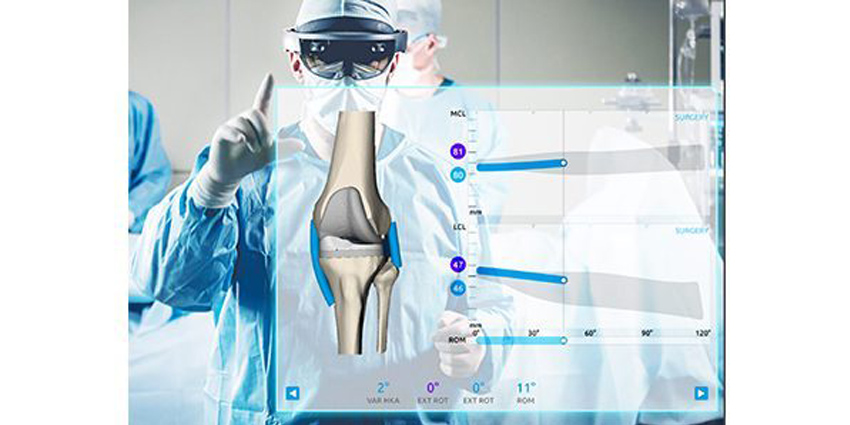
The augmented reality knee replacement platform—NextAR™ TKA—received clearance from the FDA in 2020. The process begins when surgeons take a preoperative CT scan of the patient’s knee for surgical planning and then use AR glasses during surgery. The powerful glasses not only allow orthopedic surgeons to fully visualize the knee structure and the surgical plan, but they can also track progress in real time directly on the operative field—without having to glance away at a computer screen.
“It’s like a car that has the speedometer projected on the windshield, so you don’t have to look down when you’re driving,” says Dr. Vigdorchik. “Everyone knows how to drive home, but you use GPS technology to find the best and most efficient route to take.”
According to Dr. Vigdorchik, the NextAR TKA system may be a boon to surgical efficiency as well. “It’s a portable system that can be used in ambulatory surgery centers in addition to hospital ORs,” he notes. “In addition, the high level of precision of the AR platform could decrease operating time and translate into greater efficiency. This is particularly advantageous in the current health care environment, as surgeons and hospitals may still be catching up on elective knee replacements that were deferred during the pandemic lockdown.”
Star Wars in the OR
When OTW asked what it felt like to use this technology, Dr. Vigdorchik commented, “It felt like the beginning of a new era in joint replacement. Things we saw in sci-fi movies years ago becoming a reality in orthopedic surgery.”
OTW mused…“Dr. Vigdorchik, is there anything you could compare it to?”
“Fighter pilots, when they fly, they have special helmets that provide information to them in real time. When you drive, it’s like having the navigation system projected on the windshield in front of you, warning you of traffic, an accident, or something bad about to happen. It is like virtually trying on clothes or glasses without leaving home, seeing exactly how they will fit. It is all about efficiency, adding value, and providing the surgeon with as much information as possible when you need, at the exact time you need it, without overdoing it.”
“The tipping point for using technology in joint replacement is now. The days of huge computers or robots adding time to your surgery are over. Surgeons can be extremely efficient using robots and technology today in 2021: they no longer add time to your surgery, provide the surgeon with valuable information, and make you a better surgeon.”
Medacta indicates that NextAR TKA is only the beginning with this technology, which will be extended to hip, shoulder and spine procedures.
Author
React:
Discussion
This is a fascinating development. In my practice we've seen similar outcomes with the revised protocol. The key differentiator seems to be patient selection criteria. Has anyone else noticed the correlation with BMI thresholds?
Great point. I'd push back slightly on the conclusion, the sample size in the cited study is too small to draw population-level inferences. That said, the directional signal is compelling and worth a larger RCT.
We implemented a similar approach last year. Early results are promising but we're still gathering 12-month follow-up data. Happy to share our protocol if anyone is interested.
Join the conversation
Orthopedic professionals are discussing this. Sign in and upgrade to read every comment and add your voice.