
San Francisco, California-based Hinge Health, Inc., a private digital health company, has completed an oversubscribed $300 million Series D funding round, raising the valuation of the company to $3 billion.
Ortho Digital Health Company Raises $300 Million
1 min read Premium comments
#hingehealth#digitalhealth
The fundraising was led by investment firms Coatue Management, LLC and Tiger Global Management, LLC. Existing investors also participated, including Atomico; Insight Partners; Quadrille Capital; 11.2 Capital; Lead Edge Capital Management, LLC; Bessemer Venture Partners; and Heuristic Capital Partners.
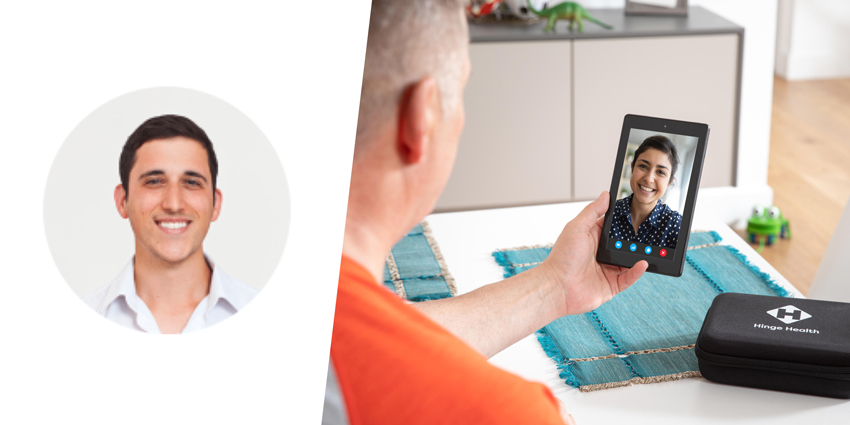
Hinge Health provides musculoskeletal (MSK) solutions for employers and health plans. It pioneered the digital clinic for back and joint pain care. Hinge Health’s clinical care model provides members with access to “physical therapists, physicians, health coaches, and technology such as wearable sensors to guide exercise therapy.”
The coronavirus pandemic dramatically increased the adoption of digital healthcare in the U.S. and 2020 played a significant role in Hinge Health’s growth. Hinge Health announced that its “customer base tripled, revenue quadrupled, customer retention continued at 100%, and Q4 [quarter four] alone saw a 937% growth in added covered lives.”
Hinge Health Co-Founder and CEO Dan Perez spoke with OTW about the fundraise. “As the pandemic accelerated the demand for virtual care, spurring the adoption of digital healthcare, we at Hinge Health have been excited to provide easy-to-use, life-changing tools to people suffering from back and joint pain.”
Perez continued, “This new capital will propel our mission to provide a digital first clinic that overcomes significant barriers people face to accessing effective, quality health care.”
The financing will be used to expand clinical capabilities and help Hinge Health become an end-to-end digital MSK clinic for back and joint pain. Notably, the financing will enable Hinge Health to increase its clinical team. Perez explained, “We are investing in deepening our MSK clinical capabilities by building advanced technologies and tripling our clinical team of doctors, physical therapists, and health coaches.”
Author
React:
Discussion
This is a fascinating development. In my practice we've seen similar outcomes with the revised protocol. The key differentiator seems to be patient selection criteria. Has anyone else noticed the correlation with BMI thresholds?
Great point. I'd push back slightly on the conclusion, the sample size in the cited study is too small to draw population-level inferences. That said, the directional signal is compelling and worth a larger RCT.
We implemented a similar approach last year. Early results are promising but we're still gathering 12-month follow-up data. Happy to share our protocol if anyone is interested.
Join the conversation
Orthopedic professionals are discussing this. Sign in and upgrade to read every comment and add your voice.