
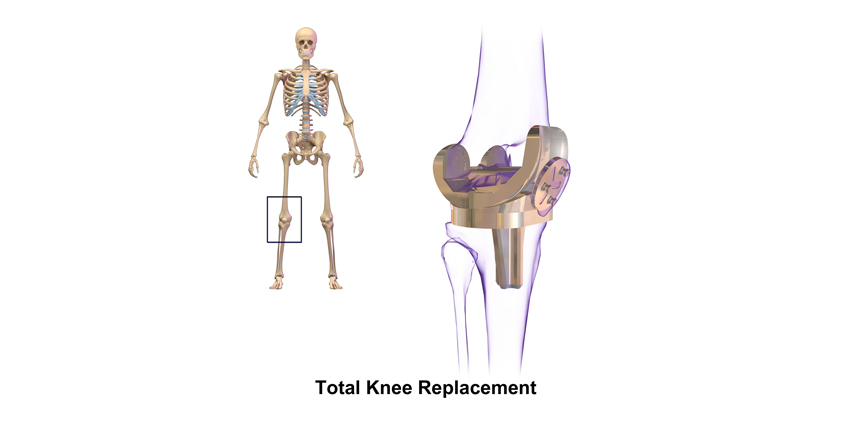
A new systematic review and meta-analysis involving 4,102 total knee arthroplasties (TKAs) has called into question whether implant design alone will provide further improvement in postoperative patient outcomes.
Implant Design Alone Not Enough, Says New Study
1 min read Premium comments
Secondary#medialstabilisedtotalkneearthroplasty#tka
A team of researchers from the UK compared clinical and patient-reported outcome measures of medially stabilized TKA with other TKA designs. Their work, “Medial stabilised total knee arthroplasty achieves comparable clinical outcomes when compared to other TKA designs: a systematic review and meta‐analysis of the current literature,” was published in the November 27, 2020 edition of Knee Surgery, Sports Traumatology, Arthroscopy.
Dr. Sohail Nisar, co-author with the University of Leeds and Leeds Teaching Hospitals National Health Service Trust in the UK, explained the background of the study to OTW. “Medial stabilised TKA is designed to attempt to recreate native knee kinematics. Studies have shown improved outcomes when native knee kinematics are recreated. We were interested to see if medial stabilised total knee arthroplasty improved patient reported outcomes.”
22 Studies, 3,011 Patients, 4,102 TKAs
The overall mean age of patients in the study was 70 years, with a mean followup of 52.6 months. The researchers found that overall Oxford Knee Scores were “significantly better” for medial stabilised TKA, but no differences were seen in the Forgotten Joint Scores, Western Ontario and McMaster Universities Osteoarthritis Index, Knee Society Score-Knee, KSS-Function, and range of motion between medial stabilised and non-medial stabilised TKA designs.
According to the authors, “Significant differences were noted for sub-group analyses; medial stabilised TKA showed significantly worse Knee Society Score -Knee and Western Ontario and McMaster Universities Osteoarthritis Index scores when compared to Rotating Platform TKA while significantly better Forgotten Joint Scores and Knee Society Score-knee scores when compared to cruciate-retaining TKA.”
“The most important finding was comparable outcomes—in that new total knee arthroplasty designs do not seem to be improving patient outcomes,” said Dr. Nisar to OTW. “Orthopaedic surgeons need to investigate other factors such as alignment and soft tissue balance to achieve improved clinical outcomes following TKA.”
Author
React:
Discussion
This is a fascinating development. In my practice we've seen similar outcomes with the revised protocol. The key differentiator seems to be patient selection criteria. Has anyone else noticed the correlation with BMI thresholds?
Great point. I'd push back slightly on the conclusion, the sample size in the cited study is too small to draw population-level inferences. That said, the directional signal is compelling and worth a larger RCT.
We implemented a similar approach last year. Early results are promising but we're still gathering 12-month follow-up data. Happy to share our protocol if anyone is interested.
Join the conversation
Orthopedic professionals are discussing this. Sign in and upgrade to read every comment and add your voice.