
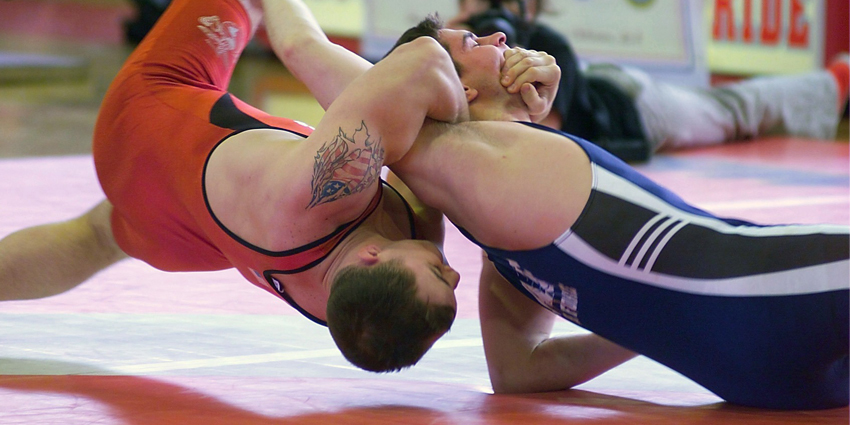
Elite athletes who participate in Olympic combat sports are at high risk of injury, according to a new study.
Combat Sports Athletes Injured Every 2 Hours
1 min read Premium comments
#eliteathletes#combatsportsathletes#injuryfrequency
The researchers found that Olympians who compete in sports such as boxing, judo, and taekwondo sustain an injury every 2.1 hours of competition.
In the article, “Injury incidence, severity and profile in Olympic combat sports: a comparative analysis of 7,712 athlete exposures from three consecutive Olympic Games,” published in the British Journal of Sports Medicine, they compared the epidemiology of competition injuries in unarmed combat sports in three consecutive Olympic Games.
Using injury data from the International Olympic Committee injury surveillance system and exposure data from official tournament records at three consecutive Olympic Games: Beijing 2008, London 2012 and Rio de Janeiro 2016, the researchers calculated competition injury incidence rates per 1000 min of exposure (IIRME).
The overall IIRME was 7.8 (95% CI 7.0 to 8.7). The IIRME in judo (9.6 (95% CI 7.8 to 11.7)), boxing (9.2 (95%CI 7.6 to 10.9)) and taekwondo (7.7 (95% CI 5.6 to 10.5)) were significantly higher than in wrestling (4.8 (95% CI 3.6 to 6.2)).
However, the proportion of injuries resulting in more than 7 days absence from competition or training was higher in wrestling (39.6%), judo (35.9%) and taekwondo (32.5%) than in boxing (21.0%).
There was no difference in injury risk by sex, weight category or tournament round, but athletes that lost had significantly higher IIRME compared with their winning opponents (rate ratio 3.59 (95% CI 2.68 to 4.79).
The researchers wrote, “Olympic combat sport athletes sustained, on average, one injury every 2.1 hours of competition. The risk of injury was significantly higher in boxing, judo and taekwondo than in wrestling.”
“About 30% of injuries sustained during competition resulted in more than 7 days absence from competition or training. There is a need for identifying modifiable risk factors for injury in Olympic combat sports, which in turn can be targeted by injury prevention initiatives to reduce the burden of injury among combat sport athletes.”
Author
React:
Discussion
This is a fascinating development. In my practice we've seen similar outcomes with the revised protocol. The key differentiator seems to be patient selection criteria. Has anyone else noticed the correlation with BMI thresholds?
Great point. I'd push back slightly on the conclusion, the sample size in the cited study is too small to draw population-level inferences. That said, the directional signal is compelling and worth a larger RCT.
We implemented a similar approach last year. Early results are promising but we're still gathering 12-month follow-up data. Happy to share our protocol if anyone is interested.
Join the conversation
Orthopedic professionals are discussing this. Sign in and upgrade to read every comment and add your voice.